top of page
.png)
Quotes by Czechoslovakian Authors


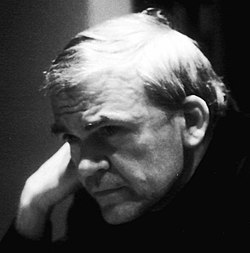
"Vertigo is something else than the fear of falling. It is the voice of emptiness below us which temps and lures us, it is the desire to fall, against which, terrified, we defense ourselves."


"I always give Lindsay so much credit for her tennis game, for her attitude, for her person, and because of how she deals with all the things. I don't think people give her enough credit for how well she's doing."

"I talk to Simon, I write to him. I never used to write a diary. But now I'm writing a diary to him. I think it's not just me, but lots of others, family and friends, can still feel him around."
"Is not an event in fact more significant and noteworthy the greater the number of fortuities necessary to bring it about? ... Everything that occurs out of necessity, everything expected, repeated day in and day out, is mute. Only chance can speak to us."

"Dying before dying has two important consequences: It liberates the individual from the fear of death and influences the actual experience of dying at the time of biological demise."
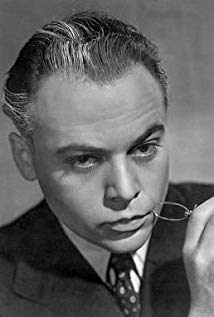
"You know, I always do my best, no matter the quality of the film."

"Asylum was good exposure for me and it is still shown quite often on television. I remember the special effects people had fun making a little doll that looked like me - which is not so easy - and it had to move along the floor."
"And therein lies the whole of man's plight. Human time does not turn in a circle, it runs ahead in a straight line. That is why man cannot be happy: happiness is the longing for repetition."
"The degree of slowness is directionally proportional to the intensity of memory. The degree of speed is directionally proportional to the intensity of forgetting."
"Mysticism and exaggeration go together. A mystic must not fear ridicule if he is to push all the way to the limits of humility or the limits of delight."
"To rebel against being born a woman seemed as foolish to her as to take pride in it."

"There is something that falls short of perfection in every book, without exception, something influenced by the age, even something ridiculous; just like everyone, without exception, has weaknesses."
"Even painful memories are ties that bind."
"The characters in my novels are my own unrealised possibilities. That is why I am equally fond of them all and equally horrified by them. Each one has crossed a border that I myself have circumvented."
"The light that radiates from the great novels time can never dim, for human existence is perpetually being forgotten by man and thus the novelists discoveries, however old they may be, will never cease to astonish."
"They didn't have the money to keep Christopher Lee long enough to play his scenes with me."
"For Sabina, living in truth, lying neither to ourselves nor to others, was possible only away from the public: the moment someone keeps an eye on what we do, we involuntarily make allowances for that eye, and nothing we do is truthful. Having a public, keeping a public in mind, means living in lies."
"I want you to be weak. As weak as I am."
"Tereza knew what happens during the moment love is born: the woman cannot resist the voice calling forth her terrified soul, the man cannot resist the woman whose soul thus responds to his voice."
"The idea of eternal return is a mysterious one, and Nietzsche has often perplexed other philosophers with it: to think that everything recurs as we once experienced it, and that the recurrence itself recurs ad infinitum! What does this mad myth signify?"
"Without realizing it, the individual composes his life according to the laws of beauty even in times of greatest distress."
"For existential mathematics, which does not exist, would probably propose this equation: the value of coincidence equals the degree of its improbability."
"Given the nature of the human couple, the love of a man and a woman is a priori inferior to that which can exist (at least in the best instances) in the love between man and dog...It is a completely selfless love."
"All novels . . . are concerned with the enigma of the self. As soon as you create an imaginary being, a character, you are automatically confronted by the question: what is the self? How can it be grasped?"
"True human goodness, in all its purity and freedom, can come to the fore only when its recipient has no power."
"Lovers of literature will look for the remains of the golden treasure in that shipwreck on the bottom of the sea of criticism."
"Youth is terrible: it is a stage trod by children in buskins and a variety of costumes mouthing speeches they've memorized and fanatically believe but only half understand. And history is terrible because it so often ends up a playground for the immature; a playground for the young Nero, a playground for the young Bonaparte, a playground for the easily roused mobs of children whose simulated passions and simplistic poses suddenly metamorphose into a catastrophically real reality."
"Youth is a terrible thing: it is a stage trod by children in buskins and fancy costumes mouthing speeches they've memorized and fanatically believe but only half understand."
"Such are the Splendors and Miseries of memory: it is proud of its ability to keep truthful track of the logical sequence of past events; but when it comes to how we experienced them at the time, memory feels no obligation to truth."
"Fortunately women have the miraculous ability to change the meaning of their actions after the event."
"He suddenly recalled from Plato's Symposium: People were hermaphrodites until God split then in two, and now all the halves wander the world over seeking one another. Love is the longing for the half of ourselves we have lost."
"The novel's spirit is the spirit of complexity. . . . The novel's spirit is the spirity of continuity . . . a thing made to last, to connect the past with the future."
"It was the incommunicable scent of this country, its intangible essence, that she had brought along with her to France."
"There was not a scrap of tangible evidence to show that he had spent the most wonderful year of his life with her.Which only increased his desire to remain faithful to her."
"The cemetery was vanity transmogrified into stone. Instead of growing more sensible in death, the inhabitants of the cemetery were sillier than they had been in life."
"The Greek word for "return" is nostos. Algos means "suffering." So nostalgia is the suffering caused by an unappeased yearning to return."
"That conversation with the taxi driver suddenly made clear to me the essence of the writer's occupation. We write books because our children aren't interested in us. We address ourselves to an anonymous world because our wives plug their ears when we speak to them."
"Jealousy isn't a pleasant quality, but if it isn't overdone (and if it's combined with modesty), apart from its inconvenience there's even something touching about it."
"I understand you, and I shall not attempt to make you change your mind. I am too old to want to improve the world. I have told you what I think, and that is all. I shall remain your friend even if you act contrary to my convictions, and I shall help you even if I disagree with you."
"The unification of the planet's history, that humanist dream which God has spitefully allowed to come true, has been accompanied by a process of dizzying reduction. True, the termites of reduction have always gnawed away at life: even the greatest love ends up as a skeleton of feeble memories. But the character of modern society hideously exacerbates this curse: it reduces man's life to its social function; the history of a people to a small set of events that are themselves reduced to a tendentious interpretation; social life is reduced to political struggle, and that in turn to the confrontation of just two great global powers."
"A novel examines not reality but existence. And existence is not what has occurred, existence is the realm of human possibilities, everything that man can become, everything he's capable of. Novelists draw up the map of existence by discovering this or that human possibilit. But again, to exist mean: 'being-in-the-world.' Thus both the character and his world must be understood as possibilities."
"People who shout joy from the rooftops are often the saddest of all."
"Jealousy is like a raging toothache. One cannot do anything when one is jealous, not even sit down. Once can only come and go. Back and forth."
"...no one can do a thing about feelings, they exist and there's no way to censor them. We can reproach ourselves for some action, for a remark, but not for a feeling, quite simply because we have no control at all over it."
"The physical contact with people who struck and trampled and killed one another seemed far worse to him than a solitary death in the purity of the waters."
"I was not a hypocrite, with one real face and several false ones. I had several faces because I was young and didn't know who I was or wanted to be."
"I imagine the feelings of two people meeting after many years. In the past they spent some time together, and therefore they think they are linked by the same experience, the same recollections. The same recollections? That's where the misunderstanding starts: they don't, have the same recollections; each of them retains two or three small scenes from the past, but each has his own; their recollections are not similar; they don't intersect."
"Eventually we come to know and understand a lot of things, but it's too late, because a whole life has already been determined at a stage when we didn't know a thing."
"She was aware that in love even the most passionate idealism will not rid the body's surface of its terrible, basic importance."
bottom of page