top of page
.png)

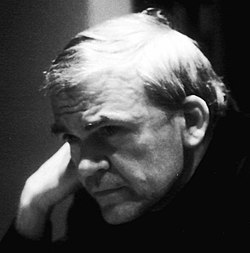
"There was not a scrap of tangible evidence to show that he had spent the most wonderful year of his life with her.Which only increased his desire to remain faithful to her."
Standard
Customized

Exlpore more Memory quotes

"Memory is a few lines snipped from a larger story that we are privileged to tuck away between the pages of our minds."
"Only later, much later, too late, did I understand how small she (Mrs Winterson) was to herself. The baby nobody picked up. The uncarried child still inside her."
"Scent is the strongest tie to memory."
"The pleasure of remembering had been taken from me, because there was no longer anyone to remember with. It felt like losing your co-rememberer meant losing the memory itself, as if the things we'd done were less real and important than they had been hours before."
Explore more quotes by Milan Kundera
"The girl was grateful to the young man for every bit of flattery; she wanted to linger for a moment in its warmth and so she said, 'You're very good at lying.''Do I look like a liar?''You look like you enjoy lying to women,' said the girl, and into her words there crept unawares a touch of the old anxiety, because she really did believe that her young man enjoyed lying to women."
"No peace is possible between the novelist and the agélaste [those who do not laugh]. Never having heard God's laughter, the agélastes are convinced that the truth is obvious, that all men necessarily think the same thing, and that they themselves are exactly what they think they are. But it is precisely in losing the certainty of truth and the unanimous agreement of others that man becomes an individual. The novel is the imaginary paradise of individuals. It is the territory where no one possesses the truth — neither Anna nor Karenin — but where everyone has the right to be understood, both Anna and Karenin."
"All the same, a seductive voice from afar kept breaking into her conjugal peace: it was the voice of solitude. She closed her eyes and listened to the sound of a hunting horn coming from the depths of distant forests. There were paths in those forests."
"A meadow is nothing but a field of suffering. Every second some creature is dying in the gorgeous green expanse, ants eat wriggling earthworms, birds lurk in the sky to pounce on a weasel or a mouse. You see that black cat, standing motionless in the grass. She is only waiting for an opportunity to kill. I detest all that naA ve respect for nature. Do you think that a doe in the jaws of a tiger feels less horror than you? People thought up the idea that animals don't have the same capability for suffering as human, because otherwise they couldn't bear the knowledge that they are surrounded by a world of nature that is horror and nothing but horror."
"Today I know this: when it comes time to take stock, the most painful wound is that of broken friendships; and there is nothing more foolish than to sacrifice a friendship to politics."
"The Greek word for "return" is nostos. Algos means "suffering." So nostalgia is the suffering caused by an unappeased yearning to return."
"Large countries' patriotism is different: they are buoyed by their glory, their importance, their universal mission. The Czechs loved their country not because it was glorious but because it was unknown; not because it was big but because it was small and in constant danger. Their patriotism was an enormous compassion for their country."
"The uniform is that which we do not choose, that which is assigned to us; it is the certitude of the universal against the precariousness of the individual. When the values that were once so solid come under challenge and withdraw, heads bowed, he who cannot live without them (without fidelity, family, country, discipline, without love) buttons himself up in the universality of his uniform as if that uniform were the last shred of transcendence that could protect him against the cold of a future in which there will be nothing left to respect."
"There is nothing heavier than compassion. Not even one's own pain weighs so heavy as the pain one feels for someone, for someone, pain intensified by the imagination and prolonged by a hundred echos."
bottom of page