top of page
.png)
Quotes by Economist


"Mankind's problems can no longer be solved by national governments. What is needed is world government."


19
"Through challenge and difficulty, we learn to see life differently than before."
19

"The most important thing for small businesses is getting the economy back on its feet. That - the key driver of small business activity is demand for their product, and that is what we are trying to do, getting the economy back on its feet. That's far more important than other factors."
19

"It is illogical to say, as many etatists do, that liberalism is hostile to or hates the state, because it is opposed to the transfer of the ownership of railroads or cotton mills to the state. If a man says that sulphuric acid does not make a good hand lotion, he is not expressing hostility to sulphuric acid as such; he is simply giving his opinion concerning the limitations of its use."
18
"Money is not indefinitely divisible. Even with the assistance of money-substitutes for expressing fractional sums that for technical reasons cannot conveniently be expressed in the actual monetary material (a method that has been brought to perfection in the modern system of token coinage), it seems entirely impossible to provide commerce with every desired fraction of the monetary unit."
18
"What is called storing money is a way of using wealth. The uncertainty of the future makes it seem advisable to hold a larger or smaller part of one's possessions in a form that will facilitate a change from one way of using wealth to another, or transition from the ownership of one good to that of another, in order to preserve the opportunity of being able without difficulty to satisfy urgent demands that may possibly arise in the future for goods that will have to be obtained by way of exchange."
18
"Instead of trying to hide yourself from the world, make it your signature trait. Make what most people think to be the worst of you become something your proud of."
18
"The sense of your own experience will grow along with your confidence."
18
"For hundreds, even thousands, of years, people completely failed to see that variations in the objective exchange-value of money could be induced by monetary factors. They tried to explain all variations of prices exclusively from the commodity side."
18
"The aim was to regulate the value of money by increasing or diminishing the quantity of it. The effects of these measures appeared to provide an inductive proof of the correctness of this superficial version of the Quantity Theory, and incidentally concealed the weaknesses of its logic."
18
"When, thirty-five years ago, I tried to give a summary of the ideas and principles of that social philosophy that was once known under the name of liberalism, I did not indulge in the vain hope that my account would prevent the impending catastrophes to which the policies adopted by the European nations were manifestly leading. All I wanted to achieve was to offer to the small minority of thoughtful people an opportunity to learn something about the aims of classical liberalism and its achievements and thus to pave the way for a resurrection of the spirit of freedom after the coming debacle."
18
"All what you have to do is to accept, to be bold and open to the world and the world will open it's gates for you."
18
"But when States did debase the coinage, it was always from purely fiscal motives. The government needed financial help, that was all; it was not concerned with questions of currency policy."
18
"Manufacturing and commercial monopolies owe their origin not to a tendency imminent in a capitalist economy but to governmental interventionist policy directed against free trade and laissez faire."
18
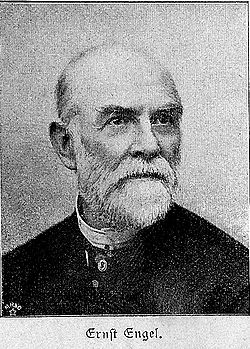
"The poorer is a family, the greater is the proportion of the total outgo which must be used for food... The proportion of the outgo used for food, other things being equal, is the best measure of the material standard of living of a population."
18

"Together, life can bloom into something unimaginable!"
18

"Few people at the beginning of the nineteenth century needed an adman to tell them what they wanted."
17
bottom of page