top of page
.png)
Economics Quotes


"It is not the fault of the entrepreneurs that the consumers,the people, the common man,prefer liquor to Bibles and detective stories to serious books, and that governments prefer guns to butter. The entrepreneur does not make greater profits in selling bad things than in selling good things. His profits are the greater the better he succeeds in providing the consumers with those things they ask for most intensely."


59

"That is why I decline to recognize the meremultimillionaire, the man of mere wealth, as an asset of value to any country;and especially as not an asset to my own country. If he has earned or uses hiswealth in a way that makes him a real benefit, of real use- and such is often thecase- why, then he does become an asset of real worth."
56
"The social function of economic science consists precisely in developing soundeconomic theories and in exploding the fallacies of vicious reasoning. In the pursuit ofthis task the economist incurs the deadly enmity of all mountebanks and charlatanswhose shortcuts to an earthly paradise he debunks. The less these quacks are able toadvance plausible objections to an economist's argument, the more furiously do theyinsult them."
56
"No individual and no nation need fear at any time to have less money than it needs. Government measures designed to regulate the international movement of money in order to ensure that the community shall have the amount it needs, are just as unnecessary and inappropriate as, say, intervention to ensure a sufficiency or corn or iron or the like. This argument dealt the Mercantilist Theory its death-blow."
55
"If we disregard the exchange of present goods for future goods, and restrict our considerations for the time being to those cases in which the only exchanges are those between present goods and present money, we shall at once observe a fundamental difference between the effects of an isolated variation in a single commodity-price, emanating solely from the commodity side, and the effects of a variation in the exchange-ratio between money and other economic goods in general, emanating from the monetary side."
54
"The first value of money was clearly the value which the goods used as money possessed (thanks to their suitability for satisfying human wants in other ways) at the moment when they were first used as common media of exchange."
53
"My first undertaking in the way of scientific experiment was in the field of economics and psychology."
53
"Nevertheless statesmen are still greatly exercised by the problem of the international distribution of money. For hundreds of years, the Midas Theory, systematized by Mercantilism, has been the rule followed by governments in taking measures of commercial policy. In spite of Hume, Smith, and Ricardo, it still dominates men's minds more than would be expected. Phoenix-like, it rises again and again from its own ashes."
50
"If all the exchange-ratios of the past were erased from human memory, the process of market-price-determination might certainly become more difficult, because everybody would have to construct a new scale of valuations for himself; but it would not become impossible. In fact, people the whole world over are engaged daily and hourly in the operation from which all prices result: the decision as to the relative significance enjoyed by specific quantities of goods as conditions for the satisfaction of wants."
49
"It is not in the power of governments to increase the supply of one commodity without a corresponding restriction in the supply of other commodities more urgently demanded by consumers. The authority may reduce the price of one commodity only by raising the prices of others."
49
"If the possessor of a units of money receives h additional units, then it is not at all true to say that he will value the total stock a + h exactly as highly as he had previously valued the stock a alone. Because he now has disposal over a larger stock, he will now value each unit less than he did before; but how much less will depend upon a whole series of individual circumstances, upon subjective valuations that will be different for each individual."
48
"Economic history shows us a continual increase in the demand for money. The characteristic feature of the development of the demand for money is its intensification; the growth of division of labour and consequently of exchange transactions, which have constantly become more and more indirect and dependent on the use of money, have helped to bring this about, as well as the increase of population and prosperity."
48

"Money said, "I warn you that ignorance thrives on hysteria."
48
"For when the Law of Price declares that a good actually commands a particular price, and explains why it does so, it of course implies that the good is able to command this price, and explains why it is able to do so. The Law of Price comprehends the Law of Exchange-Value."
48


"Economic power is exercised by means of a positive, by offering men a reward, an incentive, a payment, a value; political power is exercised by means of a negative, by the threat of punishment, injury, imprisonment, destruction. The businessman's tool is values; the bureaucrat's tool is fear."
47
"When people encounter the free market and they recoil or react negatively to it, they're merely confessing that voluntaryism, trade and negotiation are foreign and threatening to them, which tells you everything about how tragically they were raised."
47
"By 'the objective exchange-value of money' we are accordingly to understand the possibility of obtaining a certain quantity of other economic goods in exchange for a given quantity of money, and by 'the price of money' this actual quantity of other goods."
47

"For the etatist, money is a creature of the State, and the esteem in which money is held is the economic expression of the respect or prestige enjoyed by the State. The more powerful and the richer the State, the better its money. Thus, during the War, it was asserted that 'the monetary standard of the victors' would ultimately be the best money. Yet victory and defeat on the battlefield can exercise only an indirect influence on the value of money."
46
"She'd been fed anti-consumerist bullshit by her parents but didn't understand simple economics."
46

"Any capitalist . . . who had made sixty thousand pounds out of sixpence, always professed to wonder why the sixty thousand nearest Hands didn't each make sixty thousand pounds out of sixpence, and more or less reproached them every one for not accomplishing the little feat. What I did you can do. Why don't you go and do it?"
45
"Where the currency depreciation is a result of government inflation carried out by the issue of notes, it is possible to avert its disastrous effect on economic calculation by conducting all bookkeeping in a stable money instead. But so far as the depreciation is a depreciation of gold, the world money, there is no such easy way out."
45

"The marginal utility of money to any individual, i.e., the marginal utility derivable from the goods that can be obtained with the given quantity of money or that must be surrendered for the required money, presupposes a certain exchange-value of the money; so the latter cannot be derived from the former. 1 Those who have realized the significance of historically-transmitted values in the determination of the objective exchange-value of money will not find great difficulty in escaping from this apparently circular argument."
43
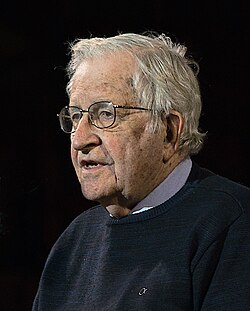
"The times are too difficult and the crisis too severe to indulge in schadenfreude. Looking at it in perspective, the fact that there would be a financial crisis was perfectly predictable: its general nature, if not its magnitude. Markets are always inefficient."
42
"The social displacements that occur as consequences of variations in the value of money result solely from the circumstance that this assumption never holds good. In the chapter dealing with the determinants of the objective exchange-value of money it was shown that variations in the value of money always start from a given point and gradually spread out from this point through the whole community."
41

"In reality, the laborer belongs to capital before he has sold himself to capital. His economic bondage is both brought about and concealed by the periodic sale of himself, by his change of masters, and by the oscillation in the market price of labor power. Capitalist production, therefore, under its aspect of a continuous connected process, of a process of reproduction, produces not only commodities, not only surplus value, but it also produces and reproduces the capitalist relation; on the one side the capitalist, on the other the wage-laborer."
41
"Under bilateral competition, market-price is determined within a range whose upper limit is set by the valuations of the lowest bidder among the actual buyers and the highest offerer among the excluded would-be sellers, and whose lower limit is set by the valuations of the lowest offerer among the actual sellers and the highest bidder among the excluded would-be buyers."
40
"A use-value, or useful article, therefore, has value only because abstract human labour is objectified or materialized in it. How, then, is the magnitude of this value to be measured? By means of the quantity of the "value-forming substance", the labour, contained in the article. This quantity is measured by its duration, and the labour-time is itself measured on the particular scale of hours, days etc."
40
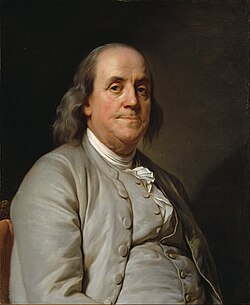
"There seem to be but three ways for a nation to acquire wealth. The first is by war...This is robbery. The second by commerce, which is generally cheating. The third by agriculture, the only honest way, wherein man receives a real increase of the seed thrown into the ground, in a kind of continual miracle, wrought by the hand of God in his favor, as a reward for his innocent life and his virtuous industry."
39

"Labor is prior to and independent of capital. Capital is only the fruit of labor and could never have existed if labor had not first existed. Labor is the superior of capital and deserves much the higher consideration."
38
"To recapitulate: the exchange-ratio subsisting between commodities and money is everywhere the same. But men and their wants are not everywhere the same, and neither are commodities. Only if these distinctions are ignored is it possible to speak of local differences in the purchasing power of money or to say that living is dearer in one place than in another."
37
"Rejecting predatory capitalism in America is a way to respect and honor America."
36
"Basic economic theory. People behave differently based on how much they think something's worth. Because everyone got their chips for free, people made huge bets on every hand-no matter what they were holding. People who play with everything on the line-for real-don't act like that."
35
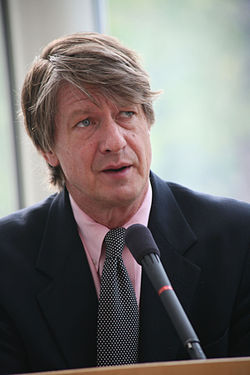
"We all know how 'modern democracies take loaves from the wealthy.' It's the slipups in the 'pass them out to the poor' department that inspire a study of Economics."
35
"In the case of money, subjective use-value and subjective exchange-value coincide. Both are derived from objective exchange-value, for money has no utility other than that arising from the possibility of obtaining other economic goods in exchange for it."
34
"The desire for an increase of wealth can be satisfied through exchange, which is the only method possible in a capitalist economy, or by violence and petition as in a militarist society, where the strong acquire by force, the weak by petitioning."
33
"Machinery which is not used is not capital."
33
"The probable accumulation of the surpluses of revenue beyond what can be applied to the payment of the public debt... merits the consideration of Congress. Shall it lie unproductive in the public vaults?...Or shall it rather be appropriated to the improvements of roads, canals, rivers, education, and other great foundations of prosperity and union."
32
bottom of page