top of page

Quotes by English Authors


"I am not afraid of death, but would not want to die in some obscure or pointless way."
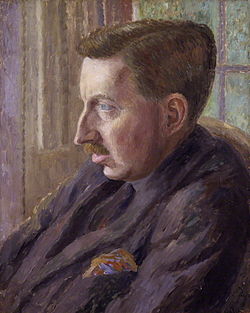
"A poem is true if it hangs together. Information points to something else. A poem points to nothing but itself."
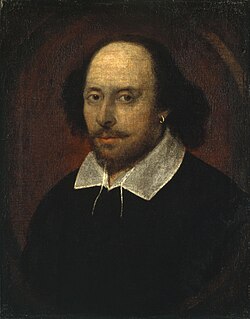
"I love thee I love but thee With a love that shall not die Till the sun grows cold And the stars grow old."
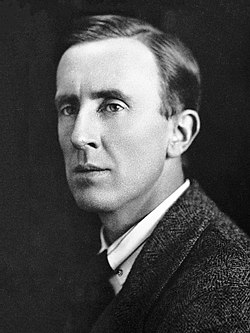
"Frodo! Mr. Frodo, my dear!' cried Sam, tears almost blinding him. 'It's Sam, I've come!' He half lifted his master and hugged him to his breast."

"Pride perceiving humility honorable, often borrows her cloak."
"But to go to school in a summer morn,O! It drives all joy away;Under a cruel eye outworn,The little ones spend the dayIn sighing and dismay."
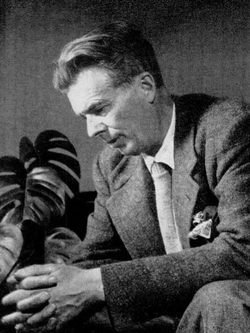
"That men do not learn very much from the lessons of history is the most important of all the lessons of history."
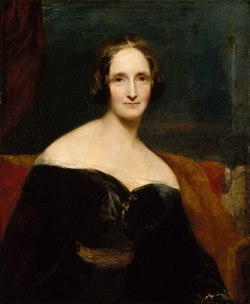
"Sometimes I could cope with the sullen despair that overwhelmed me: but sometimes the whirlwind passions of my soul drove me to seek, by bodily exercise and by change of place, some relief from my intolerable sensations. It was during an access of this kind that I suddenly left my home, and bending my steps towards the near Alpine valleys, sought in the magnificence, the eternity of such scenes, to forget myself and my ephemeral, because human, sorrows."

"He [Wordsworth] invited his readers to abandon their usual perspective and to consider for a time how the world might look through other eyes, to shuttle between the human and the natural perspective. Why might this be interesting, or even inspiring? Perhaps because unhappiness can stem from only having one perspective to play with."

"I often wonder why the whole world is so prone to generalise. Generalisations are seldom if ever true and are usually utterly inaccurate."

"The imagination doesn't crop annually like a reliable fruit tree. The writer has to gather whatever's there: sometimes too much, sometimes too little, sometimes nothing at all. And in the years of glut there is always a slatted wooden tray in some cool, dark attic, which the writer nervously visits from time to time; and yes, oh dear, while he's been hard at work downstairs, up in the attic there are puckering skins, warning spots, a sudden brown collapse and the sprouting of snowflakes. What can he do about it?"

"It is not funny that anything else should fall down only that a man should fall down. Why do we laugh? Because it is a gravely religious matter: it is the Fall of Man. Only man can be absurd: for only man can be dignified."

"Equality in possessions must be the last result of the utmost refinements of civilization; it is one of the conditions of that system of society towards which, with whatever hope of ultimate success, it is our duty to tend."
"I understand a fury in your wordsBut not your words."

"Before, they had been beasts, their instincts fitly adapted to their surroundings, and happy as living things may be. Now they stumbled in the shackles of humanity, lived in a fear that never died, fretted by a law they could not understand; their mock-human existence, begun in an agony, was one long internal struggle, one long dread of Moreau- and for what? It was the wantonness of it that stirred me."
"And so, standing before the aforesaid officiator, the two swore that at every other time of their lives till death took them, they would assuredly believe, feel, and desire precisely as they had believed, felt, and desired during the few preceding weeks. What was as remarkable as the undertaking itself was the fact that nobody seemed at all surprised at what they swore."

"I left a pause. 'You sound like a certain kind of surgeon. A lot more interested in the operation than the patient.' 'I should not like to be in the hands of a surgeon who did not take that view."

"We started to collect more and more of these words and concepts, and began to realize what an arbitrarily selective work the Oxford English Dictionary is. It simply doesn't recognize huge wodges of human experience. Like, for instance, standing in the kitchen wondering what you went in there for. Everybody does it, but because there isn't-or wasn't-a word for it, everyone thinks it's something that only they do and that they are therefore more stupid than other people. It is reassuring to realize that everybody is as stupid as you are and that all we are doing when we are standing in the kitchen wondering what we came in here for is "woking."
"Is there anything more plausible than a second hand?"
"My name is growing all the time, and I've lived a very long, long time; so my name is like a story. Real names tell you the story of the things they belong to in my language, in the Old Entish as you might say. It is a lovely language, but it takes a very long time to say anything in it, because we do not say anything in it, unless it is worth taking a long time to say, and to listen to."
"There was a hell for blasphemers. There was a hell for disputers of rightful authority. There were a number of hells for liars. There was probably a hell for little boys who wished their grandmothers were dead. There were more than enough hells to go around."
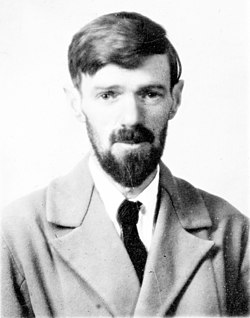
"The world is supposed to be full of possibilities, but they narrow down to pretty few in most personal experience. There's lots of good fish in the sea... maybe... but the vast masses seem to be mackerel or herring, and if you're not mackerel or herring yourself, you are likely to find very few good fish in the sea."
"How much larger your life would be if your self could become smaller in it; if you could really look at other men with common curiosity and pleasure; if you could see them walking as they are in their sunny sefishness and their virile indifference! You would begin to be interested in them, because they are not interested in you. You would break out of this tiny and tawdry theatre in which your own little plot is always played, and you would find yourself under a freer sky, in a street full of splendid strangers."

"A bachelor's life is a fine breakfast, a flat lunch, and a miserable dinner."
"A man has no religion who has not slowly and painfully gathered one together, adding to it, shaping it; and one's religion is never complete and final, it seems, but must always be undergoing modification."


"It is known, to the force of a single pound weight, what the engine will do; but, not all the calculators of the National Debt can tell me the capacity for good or evil, for love or hatred, for patriotism or discontent, for the decomposition of virtue into vice, or the reverse."
"It is reasonable to have perfection in our eye that we may always advance toward it, though we know it can never be reached."

"From the old wood came an ancient melancholy, somehow soothing to her, better than the harsh insentience of the outer world. She liked the inwardness of the remnant of forest, the unspeaking reticence of the old trees. They seemed a very power of silence, and yet a vital presence. They, too, were waiting: obstinately, stoically waiting, and giving off a potency of silence."
"Of course the Man was wild too. He was dreadfully wild. He didn't even begin to be tame till he met the Woman, and she told him that she did not like living in his wild ways. She picked out a nice dry Cave, instead of a heap of wet leaves, to lie down in; and she strewed clean sand on the floor; and she lit a nice fire of wood at the back of the Cave; and she hung a dried wild-horse skin, tail down, across the opening of the Cave; and she said, 'Wipe your feet, dear, when you come in, and now we'll keep house."
"Recklessness is almost a man's revenge on his woman."
"When my country, into which I had just set my foot, was set on fire about my ears, it was time to stir. It was time for every man to stir."
"A man treats his own faults as original sin and supposes them scattered everywhere with the seed of Adam. He supposes that men have then added their own foreign vices to the solid and simple foundation of his own private vices. It would astound him to realize that they have actually, by their strange erratic path, avoided his vices as well as his virtues."
"Literary criticism can be no more than a reasoned account of the feeling produced upon the critic by the book he is criticizing. Criticism can never be a science: it is, in the first place, much too personal, and in the second, it is concerned with values that science ignores. The touchstone is emotion, not reason. We judge a work of art by its effect on our sincere and vital emotion, and nothing else. All the critical twiddle-twaddle about style and form, all this pseudoscientific classifying and analysing of books in an imitation-botanical fashion, is mere impertinence and mostly dull jargon."
bottom of page