top of page
.png)
Quotes by Scientist


"Any technological advance can be dangerous. Fire was dangerous from the start, and so (even more so) was speech - and both are still dangerous to this day - but human beings would not be human without them."


15
"And [Asimov]'ll sign anything, hardbacks, softbacks, other people's books, scraps of paper. Inevitably someone handed him a blank check on the occasion when I was there, and he signed that without as much as a waver to his smile - except that he signed: 'Harlan Ellison."
15

"My business is to teach my aspirations to confirm themselves to fact, not to try and make facts harmonize with my aspirations."
15
"The medieval university looked backwards; it professed to be a storehouse of old knowledge. The modern university looks forward, and is a factory of new knowledge."
15
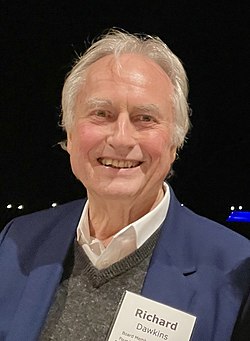
"We are a unique ape. We have language. Other animals have systems of communication that fall far short of that. They don't have the same ability to communicate complicated conditionals and what-ifs and talk about things that are not present."
15
"The only way to heal is to help others heal, and the only way to find love and keep love in our lives is to give it to others."
15
"There was no doubt about it: the City was the culmination of man's mastery over the environment. Not space travel, not the fifty colonized worlds that were now so haughtily independent, but the City."
15
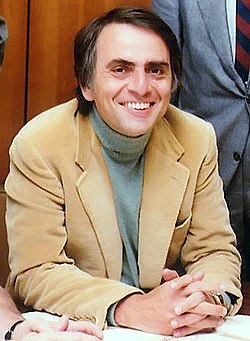
"Our television signals leave this planet and go out into space...the signals spread out from the earth in spherical waves, a little like ripples in a pond. They travel at the speed of light, 186,000 miles a second, and essentially go on forever. The better some other civilizations receivers are, the farther away they could be and still pick up our tv signals. Even we could detect a strong tv transmission from a planet going around the nearest star.' President: 'You mean everything? You mean to say all that crap on television - the car crashes, wrestling, the porno channels, the evening news?"
15

"During my stay in the United States, I witnessed the spontaneous formation of committees in a country for the pursuit and prosecution of a man who had committed a great crime. In Europe, a criminal is an unhappy man who is struggling for his life against the agents of power, whilst the people are merely a spectator of the conflict: in America, he is looked upon as an enemy of the human race, and the whole of mankind is against him."
15
"Every nation that has ended in tyranny has come to that end by way of good order. It certainly does not follow from this that peoples should scorn public peace, but neither should they be satisfied with that and nothing more. A nation that asks nothing of government but the maintenance of order is already a slave in the depths of its heart; it is a slave of its well-being, ready for the man who will put it in chains."
15
"I think the written word is probably the best medium of communication because you have time to reflect, you have time to choose your words, to get your sentences exactly right. Whereas when you're being interviewed, say, you have to talk on the fly, you have to improvise, you can change sentences around, and they're not exactly right."
15
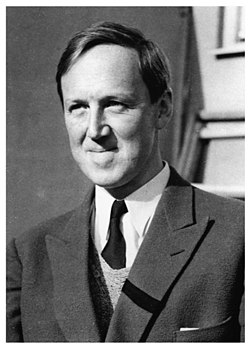
"How is it that hardly any major religion has looked at science and concluded, "This is better than we thought! The Universe is much bigger than our prophets said, grander, more subtle, more elegant? Instead they say, "No, no, no! My god is a little god, and I want him to stay that way. A religion, old or new, that stressed the magnificence of the Universe as revealed by modern science might be able to draw forth reserves of reverence and awe hardly tapped by the conventional faiths."
15
"The first step in making rabbit stew is catching the rabbit."
15
"Science is based on experiment, on a willingness to challenge old dogma, on an openness to see the universe as it really is. Accordingly, science sometimes requires courage - at the very least the courage to question the conventional wisdom."
15
"A child is not a Christian child, not a Muslim child, but a child of Christian parents or a child of Muslim parents. This latter nomenclature, by the way, would be an excellent piece of consciousness-raising for the children themselves. A child who is told she is a 'child of Muslim parents' will immediately realize that religion is something for her to choose -or reject- when she becomes old enough to do so."
15
"How any government could promote the Vardy academies in the North-East of England is absolutely beyond me. Tony Blair defends them on grounds of diversity, but it should be unthinkable in the 21st century to have a school whose head of science believes the world is less than 10,000 years old."
15
"I'm frequently asked, "Do you believe there's extraterrestrial intelligence?" I give the standard arguments- there are a lot of places out there, the molecules of life are everywhere, I use the word billions, and so on. Then I say it would be astonishing to me if there weren't extraterrestrial intelligence, but of course there is as yet no compelling evidence for it.Often, I'm asked next, "What do you really think?"I say, "I just told you what I really think.""Yes, but what's your gut feeling?"But I try not to think with my gut. If I'm serious about understanding the world, thinking with anything besides my brain, as tempting as that might be, is likely to get me into trouble. Really, it's okay to reserve judgment until the evidence is in."
15
"I'm pretty sure there is some genetic component towards intelligence."
15
"It's the writing that teaches you."
15
"There is something stunningly narrow about how the Anthropic Principle is phrased. Yes, only certain laws and constants of nature are consistent with our kind of life. But essentially the same laws and constants are required to make a rock. So why not talk about a Universe designed so rocks could one day come to be, and strong and weak Lithic Principles? If stones could philosophize, I imagine Lithic Principles would be at the intellectual frontiers."
15
"Knowledge is the key to the development of civilization."
15
It is a tedious cliché (and, unlike many clichés, it isn't even true) that science concerns itself with how questions, but only theology is equipped to answer why questions. What on Earth is a why question? Not every English sentence beginning with the word 'why' is a legitimate question. Why are unicorns hollow? Some questions simply do not deserve an answer. What is the colour of abstraction? What is the smell of hope? The fact that a question can be phrased in a grammatically correct English sentence doesn't make it meaningful, or entitle it to our serious attention. Nor, even if the question is a real one, does the fact that science cannot answer it imply that religion can.
15
"The form that an animal's subjective experience takes will be a property of the internal computer model. That model will be designed, in evolution, for its suitability for useful internal representation, irrespective of the physical stimuli that come to it from outside. Bats and we need the same kind of internal model for representing the position of objects in three-dimensional space. The fact that bats construct their internal model with the aid of echoes, while we construct ours with the aid of light, is irrelevant."
15
"If you're an atheist, you know, you believe, this is the only life you're going to get. It's a precious life. It's a beautiful life. Its something we should live to the full, to the end of our days. Where if you're religious and you believe in another life somehow, that means you don't live this life to the full because you think you're going to get another one. That's an awfully negative way to live a life. Being a atheist frees you up to live this life properly, happily and fully."
15

"The golden proportion is a scale of proportions which makes the bad difficult to produce and the good easy."
15
"If love is what we are, then every human interaction is an opportunity to express ourselves."
15
"I believe that only scientists can understand the universe. It is not so much that I have confidence in scientists being right, but that I have so much in nonscientists being wrong."
15
"It occurred to me by intuition, and music was the driving force behind that intuition. My discovery was the result of musical perception."
15
"Open-mindedness is a precondition for generating new ideas, but focusing on the problem is almost equally important."
15
"We wanted to be accepted by our fellows, especially the influential natural leaders among us; and the ethos of my peers was " until my last year at Oundle " anti-intellectual. You had to pretend to be working less hard than you actually were. Native ability was respected; hard work was not. It was the same on the sports field. Sportsmen were admired more than scholars in any case. But if you could achieve sporting brilliance without training, so much the better. Why is native ability more admired than hard graft? Shouldn't it be the other way around?"
15
"Discretion can be abused, and rulebooks are important safeguards against that. But the balance has shifted too far in the direction of an obsessive reverence for rules."
15
"Amongst democratic nations men easily attain a certain equality of conditions: they can never attain the equality they desire. It perpetually retires from before them, yet without hiding itself from their sight, and in retiring draws them on. At every moment they think they are about to grasp it; it escapes at every moment from their hold. They are near enough to see its charms, but too far off to enjoy them; and before they have fully tasted its delights they die."
15
"When the taste for physical gratifications among them has grown more rapidly than their education . . . the time will come when men are carried away and lose all self-restraint . . . . It is not necessary to do violence to such a people in order to strip them of the rights they enjoy, they themselves willingly loosen their hold. . . . they neglect their chief business which is to remain their own masters."
15
bottom of page