top of page
.png)
Philosophy Quotes


"I trust that when people meet, we meet for a transcendent reason, and that the challenges we face in life are always lessons that serve our soul's growth."


50

"It is as if there were in the human consciousness a sense of reality, a feeling of objective presence, a perception of what we may call 'something there,' more deep and more general than any of the special and particular 'senses' by which the current psychology supposes existent realities to be originally revealed. If this were so, we might suppose the senses to waken our attitudes and conduct as they so habitually do, by first exciting this sense of reality; but anything else, any idea, for example, that might similarly excite it, would have that same prerogative of appearing real which objects of sense normally possess."
50
"People are like the waves, all similar, none the same."
50

"The most profound joy has more of gravity than of gaiety in it."
50

"Presumptuous Man! the reason wouldst thou find,Why form'd so weak, so little, and so blind?First, if thou canst, the harder reason guess,Why form'd no weaker, blinder, and no less!Ask of thy mother earth, why oaks are madeTaller or stronger than the weeds they shade?Or ask of yonder argent fields above,Why Jove's Satellites are less than Jove?"
50

"To be thoroughly conversant with Man's heart, is to take our final lesson in the iron-clasped volume of Despair."
50
"What Reason weaves, by Passion is undone."
50
"Random thought fills the streambed, cascading with care and spilling over the flood plain until bifurcation forces it to arc and fork into a single, determined stream."
50
"We deceive ourselves in thinking that death only follows life whereas it both goes before and will follow after it for where is the difference in not beginning or ceasing to exist the effect of both is not to be."
50
"So you must not think a man has lived long because he has white hair and wrinkles: he has not lived long, just existed long. For suppose you should think that a man had had a long voyage who had been caught in a raging storm as he left harbour, and carried hither and thither and driven round and round in a circle by the rage opposing winds. He did not have a long voyage, just a long tossing about."
50
"Tolstoy said, happiness is an allegory, unhappiness a story - then what does that make us?..."
50
"Why, if it was an illusion, not praise the catastrophe, whatever it was, that destroyed illusion and put truth in it's place?"
50
"The one who did not understood that his time's root supports his life tree was born in vain."
50

"The general root of superstition is that men observe when things hit and not when they miss and commit to memory the one and forget and pass over the other."
50
"Surrender to fate and you will never be fully contented."
50
"Ethics is the triumph of freedom over facticity."
50
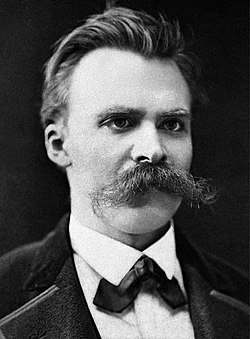
"What is it: is man only a blunder of God or God only a blunder of man?"
50

"Some of the most healing words in any language are, “I'm sorry. Will you forgive me?” How much more we need that confession to our Father in heaven."
50
"I don't believe in "original sin." I don't believe in "guilt." I don't believe in villains or heroes - only right or wrong ways that individuals have taken, not by choice but by necessity or by certain still-uncomprehended influences in themselves, their circumstances, and their antecedents. This is so simple I'm ashamed to say it, but I'm sure it's true. In fact, I would bet my life on it! And that's why I don't understand why our propaganda machines are always trying to teach us, to persuade us, to hate and fear other people on the same little world that we live in."
50
"When we say that Philosophy tries to clear up the meanings of concepts we do not mean that it is simply concerned to substitute some long phrase for some familiar word."
49

"From my own limited experience, I have found that the greatest degree of inner tranquility comes from the development of love and compassion. The more we care for the happiness of others, the greater our own sense of well-being becomes. Cultivating a close, warmhearted feeling for others automatically puts the mind at ease. This helps remove whatever fears or insecurities we may have and gives us the strength to cope with any obstacles we encounter. It is the ultimate source of success in life."
49
"The greatest tragedy with a sceptic is that he cannot consign himself to truth, however he may see it."
49

"Don't feel guilty for a crime you have not committed, commit it and be guilt free."
49

"Every philosophy is tinged with the coloring of some secret imaginative background, which never emerges explicitly into its train of reasoning."
49
"The more time you spend thinking about yourself, the more suffering you will experience."
49

"And this was perhaps the first time in my life that death occurred to me as a reality. I thought of the people before me who had looked down at the river and gone to sleep beneath it. I wondered about them. I wondered how they had done it-it, the physical act. I had thought of suicide when I was much younger, as, possibly, we all have, but then it would have been for revenge, it would have been my way of informing the world how awfully it had made me suffer. But the silence of the evening, as I wandered home, had nothing to do with that storm, that far off boy. I simply wondered about the dead because their days had ended and I did not know how I would get through mine."
49
"The universe is continuously creating, maintaining and destroying to create, maintain and destroy!!!! Be with the flow, know what you have to continuously create, maintain and then destroy!!!!"
49
"Every beginning has an end and every end has a new beginning, don't worry, broken soul, life will one day come to an end."
49
"It is asking a great deal of a man, who has learnt to regulate his everyday affairs in accordance with the rules of experience and with due regard to reality, that he should entrust precisely what affects him most nearly to the care of an authority which claims as its prerogative freedom from all the rules of rational thought."
49

"When a solipsist dies ... everything goes with him."
49

"Farewell Hope, and with Hope farewell Fear."
49

"As we drove, I imagined we were standing still and the world was coming toward us."
49

"Pure logic is the ruin of the spirit."
49

"Knowledge without justice ought to be called cunning rather than wisdom."
49

"A human being is a part of the whole, called by us "Universe", a part limited in time and space."
49

"Some things exist whether you believe in them or not."
49

"Glib tongues frill up their hash of knowledgefor mankind in polished speechesthat are no more than vaporous windsrustling the fallen leaves in autumn."
49
"Never to suffer would never to have been blessed."
49

"One of the realities we're all called to go through is to move from repulsion to compassion and from compassion to wonderment."
49
"No, it's human, Curran said. That's the problem. People, especially unhappy people, want a cause. They want something to belong to, to be a part of something great and bigger, and to be led. It's easy to be a cog in a machine: you don't have to think, you have no responsibility. You're just following orders. Doing as your told."
49
"Can anything be imagined so ridiculous, that this miserable and wretched creature [man], who is not so much as master of himself, but subject to the injuries of all things, should call himself master and emperor of the world, of which he has not power to know the least part, much less to command the whole?"
49

"If nothing else, there's comfort in recognising that no matter how much we fail and sin, death will limit our suffering."
49

"The philosopher's school, ye men, is a surgery: you ought not to go out of it with pleasure, but with pain. For you are not in sound health when you enter."
49
"Strictly speaking, nothing that's said is true. (Though one can be the truth, one can't ever say it.)"
49
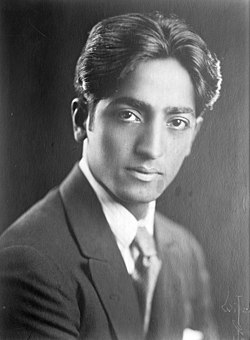
"The primary cause of disorder in ourselves is the seeking of reality promised by another."
49
"It was a good answer that was made by one who when they showed him hanging in a temple a picture of those who had paid their vows as having escaped shipwreck, and would have him say whether he did not now acknowledge the power of the gods, - 'Aye,' asked he again, 'but where are they painted that were drowned after their vows?' And such is the way of all superstition, whether in astrology, dreams, omens, divine judgments, or the like; wherein men, having a delight in such vanities, mark the events where they are fulfilled, but where they fail, though this happens much oftener, neglect and pass them by."
49

"There is faith and faith. One form of faith is actual practice-the rituals and so on-the other form of faith involves actually believing in it."
49
"Try to study yourself and what is inside you, as the entire world lies in you."
49
"Between the approximation of the idea and the precision of reality there was a small gap of the unimaginable, and it was this hiatus that gave him no rest."
49
"Our second danger is to associate tradition with the immovable; to think of it as something hostile to all change; to aim to return to some previous condition which we imagine as having been capable of preservation in perpetuity, instead of aiming to stimulate the life which produced that condition in its time. . . . a tradition without intelligence is not worth having . . ."
49
bottom of page