top of page

Literature Quotes



"What was he? Storyteller and secretary and doer of odd jobs, neither Tizerkane nor delegate, just someone along for the dream."


16
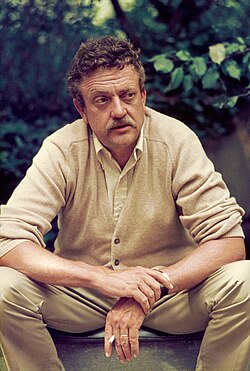
"I have been a soreheaded occupant of a file drawer labeled "science fiction" ... and I would like out, particularly since so many serious critics regularly mistake the drawer for a urinal."
16
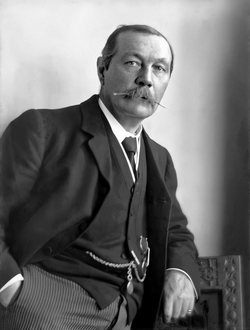
"I am an omnivorous reader with a strangely retentive memory for trifles."
16

"Doesn't the telling of something always become a story?"
16

"Several times he had to flatten himself against the shelves as a thesaurus thundered by. He waited patiently as a herd of Critters crawled past, grazing on the contents of the choicer books and leaving behind them piles of small slim volumes of literary criticism."
16

"But he'll never be fully recognised, because Scots literature these days is all about complaining and moaning and being injured in one's soul."
16
"A book is a collaboration between the one who reads and what is read and, at its best, that coming together is a love story like any other."
16
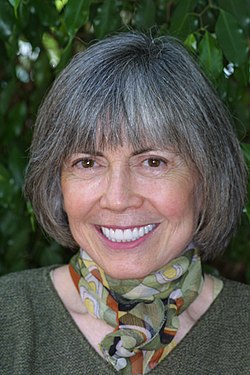
"No, but one can feel desperate at any age, don't you think? The young are eternally desperate, he said frankly. "And books, they offer hope - that a whole universe might open up from between the covers, and falling into that universe one is saved."
16

"Eventually, we come to love certain novels because we have expended so much imaginative labor on them. This is why we hang on to those novels, whose pages are creased and dog-eared."
16

"I'd write of people and places like I knew, and I'd make my characters talk everyday English; and I'd let the sun rise and set in the usual quiet way without much fuss over the fact. If I had to have villains at all, I'd give them a chance, Anne--I'd give them a chance. There are some terrible bad men the world, I suppose, but you'd have to go a long piece to find them...But most of us have got a little decency somewhere in us. Keep on writing, Anne."
16
"I believe books should be like a prime rib steak ~ good and thick."
16

"A book lives a new life every time it is read."
16

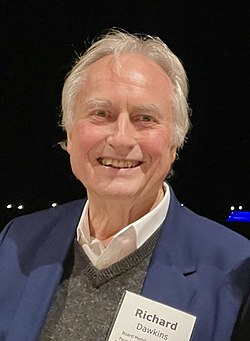
"I'm fond of science fiction. But not all science fiction. I like science fiction where there's a scientific lesson, for example - when the science fiction book changes one thing but leaves the rest of science intact and explores the consequences of that. That's actually very valuable."
16

"Ignatius B. Samson, welcome to the Cemetery of Forgotten Books."
16
"Memory takes a lot of poetic licence. It omits some details; others are exaggerated, according to the emotional value of the articles it touches, for memory is seated predominantly in the heart. The interior is therefore rather dim and poetic."
16

"And Marianne, who had the knack of finding her way in every house to the library, however it might be avoided by the family in general, soon procured herself a book."
16
"The reader is probably wondering that if Tolkien did indeed fashion two of his heroic characters from Catholic prophecies, what about the evil protagonists? Were any of them inspired by these little-known revelations concerning future times? The answer is yes, but to discover the links between the myth and the prophecies, we must venture not only into the realm of unnerving revelations, but also into the murky world of secret sects, dark plots, occult signs, bloody revolutions and conspiracy theories ~ we must probe deep into the burning Eye of Sauron."
16

"I do not mean to object to a thorough knowledge of the famous works we read. I object only to the interminable comments and bewildering criticisms that teach but one thing: there are as many opinions as there are men."
16
"The novelist is condemned to wander all his life. Homeless and blind like Oedipus he wanders until death. And so let us protect the novelist and adore him, with pity, honor, and love."
16
"And there he would lie all day long on the lawn brooding presumably over his poetry, till he reminded one of a cat watching birds, when he had found the word, and her husband said, "Poor old Augustus-he's a true poet," which was high praise from her husband."
16

"In literature the ambition of the novice is to acquire the literary language the struggle of the adept is to get rid of it."
16
"Without further ado I left the place, finding my route by the marks I had made on the way in. As I walked in the dark through the tunnels and tunnels of books, I could not help being overcome by a sense of sadness. I couldn't help thinking that if I, by pure chance, had found a whole universe in a single unknown book, buried in that endless necropolis, tens of thousands more would remain unexplored, forgotten forever. I felt myself surrounded by millions of abandoned pages, by worlds and souls without an owner sinking in an ocean of darkness, while the world that throbbed outside the library seemed to be losing its memory, day after day, unknowingly, feeling all the wiser the more it forgot."
16

"A good novel tells us the truth about its hero, but a bad novel tells us the truth about its author. It does much more than that, it tells us the truth about its readers; and, oddly enough, it tells us this all the more the more cynical and immoral be the motive of its manufacture."
16
"Every book, every volume you see here, has a soul. The soul of the person who wrote it and of those who read it and lived and dreamed with it. Every time a book changes hands, every time someone runs his eyes down its pages, its spirit grows and strengthens."
16
"Literature was not born the day when a boy crying "wolf, wolf" came running out of the Neanderthal valley with a big gray wolf at his heels; literature was born on the day when a boy came crying "wolf, wolf" and there was no wolf behind him."
16

"If books are not good company, where shall I find it?"
16

"There are a large number of people in the room, but one is unaware of them. They are in the books. At times they move among the pages, like sleepers turning over between two dreams. Ah, how good it is to be among people who are reading."
16
"Walt Whitman, he who laid end to end words never seen in each other's company before outside of a dictionary."
16
"Gently the waves would break (Lily heard them in her sleep); tenderly the light fell (it seemed to come through her eyelids). And it all looked, Mr. Carmichael thought, shutting his book, falling asleep, much as it used to look years ago."
16
"To whom it may concern: It is springtime. It is late afternoon."
16
"Lily was listening; Mrs. Ramsay was listening; they were all listening. But already bored, Lily felt that something was lacking; Mr. Bankes felt that something was lacking. Pulling her shawl round her Mrs. Ramsay felt that something was lacking. All of them bending themselves to listen thought, "Pray heaven that the inside of my mind may not be exposed," for each thought, "The others are feeling this. They are outraged and indignant with the government about the fishermen. Whereas, I feel nothing at all."
16

"If there really is such a thing as turning in one's grave, Shakespeare must get a lot of exercise."
16
"I hate to lend a book I love it never seems quite the same when it comes back to me."
16

"I cannot marry the facts of William Shakespeare to his verse: Other men had led lives in some sort of keeping with their thought, but this man is in wide contrast."
16

"A perverse nature can be stimulated by anything. Any book can be used as a pornographic instrument, even a great work of literature if the mind that so uses it is off-balance. I once found a small boy masturbating in the presence of the Victorian steel-engraving in a family Bible."
16
"Every book has a soul, the soul of the person who wrote it and the soul of those who read it and dream about it."
15

"Books, for me, are a home. Books don't make a home - they are one, in the sense that just as you do with a door, you open a book, and you go inside. Inside there is a different kind of time and space. There is warmth there too - a hearth. I sit down with a book and I am warm."
15
"Do you realize that all great literature - "Moby Dick," "Huckleberry Finn," "A Farewell to Arms," "The Scarlet Letter," "The Red Badge of Courage," "The Iliad and The Odyssey," "Crime and Punishment," the Bible, and "The Charge of the Light Brigade" - are all about what a bummer it is to be a ...human being?"
15
"Do you know why books such as this are so important? They have quality. And what does the word quality mean? To me, it means texture. This book has pores. It has features. This book can go under the microscope. You'd find life under the glass screaming past an infinite profusion. The more pores, the more truthfully recorded details of life per square inch you can get on a sheet of paper the more literary you are. That's my definition anyway. Telling detail. Fresh detail."
15
"But you love books, then, Aunt Queen was saying. I had to listen."Oh, yes, Lestat said. "Sometimes they are the only thing that keeps me alive."What a strange thing to say at your age, she laughed."No, but one can feel desperate at any age, don't you think? The young are eternally desperate, he said frankly. "And books, they offer one hope -- that a whole universe might open up from between the covers, and falling into that new universe, one is saved."
15

"There is a great deal to be said in favour of reading a novel backwards. The last page is as a rule the most interesting, and when one begins with the catastrophe or the dA©nouement one feels on pleasant terms of equality with the author. It is like going behind the scenes of a theatre. One is no longer taken in, and the hair-breadth escapes of the hero and the wild agonies of the heroine leave one absolutely unmoved. One knows the jealously guarded secret, and one can afford to smile at the quite unnecessary anxiety that the puppets of fiction always consider it their duty to display."
15
"In reading we have to allow the sunken meanings to remain sunken, suggested, not stated; lapsing and flowing into each other like reeds on the bed of a river."
15
"You talk books away," he said; "why don't you write one?" "I am too fond of reading books to care to write them, Mr. Erskine. I should like to write a novel certainly, a novel that would be as lovely as a Persian carpet and as unreal."
15

"As the hours crept by, the afternoon sunlight bleached all the books on the shelves to pale, gilded versions of themselves and warmed the paper and ink inside the covers so that the smell of unread words hung in the air."
15
"Literary criticism can be no more than a reasoned account of the feeling produced upon the critic by the book he is criticizing. Criticism can never be a science: it is, in the first place, much too personal, and in the second, it is concerned with values that science ignores. The touchstone is emotion, not reason. We judge a work of art by its effect on our sincere and vital emotion, and nothing else. All the critical twiddle-twaddle about style and form, all this pseudoscientific classifying and analysing of books in an imitation-botanical fashion, is mere impertinence and mostly dull jargon."
15

"These are all novels, all about people that never existed, the people that read them it makes them unhappy with their own lives. Makes them want to live in other ways they can never really be."
15
"The story of the book filled the car with exciting adventures of the sort that are fun to read about, so we didn't have to think about the exciting adventures of the sort that are no fun to live through."
15
"What is above all needed is to let the meaning choose the word, and not the other way around. In prose, the worst thing you can do with words is to surrender to them."
15
bottom of page