top of page
.png)

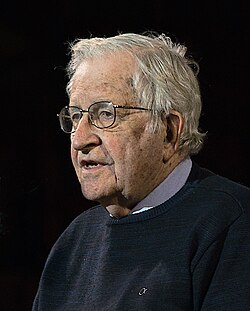
"It is quite possible--overwhelmingly probable, one might guess--that we will always learn more about human life and personality from novels than from scientific psychology."
Standard
Customized

Exlpore more Literature quotes

"Shakespeare shook his head and sunk his chin into his ruff, making him look more owl-like than ever. "I have written about other worlds often enough. I have said what I can say. There are many kinds of reality. This is but one kind."
"Pages entertain me more than pictures do."
"A book lives a new life every time it is read."
"I read to know the past, I write to express my love for the future."
"I don't know where people got the idea that characters in books are supposed to be likable. Books are not in the business of creating merely likeable characters with whom you can have some simple identification with. Books are in the business of creating great stories that make you're brain go ahhbdgbdmerhbergurhbudgerbudbaaarr."
"Reading a good book helps us to feel un-alone."
"This philistinism of interpretation is more rife in literature than in any other art. For decades now, literary critics have understood it to be their task to translate the elements of the poem or play or novel or story into something else. Sometimes a writer will be so uneasy before the naked power of his art that he will install within the work itself - albeit with a little shyness, a touch of the good taste of irony - the clear and explicit interpretation of it. Thomas Mann is an example of such an overcooperative author. In the case of more stubborn authors, the critic is only too happy to perform the job."
"Considering that the modern and contemporary literature taught in most universities is largely bleak, cynical, morbid, pessimistic, misanthropic dogmatism, often written by suicidal types who sooner or later kill themselves with alcohol or drugs, or shotguns, Professor Takuda was a remarkably cheerful man."
"Literature is where I go to explore the highest and lowest places in human society and in the human spirit, where I hope to find not absolute truth but the truth of the tale, of the imagination, and of the heart."
Explore more quotes by Noam Chomsky
"We can, for example, be fairly confident that either there will be a world without war or there won't be a world - at least, a world inhabited by creatures other than bacteria and beetles, with some scattering of others."
"Corporations barely pay taxes. The corporate tax rate is already very low, but corporations have worked out an array of complicated techniques so they often don't have to pay taxes at all... The scale of sheer robbery by corporate power is enormous."
"Language is a process of free creation; its laws and principles are fixed, but the manner in which the principles of generation are used is free and infinitely varied. Even the interpretation and use of words involves a process of free creation."
"By now, they rank people by income level or wages roughly the same: The bottom seventy per cent or so are virtually disenfranchised; they have almost no influence on policy, and as you move up the scale you get more influence. At the very top, you basically run the show."
"If there was an observer on Mars, they would probably be amazed that we have survived this long."
"How people themselves perceive what they are doing is not a question that interests me. I mean, there are very few people who are going to look into the mirror and say, 'That person I see is a savage monster'; instead, they make up some construction that justifies what they do. If you ask the CEO of some major corporation what he does he will say, in all honesty, that he is slaving 20 hours a day to provide his customers with the best goods or services he can and creating the best possible working conditions for his employees. But then you take a look at what the corporation does, the effect of its legal structure, the vast inequalities in pay and conditions, and you see the reality is something far different."
"One of the best predictors of policy around is Thomas Ferguson's investment theory of politics, as he calls it - very outstanding political economist - which essentially - I mean, to say it in a sentence, he describes elections as occasions in which groups of investors coalesce and invest to control the state."
"In societies that profess some respect for law, suspects are apprehended and brought to fair trial. I stress 'suspects.'"
bottom of page