top of page

Literature Quotes



"My only advantage as a reporter is that I am so physically small, so temperamentally unobtrusive, and so neurotically inarticulate that people tend to forget that my presence runs counter to their interests. And it always does. That is one last thing to remember: writers are always selling somebody out."


23
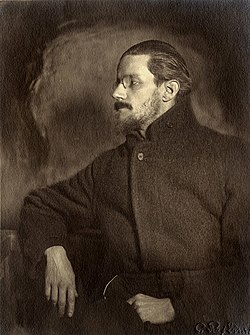
"Mr Leopold Bloom ate with relish the inner organs of beasts and fowls. He liked thick giblet soup, nutty gizzards, a stuffed roast heart, liverslices fried with crustcrumbs, fried hencods' roes. Most of all he liked grilled mutton kidneys which gave to his palate a fine tang of faintly scented urine."
23

"Meeting writers is always so disappointing. I got over wanting to meet live writers quite a long time ago. There is this terrific book that has changed your life, and then you meet the author, and he has shifty eyes and funny shoes and he won't talk about anything except the injustice of the United States income tax structure toward people with fluctuating income, or how to breed Black Angus cows, or something."
23
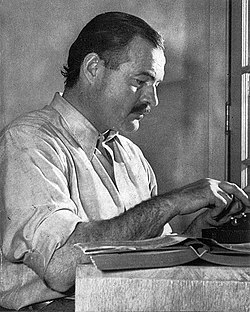
"If a writer of prose knows enough about what he is writing about he may omit things that he knows and the reader, if the writer is writing truly enough, will have a feeling of those things as strongly as though the writer had stated them. The dignity of movement of an ice-berg is due to only one-eighth of it being above water. A writer who omits things because he does not know them only makes hollow places in his writing. A writer who appreciates the seriousness of writing so little that he is anxious to make people see he is formally educated, cultured or well-bred is merely a popinjay. And this too remember; a serious writer is not to be confounded with a solemn writer. A serious writer may be a hawk or a buzzard or even a popinjay, but a solemn writer is always a bloody owl."
23

"My books are water, those of the great geniuses is wine. Everybody drinks water."
23
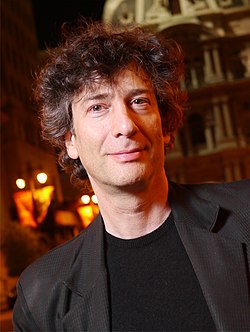
"I lived in books more than I lived anywhere else."
23
"In reading a novel, any novel, we have to know perfectly well that the whole thing is nonsense, and then, while reading, believe every word of it. Finally, when we're done with it, we may find - if it's a good novel - that we're a bit different from what we were before we read it, that we have changed a little... But it's very hard to say just what we learned, how we were changed."
22
"Then I started to think in Lipp's about when I had first been able to write a story about losing everything. It was up in Cortina d'Ampezzo when I had come back to join Hadley there after the spring skiing which I had to interrupt to go on assignment to Rhineland and the Ruhr. It was a very simple story called 'Out of Season' and I had omitted the real end of it which was that the old man hanged himself. This was omitted on my new theory that you could omit anything if you knew that you omitted and the omitted part would strengthen the story and make people feel something more than they understood."
22
"Get someone-anyone-to read books to you. Having books read to you at any age is the supremo ultimato of living."
22
"I conceive that the right way to write a story for boys is to write so that it will not only interest boys but strongly interest any man who has ever been a boy. That immensely enlarges the audience."
22

"But I can understand now why people read, why they like to get lost in somebody else's life. Sometimes I'll read a sentence and it will make me sit up, jolt me, because it is something that I have recently felt but never said out loud. I want to reach into the page and tell the characters that I understand them, that they're not alone, that I'm not alone, that it's okay to feel like this."
22

"Start writing, no matter what. The water does not flow until the faucet is turned on."
22
"The constrained lives of his characters made me wonder how my own existence might appear in his hands."
22
"No! I am not Prince Hamlet, nor was meant to be; Am an attendant lord, one that will do To swell a progress, start a scene or two, Advise the prince; no doubt, an easy tool, Deferential, glad to be of use, Politic, cautious, and meticulous; Full of high sentence, but a bit obtuse; At times, indeed, almost ridiculous- Almost, at times, the Fool."
22

"I do not know whether music knows how to despair over music, or marble over marble, but literature is an art which knows how to prophesize the time in which it might have fallen silent, how to attack its own virtue, and how to fall in love with its own dissolution and court its own end."
22

"Deep versed in books and shallow in himself."
22
"Some are born to sweet delight, Some are born to endless night."
22
"For a storyteller, an open ending leaves much room for imagination; for the inquisitive reader, however, it is a source of great anxiety."
22

"H.G. Wells said that his method was "to trick his reader into an unwary concession to some plausible assumption and get on with his story while the illusion holds." Such prestidigitation is a characteristic ploy of science fiction: to make a nonexistent entity or impossible premise acceptable (often by scientific-sounding terms such as telepathy, extraterrestrial, cavorite, FTL speed) and then follow through with a genuinely realistic, logically coherent description of the effects and implica."
22

"But there is no doubt that to attempt a novel of ideas is to give oneself a handicap: the parochialism of our culture is intense. For instance, decade after decade bright young men and women emerge from their universities able to say proudly: 'Of course I know nothing about German literature.' It is the mode. The Victorians knew everything about German literature, but were able with a clear conscience not to know much about the French."
22
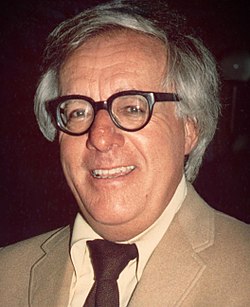
"He was always here to offer cups of good clear Walden Pond, or shout down the deep well of Shakespeare and listen, with satisfaction, for echoes. Here the lion and the hartebeest lay together, here the jackass became a unicorn."
22

"I was at a party in 1989 and Ian McEwan, Martin Amis and Salman Rushdie were sitting on a sofa wondering where the next generation of great British writers would come from. As we talked, it became clear they had never read a word by me."
22
"Do you know why books such as this are so important? Because they have quality. And what does the word quality mean? To me it means texture. This book has pores. It has features. This book can go under the microscope. You'd find life under the glass, streaming past in infinite profusion. The more pores, the more truthfully recorded details of life per square inch you can get on a sheet of paper, the more 'literary' you are. That's my definition anyway. Telling detail. Fresh detail. The good writers touch life often. The mediocre ones run a quick hand over her. The bad ones rape her and leave her for the flies. So now you see why books are hated and feared? They show the pores in the face of life."
22

"The decline of literature indicates the decline of a nation."
22

"Literature always anticipates life. It doesn't copy it but moulds it to it's purpose."
22
"Not much to say except to warn you not to get too serious about all this, if you want to become a writer of fiction in the future. If you intend to become a critic, that is a Whale of another color. Playing around with symbols, even as a critic, can be a kind of kiddish parlor game. A little of it goes a long way. There are other things of greater value in any novel or story, humanity, character analysis, truth on other levels. Good symbolism should be as natural as breathing and as unobtrusive."
21

"She took refuge on the firm ground of fiction, through which indeed there curled the blue river of truth."
21

"To read a novel is to wonder constantly, even at moments when we lose ourselves most deeply in the book: How much of this is fantasy, and how much is real?"
21
"Anybody can make history, only a great man can write it."
21
"To think that realistic fiction is by definition superior to imaginative fiction is to think imitation is superior to invention."
21
"I always thought 'chick lit' meant third-person contemporary funny novels, dealing with issues of the day. I mean, it's not the ideal term; when I'm asked to describe what I do, I say I write romantic comedies, cause that's what I feel they are. But I'm quite pragmatic."
21

"I had forgotten that, and so many things. How could I put everything down on paper? It seemed impossible. No matter what, the majority of life would be left out of this story, this sliver of a version of the life I'd known. But I tried anyway."
21

"The things you were talking about. The lights and the flowers. Do they expect those things to make them romantic, not the other way around? "Darling, what do you mean? "There wasn't a person there who enjoyed it," she said, her voice lifeless, "or who thought or felt anything at all. They moved about, and they said the same dull things they say anywhere. I suppose they thought the lights would make it brilliant."Darling, you take everything too seriously. One is not supposed to be intellectual at a ball. One is simply supposed to be gay." How? By being stupid?"
21

"A novel is always more complicated than it seems at the beginning. Indeed a novel should be more complicated than it seems at the beginning."
21

"We are never allowed to forget that some books are badly written; we should remember that sometimes they're badly read, too."
21
"Books have a unique way of stopping time in a particular moment and saying: Let's not forget this."
21

"Does such a thing as "the fatal flaw," that showy dark crack running down the middle of a life, exist outside literature?"
21

"I am a cemetery by the moon unblessed."
21
"A quote is a story, suspended in a sentence and treasured through time."
21

"With her eyes alone she could give this response, this absolutely erotic response, as if febrile waves were trembling there, pools of madness... something devouring that could lick a man all over like a flame, annihilate him, with a pleasure never known before."
21
"It was pretty silly quoting poetry around free and easy like that. It was the act of a silly damn snob. Give man a few lines of verse and he thinks he's the Lord of all Creation. You think you can walk on water with all your books. Well, the world can get by just fine without them."
21
"The act of writing itself is much like the construction of a mirror made of words. Looking at certain illuminated corners of or cracks within the mirror, the author can see fragments of an objective reality that comprise the physical universe, social communities, political dynamics, and other facets of human existence. Looking in certain other corners of the same mirror, he or she may experience glimpses of a True Self sheltered deftly behind a mask of public proprieties."
21

"What was the point of having a situation worthy of fiction if the protagonist didn't behave as he would have done in a book?"
21

"Huh. Well you and I just disagree. Maybe the world just feels differently to us. This is all going back to something that isn't really clear: that avant-garde stuff is hard to read. I'm not defending it, I'm saying that stuff - this is gonna get very abstract - but there's a certain set of magical stuff that fiction can do for us. There's maybe thirteen things, of which who even knows which ones we can talk about. But one of them has to do with the sense of, the sense of capturing, capturing what the world feels like to us, in the sort of way that I think that a reader can tell "Another sensibility like mine exists." Something else feels this way to someone else. So that the reader feels less lonely."
21

"Many a book is like a key to unknown chambers within the castle of one's own self."
21
"All writers read, Ms Rainn. With dwindling amounts of books circulating imagination, the less writers of all mediums will be able to exercise their own imaginations."
21
"One English nobleman and statesman read and reread a particular work of literature because it was "the only book which allowed him to forget politics."
21

"A book is made from a tree. It is an assemblage of flat, flexible parts (still called "leaves") imprinted with dark pigmented squiggles. One glance at it and you hear the voice of another person, perhaps someone dead for thousands of years. Across the millennia, the author is speaking, clearly and silently, inside your head, directly to you. Writing is perhaps the greatest of human inventions, binding together people, citizens of distant epochs, who never knew one another. Books break the shackles of time - proof that humans can work magic."
21

"Gordon eyed them with inert hatred. At this moment he hated all books, and novels most of all. Horrible to think of all that soggy, half-baked trash massed together in one place."
21
bottom of page