top of page
.png)
Economics Quotes


"Paper money in time of war, the new notes will first go into the pockets of the war contractors. 'As a result, these persons' demands for certain articles will increase and so also the price and the sale of these articles, but especially in so far as they are luxury articles. Thus the position of the producers of these articles will be improved, their demand for other commodities will also increase, and thus the increase of prices and sales will go on, distributing itself over a constantly augmented number of articles, until at last it has reached them all."


13
"A third group of inflationists do not deny that inflation involves serious disadvantages. Nevertheless, they think that there are higher and more important aims of economic policy than a sound monetary system. They hold that although inflation may be a great evil, yet it is not the greatest evil, and that the State might under certain circumstances find itself in a position where it would do well to oppose greater evils with the lesser evil of inflation."
13
"Inequality of wealth and incomes is an essential feature of the market economy. It is the implement that makes the consumers supreme in giving them the power to force all those engaged in production to comply with their orders. It forces all those engaged in production to the utmost exertion in the service of the consumers. It makes competition work. He who best serves the consumers profits most and accumulatesriches."
13
"So I got to thinking that perhaps that's what money is: a crystallization-or, rather, a homogenization-of time and free will into those things we call dollars and pounds and yen and euros. Money multiplies your time. It also expands your agency and broadens the number of things you can do accordingly. Big-time lottery winners haven't won ten million dollars-they've won ten thousand person-years of time to do pretty much anything they want anywhere on Earth. Windfalls are like the crystal meth version of time and free will."
13

"It is impossible to say how far the present value of money depends on its monetary employment and how far on its industrial employment. When the institution of money was first established, the industrial basis of the value of the precious metals may have preponderated; but with progress in the monetary organization of economic life the monetary employment has become more and more important. It is certain that nowadays the value of gold is largely supported by its monetary employment, and that its demonetization would affect its price in an overwhelming fashion."
13

"An economist's guess is liable to be as good as anybody else's."
13
"Even with all its positive attributes, capitalism in its imperialistic form is the most treacherous system mankind ever devised. It is driven by a selfishness that has an almost religious underlining to it."
13

"The free market has never worked in agriculture and it never will. The economics of a family farm are very different from a firm's... the demand for food isn't elastic, people don't eat more just because food is cheap. Even if I go out of business this land will keep producing corn."
13
"Neither has the wealth of a country any bearing on the valuation of its money. Nothing is more erroneous than the widespread habit of regarding the monetary standard as something in the nature of the shares of the State or the community.Such observers fail to recognize that the valuation of the rnonetary unit does not depend upon the wealth of the country, but upon the ratio between the quantity of money and the demand for it, so that even the richest country may have a bad currency and the poorest country a good one."
13
"Even when repressed, inequality grows; only the man who is below the average in economic ability desires equality; those who are conscious of superior ability desire freedom, and in the end superior ability has its way."
12
"When a country has substituted credit money or fiat money for metallic money, because the legal equating of the over-issued paper and the metallic money sets in motion the mechanism described by Gresham's Law, it is often asserted that the balance of payments determines the rate of exchange. But this also is a quite inadequate explanation. The rate of exchange is determined by the purchasing power possessed by a unit of each kind of money."
12
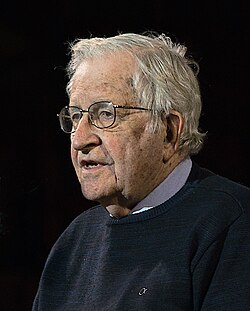
"The advertising industry's prime task is to ensure that uninformed consumers make irrational choices, thus undermining market theories that are based on just the opposite."
12
"It is the beginning of the 'demonetization' of the notes. The process is hastened by its panic-like character. It may be possible once, twice, perhaps even three or four times, to allay the fears of the public; but eventually the affair must run its course and then there is no longer any going back. Once the depreciation is proceeding so rapidly that sellers have to reckon with considerable losses even if they buy again as quickly as is possible, then the position of the currency is hopeless."
12

"What is missing in our economic system is a central value that can encompass everything that can be transacted and used to assign the proper relative value to everything."
12
"The oldest and most popular instrument of etatistic monetary policy is the official fixing of maximum prices. High prices, thinks the etatist, are not a consequence of an increase in the quantity of money, but a consequence of reprehensible activity on the part of 'bulls' and 'profiteers'; it will suffice to suppress their machinations in order to ensure the cessation of the rise of prices. Thus it is made a punishable offence to demand, or even to pay, 'excessive' prices."
12
"That policy which aims at raising the objective exchange-value of money is called, after the most important means at its disposal, restrictionism or deflationism. This nomenclature does not really embrace all the policies that aim at an increase in the value of money. The aim of restrictionism may also be attained by not increasing the quantity of money when the demand for it increases, or by not increasing it enough. This method has quite often been adopted as a way of increasing the value of money in face of the problems of a depreciated credit-money standard."
12
"China is a great manufacturing center, but it's actually mostly an assembly plant. So it assembles parts and components, high technology that comes from the surrounding industrial - more advanced industrial centers - Japan, Taiwan, South Korea, Singapore, the United States, Europe - and it basically assembles them."
12
"The State does not govern the market; in the market in which products are exchanged it may quite possibly be a powerful party, but nevertheless it is only one party of many, nothing more than that. All its attempts to transform the exchange-ratios between economic goods that are determined in the market can only be undertaken with the instruments of the market."
12

"If wealth is a magnet, poverty is a kind of repellent."
12
"Determinants of prices have their effect only through the medium of the subjective estimates of individuals, and the extent to which any given factor influences these subjective estimates can never be predicted."
12
"Let us merely discuss the question, what consequences would necessarily follow if, ceteris paribus, with an increasing quantity of money, prices were restricted to the old level by official compulsion? An increase in the quantity of money leads to the appearance in the market of new desire to purchase, which had previously not existed; 'new purchasing power', it is usual to say, has been created. If the new would-be purchasers compete with those that are already in the market, then, so long as it is not permissible to raise prices, only part of the total purchasing power can be exercised."
12

"Riches are for spending."
12
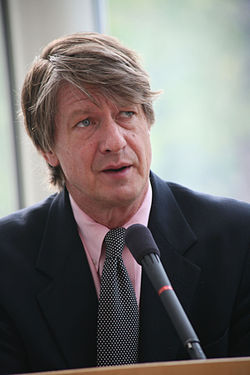
"The idea of capitalism is not just success but also the failure that allows success to happen."
11
"There is not the slightest analogy between playing games and the conduct of business within a market society. The card player wins money by outsmarting his antagonist. The businessman makes money by supplying customers with goods they want to acquire."
11
"A metallic money, the augmentation or diminution of the quantity of metal available for which is independent of deliberate human intervention, is becoming the modern monetary ideal. The significance of adherence to a metallic-money system lies in the freedom of the value of money from State influence that such a system guarantees."
11

"An economic system which can only expand or expire must be false to all that is human."
11
"The attempt to restrain prices within limits has to be given up. A government that sets out to abolish market prices is inevitably driven towards the abolition of private property."
11
"As a rule, however, an increase in the value of money spreads only gradually. The first of those who have to content themselves with lower prices than before for the commodities they sell, while they still have to pay the old higher prices for the commodities they buy, are those who are injured by the increase in the value of money. Those, however, who are the last to have to reduce the prices of the commodities they sell, and have meanwhile been able to take advantage of the fall in the prices of other things, are those who profit by the change."
11
"And the reason Luke is thinking about time and free will is because he believes that money is the closest human beings have ever come to crystallizing time and free will into a compact physical form. Cash. Cash is a time crystal. Cash allows you to multiply your will, and it allows you to speed up time. Cash is what defines us as a species. Nothing else in the universe has money."
11
"But here again it must be observed that this is a matter of a variation brought about through dynamic agencies. The static state, for which the contention attributed to the adherents of the mechanical version of the Quantity Theory would be valid, is disturbed by the fact that the exchange-ratios between individual commodities are necessarily modified. Under certain conditions, the technique of the market may have the effect of extending this modification to the exchange-ratio between money and other economic goods also."
11
"Miracle focus messages compels masses to think that the process of production is not necessary for prosperity."
11

"Some regard private enterprise as if it were a predatory tiger to be shot. Others look upon it as a cow that they can milk. Only a handful see it for what it really is--the strong horse that pulls the whole cart."
10

"You are horrified at our intending to do away with private property. But in your existing society private property is already done away with for nine-tenths of the population; its existence for the few is solely due to its non-existence in the hands of those nine-tenths. You reproach us, therefore, with intending to do away with a form of property, the necessary condition for whose existence is the non-existence of any property for the immense majority of society.In one word, you reproach us with intending to do away with your property. Precisely so: that is just what we intend."
10
"For once the commodities have been sold that were already on the market when their price was authoritatively fixed at a level below that demanded by the situation of the market, then the emptied store-rooms are not filled again. Charging more than a certain price is prohibited, but producing and selling has not been made compulsory. There are no longer any sellers. The market ceases to function. But this means that economic organization based on division of labour becomes impossible. The level of money-prices cannot be fixed without overthrowing the system of social division of labour."
10
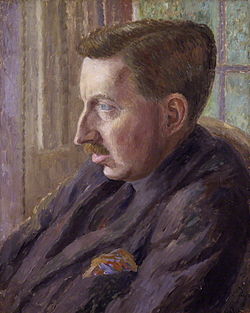
"But so few of us think clearly about our own private incomes, and admit that independent thoughts are in nine cases out of ten the result of independent means."
10
"When the price of coal falls because production has increased while demand has remained unaltered, then, for example, those retailers are involved who have taken supplies from the wholesale dealers at the old higher price but are now able to dispose of them only at the new and lower price. But this alone will not account for all the social changes brought about by the increase of production of coal. The increase in the supply of coal will have improved the economic position of the community."
10

"The three wealthiest people in the world own more than the GDP of forty-eight countries!"
10
"The values of commodities are directly as the times of labour employed in their production, and are inversely as the productive powers of the labour employed."
10
"It has been proposed that monetary liabilities should be settled in terms of gold and not according to their nominal amount. If this proposal were adopted, for each mark that had been borrowed that sum would have to be repaid that could at the time of repayment buy the same weight of gold as one mark could at the time when the debt contract was entered into. The fact that such proposals are now put forward and meet with approval shows that etatism has already lost its hold on the monetary system and that inflationary policies are inevitably approaching their end. Even only a few years ago, such a proposal would either have been ridiculed or else branded as high treason."
9
"If the State uses this power systematically in order to force the community to accept a particular sort of money whose employment it desires for reasons of monetary policy, then it is actually carrying through a measure of monetary policy. The States which completed the transition to a gold standard a generation ago, did so from motives of monetary policy. They gave up the silver standard or the credit-money standard because they recognized that the behaviour of the value of silver or of credit money was unsuited to the economic policy they were following."
9

"We can't get to the $4 trillion in savings that we need by just cutting the 12 percent of the budget that pays for things like medical research and education funding and food inspectors and the weather service. And we can't just do it by making seniors pay more for Medicare."
9

"In order to deal with all the medical cost demands and other challenges in the U.S., as we look to raise that revenue, the rich will have to pay slightly more. That's quite clear."
9
"A variation in the objective exchange-value of money can arise only when a force is exerted in one direction that is not cancelled by a counteracting force in the opposite direction. If the causes that alter the ratio between the stock of money and the demand for it from the point of view of an individual consist merely in accidental and personal factors that concern that particular individual only, then, according to the law of large numbers, it is likely that the forces arising from this cause, and acting in both directions in the market, will counterbalance each other."
9
"The moneyprice of any commodity in any place, under the assumption of completely unrestricted exchange and disregarding the differences arising from the time taken in transit, must be the same as the price at any other place, augmented or diminished by the money-cost of transport."
9
bottom of page