top of page


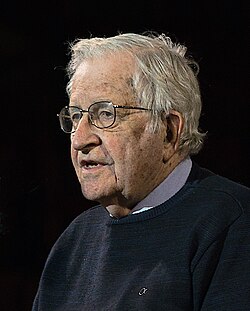
"China is a great manufacturing center, but it's actually mostly an assembly plant. So it assembles parts and components, high technology that comes from the surrounding industrial - more advanced industrial centers - Japan, Taiwan, South Korea, Singapore, the United States, Europe - and it basically assembles them."
Standard
Customized

Exlpore more Economics quotes

"We can easily imagine a monetary organization which, by the exclusive use of notes or clearing-house methods, allows all transfers to be made with the instrumentality of sums of money that never change their position in space.If differences due to the geographical position of money are disregarded in this way, we get the following law for the exchange-ratio between money and other economic goods: every economic good, that is ready for consumption (in the sense in which that phrase is usually understood in commerce and technology), has a subjective use-value qua consumption good at the place where it is and qua production good at those places to which it may be brought for consumption."
"There is not the slightest analogy between playing games and the conduct of business within a market society. The card player wins money by outsmarting his antagonist. The businessman makes money by supplying customers with goods they want to acquire."
"It is the beginning of the 'demonetization' of the notes. The process is hastened by its panic-like character. It may be possible once, twice, perhaps even three or four times, to allay the fears of the public; but eventually the affair must run its course and then there is no longer any going back. Once the depreciation is proceeding so rapidly that sellers have to reckon with considerable losses even if they buy again as quickly as is possible, then the position of the currency is hopeless."
"When the price of coal falls because production has increased while demand has remained unaltered, then, for example, those retailers are involved who have taken supplies from the wholesale dealers at the old higher price but are now able to dispose of them only at the new and lower price. But this alone will not account for all the social changes brought about by the increase of production of coal. The increase in the supply of coal will have improved the economic position of the community."
"If the State uses this power systematically in order to force the community to accept a particular sort of money whose employment it desires for reasons of monetary policy, then it is actually carrying through a measure of monetary policy. The States which completed the transition to a gold standard a generation ago, did so from motives of monetary policy. They gave up the silver standard or the credit-money standard because they recognized that the behaviour of the value of silver or of credit money was unsuited to the economic policy they were following."
"A metallic money, the augmentation or diminution of the quantity of metal available for which is independent of deliberate human intervention, is becoming the modern monetary ideal. The significance of adherence to a metallic-money system lies in the freedom of the value of money from State influence that such a system guarantees."
"Let us merely discuss the question, what consequences would necessarily follow if, ceteris paribus, with an increasing quantity of money, prices were restricted to the old level by official compulsion? An increase in the quantity of money leads to the appearance in the market of new desire to purchase, which had previously not existed; 'new purchasing power', it is usual to say, has been created. If the new would-be purchasers compete with those that are already in the market, then, so long as it is not permissible to raise prices, only part of the total purchasing power can be exercised."
"One of the Great Rules of Economics According to John GreenIf you are rich, you have to be an idiot not to stay rich. And if you are poor, you have to be really smart to get rich."
Explore more quotes by Noam Chomsky
"Reigning doctrines are often called a "double standard".The term is misleading.It is more accurate to describe them as a single standard,clear and unmistakable,the standard that Adam Smith called the "vile maxim of the masters of mankind: ...All for ourselves,and nothing for other people." Much has changed since his day,but the vile maxim flourishes."
"In the US, there is basically one party - the business party. It has two factions, called Democrats and Republicans, which are somewhat different but carry out variations on the same policies. By and large, I am opposed to those policies. As is most of the population."
"The kind of work that should be the main part of life is the kind of work you would want to do if you weren't being paid for it. It's work that comes out of your own internal needs, interests and concerns."
"We have a democracy that uses free elections to put in place known obstructionists, and a media that disproportionately gives a forum to economically driven ideology over sound science."
"The former colonies, in Latin America in particular, have a better chance than ever before to overcome centuries of subjugation, violence and foreign intervention, which they have so far survived as dependencies with islands of luxury in a sea of misery."
"The whole infrastructure of air travel was, and is, part of government policy. It is not a natural development of a free economic system - at least not in the way that is claimed. The same is true of the roads, of course."
"Well before September 11, it was understood that with modern technology, the rich and powerful will lose their near monopoly of the means of violence and can expect to suffer atrocities on home soil."
"They declare that it is unpatriotic and disruptive to question the workings of authority--but patriotic to institute harsh and regressive policies that benefit the wealthy, undermine social programs that serve the needs of the great majority, and subordinate a frightened population to increased state control."
"Peace is preferable to war. But it's not an absolute value, and so we always ask, "What kind of peace?"
bottom of page