top of page
.png)
Culture Quotes


"Sexual satisfaction eases the stranglehold of materialism, since status symbols no longer look sexual, but irrelevant. Product lust weakens where emotional and sexual lust intensifies. The price we pay for artificially buoying up this market is our heart's desire. The beauty myth keeps a gap of fantasy between men and women. That gap is made with mirrors; no law of nature supports it. It keeps us spending vast sums of money and looking distractedly around us, but its smoke and reflection interfere with our freedom to be sexually ourselves."


12
"In Canada, when we speak of water, we're speaking of ourselves. Canadians are known to be unextravagant, and one explanation of this might be that we know that wasted water means a diminished collective soul; polluted waters mean a sickened soul. Water is the basis of our self-identity, and when we dream of canoes and thunderstorms and streams and even snowballs, we're dreaming about our innermost selves."
12


"Like many white liberals, Ken sees the "whiteness of his social life as more an accident of circumstance than a choice. He would welcome greater diversity in the neighbourhood. However, he does not consciously do enough work either in his social life or in the larger community to make that diversity possible."
12
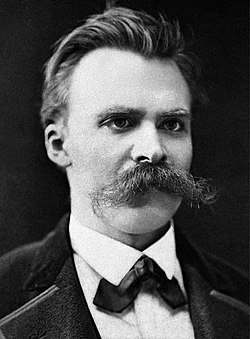
"The images of myth must be the daemonic guardians, omnipresent and unnoticed, which protect the growth of the young mind, and guide man's interpretation of his life and struggles."
12

"This is a book for every fiddler who has realized halfway through playing an ancient Scottish air that the Ramones "I Wanna Be Sedated" is what folk music is really all about, and gone straight into it."
12
"Man is a culture, nothing but a culture! Question your culture! Just like monkeys picking lice from their skin, get rid of the stupidities in your culture!"
12

"The most watched programme on the BBC, after the news, is probably 'Doctor Who.' What has happened is that science fiction has been subsumed into modern literature. There are grandparents out there who speak Klingon, who are quite capable of holding down a job. No one would think twice now about a parallel universe."
12
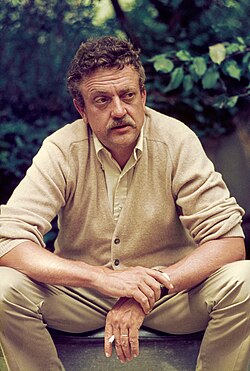

"I see Lord Buddha doing to our collective spiritual well-being what global trade did to our collective economic well-being and the digital internet did to our collective intellectual well-being."
12
"The Chinese culture belongs not only to the Chinese but also to the whole world."
12
"Osman and Prideep had been in my employment for some weeks. Every Friday I would take the to lunch. It was the high point of their calender. During the meal I would harangue them as a reminder of what they had been hired for: but my orations never seemed to increase their output. I realised later that, in the East, a commitment to produce does not automatically accompany employment."
12
"Every fashion is temporary but the concept of fashion is permanent!"
12

"We measure the value of a civilized society by the number of Libraries it opens, not the number it closes down."
12
"What does our great historical hunger signify, our clutching about us of countless cultures, our consuming desire for knowledge, if not the loss of myth, of a mythic home, the mythic womb?"
12

"She said: Sheriff how come you to let crime get so out of hand in your county? Sounded like a fair question I reckon. Maybe it was a fair question. Anyway I told her, I said: It starts when you begin to overlook bad manners. Any time you quit hearin Sir and Mam the end is pretty much in sight."
12


"To stomp about the world ignoring cultural differences is arrogant, to be sure, but perhaps there is another kind of arrogance in the presumption that we may ever really build a faultless bridge from one shore to another, or even know where the mist has ceded to landfall."
12

"Despite the fact that an Indonesian island chicken has probably had a much more natural life than one raised on a battery farm in England, people who wouldn't think twice about buying something oven-ready become much more upset about a chicken that they've been on a boat with, so there is probably buried in the Western psyche a deep taboo about eating anything you've been introduced to socially."
12
"Religion is deeply intertwined with a person's cultural identity. Hence, trying to take it away, is not only unethical from a humane standpoint, but also it is immoral and downright inhuman."
12

"....And above all, it is your civilization, it is you. However much you hate it or laugh at it, you will never be happy away from it for any length of time."
12
"A woman can never be late when she is meeting with a man. But a man can most certainly be late when he is meeting with a woman."
11
"All businesses begin and end with their company culture."
11

"Cover your glass in France or Germany --even worse, in England - and in the voice of someone who has personally affronted, your host will ask why you're not drinking. 'Oh, I just don't feel like it this morning.''Why not?''I guess I'm not in the mood?''Well, this'll put you in the mood. Here. Drink up.''No, really, I'm OK.''Just taste it.''Actually, I'm sort of...well, I sort of have a problem with it.''Then how about half a glass?"
11

"Once we got out of Jefferson Park, we rolled down the one window that worked so the world would know we had good taste in music."
11
"Black bodies have become ornamental, haven't they?"
11

"Our culture has filled our heads but emptied our hearts, stuffed our wallets but starved our wonder. It has fed our thirst for facts but not for meaning or mystery. It produces 'nice' people, not heroes."
11
"Our culture has bred consumers and addicts. We eat too much, buy too much, and want too much. We set ourselves on the fruitless mission of filling the gaping hole within us with material things. Blindly, we consume more and more, believing we are hungry for more food, status, or money, yet really we are hungry for connection."
11

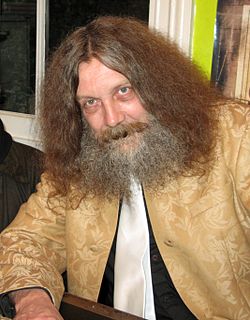
"Sexually progressive cultures gave us literature, philosophy, civilization and the rest, while sexually restrictive cultures gave us the Dark Ages and the Holocaust."
11
"Stories are like spiders, with all they long legs, and stories are like spiderwebs, which man gets himself all tangled up in but which look so pretty when you see them under a leaf in the morning dew, and in the elegant way that they connect to one another, each to each.What's that? You want to know if Anansi looked like a spider? Sure he did, except when he looked like a man.No, he never changed his shape. It's just a matter of how you tell the story. That's all."
11
"The very fact that a Frenchman was prepared, after tow minutes of conversation, to be so friendly towards anyone, especially one who had come from England, made me restless."
11

"Lash had been explaining to her that it's impolite to refer to an African American as a nigga, unless one was another African American, when Troy Lee came in and said, 'She only speaks Cantonese.''She does not. She keeps coming in and saying 'What's up my nigga?'''Oh yeah. She does that to me, too. Did you give her a pound?''No. I didn't give her a pound, motherfucker. She called me a nigga.''Well, she's not going to quit unless you give her a pound. It's just the way she rolls.''That's some bullshit, Troy.''It's her couch."
11
"Your culture is your limit; if you can't go beyond it, you will remain as a frog of your little lake!"
11
"Inspiration is not just a short-term momentum. It could take time and generations of change to truly build a culture of creativity."
11

"What's foreign one can't always keep quite clear of,For good things, oft, are not so near;A German can't endure the French to see or hear of,Yet drinks their wines with hearty cheer."
11
"The power of gradually losing all feeling of strangeness or astonishment, and finally being pleased at anything, is called the historical sense or historical culture."
11
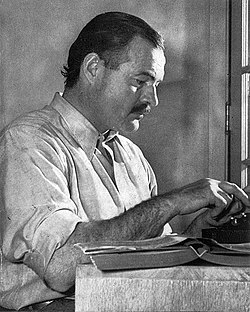
"The gypsies believe the bear to be a brother to man because he has the same body beneath his hide, because he drinks beer, because he enjoys music and because he likes to dance."
11


"Advertising has these people chassing cars and clothes they don't need. Generations have been working in jobs they hate, just so they can buy what they don't really need. We don't have a great war in our generation, or a great depression, but we do, we have a great war of the spirit. We have a great revolution against culture. The great depression is our lives. We have a spiritual depression."
11
bottom of page