top of page
.png)
Quotes by Economist


"She'll be really impressed if you take control and let her follow your lead."


32

"I assure this committee that, if I am confirmed, I will be strictly independent of all political influences... essential to that institution's ability to function effectively and achieve its mandated objectives."
32
"So everybody has some information. The function of the markets is to aggregate that information, evaluate it, and get it incorporated into prices."
32

"It would be foolish to suggest that government is a good custodian of aesthetic goals. But, there is no alternative to the state."
32

"Everybody you talk to about insurance says the insurance market has become a lot more vibrant as a result of lifting, allowing the foreign direct investment."
32

"That every person is desirous to obtain, with as little sacrifice as possible, as much as possible of the articles of wealth."
32
"Well, there's no doubt about the fact that, that higher energy prices lead to greater conservation, greater energy efficiency, and they also, of course, play a useful role on the supply side."
32
"What we're going to do is redouble our efforts on financial regulatory reform, because that has in it sensible things like say on pay, so at least the shareholders are minding the store, sensible things like saying, for heaven's sakes, compensation should be focused on - on long term, so that you don't have rewards for short-term risk-taking."
32

"The unions still have a job to do, representing their members' interests to governments and parliaments. And I think collective agreements still have a role, alongside markets and laws."
32

"It is true practically if not altogether without exception that the changes studied by any science tend to equilibrate or neutralize the forces which bring them about, and finally to come to rest."
32
"If you look at the studies coming out of the Congressional Budget Office, the number one thing that's going to blow a hole in the deficit as we go forward 20, 30 years is government spending on healthcare."
32

"But because we in the United States finance our current account deficit by borrowing in our own currency, we can move to a more competitive dollar without the adverse effects that followed currency declines in other countries."
32

"To spend this particular year reading essays to Dennis Robertson as one's supervisor, and, simultaneously, enjoying membership of the group round Keynes was indeed an intellectual treat."
32
"The countries that share this conception should be able to go further together, without excluding the others, since they can still live in a greater community of exchange and co-operation."
32

"Clean air is a basic right. The responsibility to ensure that falls to Congress and the president."
32
"Social Security represents an $11 trillion unfunded obligation. And when I say unfunded obligation, I mean we have to come up with $11 trillion at some point to make the system whole."
32

"As far as the international issues are concerned, the most important thing is the state of the transatlantic relationships, Euro-Atlantic relationships: how to develop them and how to strengthen them further."
32
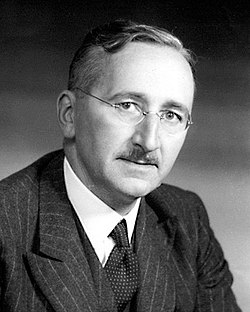
"We know: of course, with regard to the market and similar social structures, a great many facts which we cannot measure and on which indeed we have only some very imprecise and general information."
32

"Material loss can be made up through renewed labor, but the moral wrong which has been inflicted upon the conquered peoples, in the peace dictates, leaves a burning scar on the people's conscience."
32


"The speed of communication, the speed of information transfer, the cheapness of communication, the ease of moving things around the world are a difference in kind as well as degree."
32
"My job was to teach the whole corpus of economic theory, but there were two subjects in which I was especially interested, namely, the economics of mass unemployment and international economics."
32

"The mistake in the argument of those who suppose that a variation in the quantity of money results in an inversely proportionate variation in its purchasing power lies in its starting-point. If we wish to arrive at a correct conclusion, we must start with the valuations of separate individuals; we must examine the way in which an increase or decrease in the quantity of money affects the value-scales of individuals, for it is from these alone that variations in the exchange-ratios of goods proceed."
31

"The system of nature, of which man is a part, tends to be self-balancing, self-adjusting, self-cleansing. Not so with technology."
31
"But whether, for example, a coat can be exchanged for twenty yards of linen cloth or for forty yards is not a matter of chance, but depends upon objective conditions, upon the amount of socially necessary labor time contained in the coat and in the linen respectively."
31
bottom of page