top of page


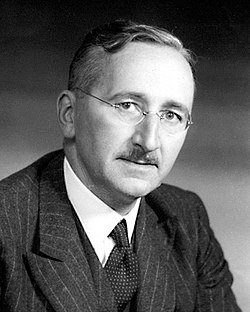
"The credit which the apparent conformity with recognized scientific standards can gain for seemingly simple but false theories may, as the present instance shows, have grave consequences."
Standard
Customized

Exlpore more Science quotes

"There is no strife, no prejudice, no national conflict in outer space as yet. Its hazards are hostile to us all. Its conquest deserves the best of all mankind, and its opportunity for peaceful cooperation many never come again. But why, some say, the moon? Why choose this as our goal? And they may well ask why climb the highest mountain? Why, 35 years ago, fly the Atlantic? Why does Rice play Texa...s? We choose to go to the moon. We choose to go to the moon in this decade and do the other things, not because they are easy, but because they are hard, because that goal will serve to organize and measure the best of our energies and skills, because that challenge is one that we are willing to accept, one we are unwilling to postpone, and one which we intend to win, and the others, too."
"Pliny suggested that the ostrich, then newly discovered, was the result of a cross between a giraffe and a gnat. (It would, I suppose, have to be a female giraffe and a male gnat.) In practice there must be many such crosses which have not beenattempted because of a certain understandable lack of motivation."
"A typical chromosomal DNA molecule in a human being is composed of about five billion pairs of nucleotides. But since there are four different kinds of nucleotides, the number of bits of information in DNA is four times the number of nucleotide pairs. Thus if a single chromosome has five billion (5 X 10^9) nucleotides, it contains twenty billion (2 X 10^10) bits of information. We also see that if more than some tens of billions (several times 10^10) of bits of information are necessary for human survival, extragenetic systems will have to provide them: the rate of development of genetic systems is so slow that no source of such additional biological information can be sought in the DNA."
"Somewhere in the steaming jungles of the Carboniferous Period there emerged an organism that for the first time in the history of the world had more information in its brains than in its genes. It was an early reptile which, were we to come upon it in these sophisticated times, we would probably not describe as exceptionally intelligent. Much of the history of life since the Carboniferous Period can be described as the gradual (and certainly incomplete) dominance of brains over genes."
"The method of science is tried and true. It is not perfect, it's just the best we have. And to abandon it, with its skeptical protocols, is the pathway to a dark age."
"Human spoken language seems to beadventitious. The exploitation of organ systems with other functions for communication in humans is also indicative of the comparatively recent evolution of our linguistic abilities."
"Think of how many religions attempt to validate themselves with prophecy. Think of how many people rely on these prophecies, however vague, however unfulfilled, to support or prop up their beliefs. Yet has there ever been a religion with the prophetic accuracy and reliability of science? ... No other human institution comes close."
"I'm frequently asked, "Do you believe there's extraterrestrial intelligence?" I give the standard arguments- there are a lot of places out there, the molecules of life are everywhere, I use the word billions, and so on. Then I say it would be astonishing to me if there weren't extraterrestrial intelligence, but of course there is as yet no compelling evidence for it.Often, I'm asked next, "What do you really think?"I say, "I just told you what I really think.""Yes, but what's your gut feeling?"But I try not to think with my gut. If I'm serious about understanding the world, thinking with anything besides my brain, as tempting as that might be, is likely to get me into trouble. Really, it's okay to reserve judgment until the evidence is in."
Explore more quotes by Friedrich August von Hayek
"It is rather a problem of how to secure the best use of resources known to any of the members of society, for ends whose relative importance only those individuals know."
"If most people are not willing to see the difficulty, this is mainly because, consciously or unconsciously, they assume that it will be they who will settle these questions for the others, and because they are convinced of their own capacity to do this."
"He will therefore have to use what knowledge he can achieve, not to shape the results as the craftsman shapes his handiwork, but rather to cultivate a growth by providing the appropriate environment, in the manner in which the gardener does this for his plants."
"The progress of the natural sciences in modern times has of course so much exceeded all expectations that any suggestion that there may be some limits to it is bound to arouse suspicion."
"I do not think it is an exaggeration to say history is largely a history of inflation, usually inflations engineered by governments for the gain of governments."
"Why should we, however, in economics, have to plead ignorance of the sort of facts on which, in the case of a physical theory, a scientist would certainly be expected to give precise information?"
"Even the striving for equality by means of a directed economy can result only in an officially enforced inequality - an authoritarian determination of the status of each individual in the new hierarchical order."
"I regard it in fact as the great advantage of the mathematical technique that it allows us to describe, by means of algebraic equations, the general character of a pattern even where we are ignorant of the numerical values which will determine its particular manifestation."
"Freedom granted only when it is known beforehand that its effects will be beneficial is not freedom."
bottom of page