top of page
.png)
Quotes by German Authors


"He who has a task to perform must know how to take sides, or he is quite unworthy of it."


"Few people have the imagination for reality."
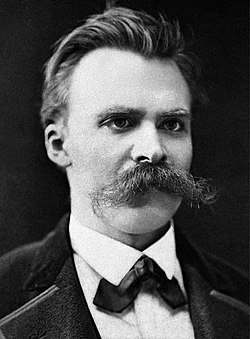
"Those who know that they are profound strive for clarity. Those who would like to seem profound to the crowd strive for obscurity."

"And now let us believe in a long year that is given to us, new, untouched, full of things that have never been, full of work that has never been done, full of tasks, claims, and demands; and let us see that we learn to take it without letting fall too much of what it has to bestow upon those who demand of it necessary, serious, and great things."

"We have to learn that personal suffering is a more effective key, a more rewarding principle for exploring the world in thought and action than personal good fortune."

"Tomorrow I plan to work work from early until late. In fact I have so much to do that I shall spend the first three hours in prayer."

"I'm not interested in provoking people, but only in trying to be consoling."
"When I am angry I can pray well and preach well."

"The fear of death is the most unjustified of all fears, for there's no risk of accident for someone who's dead."
"The most beautiful thing we can experience is the mysterious. It is the source of all true art and science."

"Both of these branches of evolutionary science, are, in my opinion, in the closest causal connection; this arises from the reciprocal action of the laws of heredity and adaptation."
"Try and penetrate with our limited means the secrets of nature and you will find that, behind all the descernible laws and connections, there remains something subtle, intangible and inexplicable. Veneration for this force beyond anything that we can comprehend is my religion. To that extent I am, in fact, religious."
"Small is the number of people who see with their eyes and think with their minds."

"It is after all the greatest art to limit and isolate oneself."

"The interior joy we feel when we have done a good deed is the nourishment the soul requires."
"The decline of literature indicates the decline of a nation."

"What's going on outside, Ravic? 'Nothing new, Kate. The world goes on eagerly preparing for suicide and at the same time deluding itself about what it's doing. 'Will there be war? 'Everyone knows that there will be war. What one does not yet know is when. Everyone expects a miracle. Ravic smiled. 'Never before have I seen so many politicians who believe in miracles as at present in France and England. And never so few as in Germany. She remained lying silent for a while. 'To think that it should be possible- she said then. 'Yes- it seems so impossible that it will happen some day. Just because one considers it so impossible and doesn't protect oneself against it."
"Wisdom is not a product of schooling but of the lifelong attempt to acquire it."
"I believe art has to take responsibility but it should not give up being art."
"Success has always been the greatest liar - and the "work" itself is a success; the great statesman, the conqueror, the discoverer is disguised by his creations, often beyond recognition; the "work," whether of the artist or the philosopher, invents the man who has created it, who is supposed to have create it; "great men," as they are venerated, are subsequent pieces of wretched minor fiction."
"Do not worry about your difficulties in Mathematics. I can assure you mine are still greater."

"If I have a book that thinks for me, a pastor who acts as my conscience, a physician who prescribes my diet, and so on... then I have no need to exert myself. I have no need to think, if only I can pay; others will take care of that disagreeable business for me."
"The main point of enlightenment is man's release from his self-caused immaturity, primarily in matters of religion."
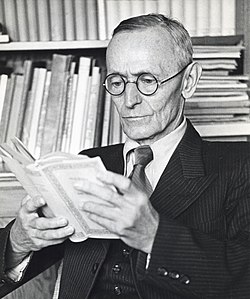
"All suicides have the responsibility of fighting against the temptation of suicide. Every one of them knows very well in some corner of his soul that suicide, though a way out, is rather a mean and shabby one, and that it is nobler and finer to be conquered by life than to fall by one's own hand."
"Girls, there are poets who learn from youto say, what you, in your aloneness, are;and they learn through you to live distantness,as the evenings through the great starsbecome accustomed to eternity."

Death is the true inspiring genius, or the muse of philosophy, wherefore Socrates has defined the latter as θανατου μελετη (thanatou meletē—the practice or study of death). Indeed without death men would scarcely philosophise."

"There are only two things worth aiming for, good music and a clean conscience."
"Truth has no special time of its own. Its hour is now - always."
"For all works and things, which are either commanded or forbidden by God and thus have been instituted by the supreme Majesty, are 'musts.' Nevertheless, no one should be dragged to them or away from them by the hair, for I can drive no man to heaven or beat him into it with a club."
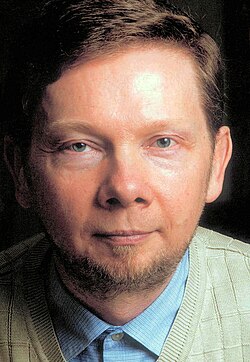
"I don't know" is not confusion. Confusion is "I don't know, but I should know" or "I don't know, but I need to know." When you fully accept that you don't know, you actually enter a state of peace and clarity that is closer to who you truly are than thought could ever be. Defining yourself through thought is limiting yourself."
"In all judgements by which we describe anything as beautiful, we allow no one to be of another opinion."
"Things are not as easily understood nor as expressible as people usually would like us to believe. Most happenings are beyond expression, they exist where a word has never intruded."
"The almost insoluble task is to let neither the power of others, nor our own powerlessness, stupefy us."
"It is not the victory of science that distinguishes our nineteenth century, but the victory of scientific method over science."
"I obviously do everything to be "hard to understand" myself."
"That is the remarkable thing about drinking: it brings people together so quickly, but between night and morning it sets an interval again of years."
"I glance at my boots. They are big and clumsy, the breeches are tucked into them, and standing up one looks well-built and powerful in those great drainpipes. But when we go bathing and strip, suddenly we have slender legs again and slight shoulders. We are no longer soldiers but little more than boys; no one would believe that we could carry packs. It is a strange moment when we stand naked; then we become civilians, and almost feel ourselves to be so. When bathing Franz Kemmerich looked as slight and frail as a child. There he lies now - buy why? The whole world ought to pass by this bed and say: 'That is Franz Kemmerich, nineteen and a half years old, he doesn't want to die. Let him not die!"
"We came to realise - first with astonishment, then bitterness, and finally with indifference - that intellect apparently wasn't the most important thing...not ideas, but the system; not freedom, but drill. We had joined up with enthusiasm and with good will; but they did everything to knock that out of us."
"The Church is the Church only when it exists for others...not dominating, but helping and serving. It must tell men of every calling what it means to live for Christ, to exist for others."
"Nothing in this world can one imagine beforehand not the least thing. Everything is made up of so many unique particulars that cannot be foreseen."
"If my sinfulness appears to me in any way smaller or less detestable in comparison with the sins of others, I am still not recognizing my sinfulness at all."
"A human being is a part of the whole called by us universe, a part limited in time and space. He experiences himself, his thoughts and feeling as something separated from the rest, a kind of optical delusion of his consciousness. This delusion is a kind of prison for us, restricting us to our personal desires and to affection for a few persons nearest to us. Our task must be to free ourselves from this prison by widening our circle of compassion to embrace all living creatures and the whole of nature in its beauty."
"Truth that is naked is the most beautiful."
"After your death, you will be what you were before your birth."
bottom of page