.png)

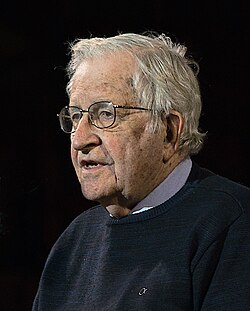
"Moynihan, when he was ambassador to the United Nations, produced the same effect when he attacked the Third World. These attacks aroused great admiration here; for example, when he denounced Idi Amin of Uganda as a "racist murderer." The question is not whether Idi Amin is a racist murderer. No doubt the appellation is correct. The question is, what does it mean for Moynihan to make this accusation and for others to applaud his honesty and courage in doing so? Who is Moynihan? He served in four administrations, those of Kennedy, Johnson, Nixon, and Ford - that is to say, administrations that were guilty of racist murder on a scale undreamed of by Idi Amin. Imagine that some minor functionary of the Third Reich had correctly accused someone of being a racist murderer."
Standard
Customized

Exlpore more Criticism quotes

"They were the sort who berated a man for meddling and chased him away, then berated him again for not being there when he was needed. Not that they would admit he was needed, even then, not them. Raise a hand to help and you were interfering, do nothing and you were an un-trustworthy wastrel."
"Ol, ol you have learnt something new, didn't you??So you are saying it again and again with smile like we are an idiots, but my question is did you understand it? Do you know what did you said, so you big peace of shit say something more to impress us, because this doesn't impress us."
"Criticism always produces negative reactions, but appreciation always creates positive actions."
"Even the slightest criticism of others is an impediment (hindrance) to Absolute Knowledge (Kevalgnan, Absolute Enlightenment). It also hinders Atmagnan (Knowledge of the Self), also hinders Samkit (Self-realization)."
"When I see the promotion of nighttime street lighting to the masses, I realize the great level of incompetence that is present in governments, human health and the biological effects of light."
"So, two cheers for Democracy: one because it admits variety and two because it permits criticism."
Explore more quotes by Noam Chomsky
"International affairs is very much run like the mafia. The godfather does not accept disobedience, even from a small storekeeper who doesn't pay his protection money. You have to have obedience; otherwise, the idea can spread that you don't have to listen to the orders, and it can spread to important places."
"I am not a committed pacifist. I would not hold that it is under all imaginable circumstances wrong to use violence, even though use of violence is in some sense unjust. I believe that one has to estimate relative justices. But the use of violence and the creation of some degree of injustice can only be justified on the basis of the claim and the assessment-which always ought to be undertaken very, very seriously and with a good deal of scepticism that this violence is being exercised because a more just result is going to be achieved."
"For a privileged minority, Western democracy provides the leisure, the facilities, and the training to seek the truth lying hidden behind the veil of distortion and misrepresentation, ideology and class interest, through which the events of current history are presented to us."
"The Occupy movement did create spontaneously communities that taught people something: you can be in a supportive community of mutual aid and cooperation and develop your own health system and library and have open space for democratic discussion and participation. Communities like that are really important."
"The number of people killed by the sanctions in Iraq is greater than the total number of people killed by all weapons of mass destruction in all of history."
"In 1993, Israel and North Korea were moving towards an agreement in which North Korea would stop sending any missiles or military technology to the Middle East and Israel would recognize that country. President Clinton intervened and blocked it."
"The advertising industry's prime task is to ensure that uninformed consumers make irrational choices, thus undermining market theories that are based on just the opposite."
"People who call themselves supporters of Israel are actually supporters of its moral degeneration and ultimate destruction."