top of page


Exlpore more America quotes


"America is a nation that conceives many odd inventions for getting somewhere but it can think of nothing to do once it gets there."
"America wasn't founded so that we could all be better. America was founded so we could all be anything we damned well pleased."
"I like going there for golf. America's one vast golf course these days."
"I think Australians do well here because we feel a bit naughty, like we're in America and if they only knew how much fun we were having, we'd all get thrown out, you know."
"America is ready for intelligent talk. I am ready to bring some humanity to TV."
Explore more quotes by Elliott Carter
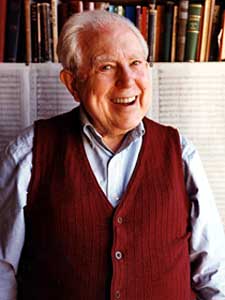
"I've known those pieces ever since I was about 16 or 17; I also at that time was taken to meet Charles Ives whom I got to know fairly well. He was the one who wrote a recommendation for me to get into college."
"My entire life has really revolved around music that was written about the time that I was born, 1908, to just before the First World War and shortly after it. This music I've always known, and it is that music that's most important to me."
"Well when I was young, when I was very young, when I was a little boy I don't remember the music I heard, but there was an article in the Brooklyn Daily written by my Aunt about how I could choose phonograph records."
"That was one of the big problems when I was at Harvard studying music. We had to write choral pieces in the style of Brahms or Mendelssohn, which was distressing because in the end you realized how good Brahms is, and how bad you are."
"Since I'm allergic to various things, the army wouldn't accept me during the war, and I got into the Office of War Information, which sent music to Europe."
"Then, when the Depression came, all of this changed completely. Since that time, the entire public is of a very different sort and there was not so much support for contemporary music in a direct way."
"I mean the public likes it more in Europe than they do here because the state supported organizations have felt that playing contemporary music was part of the education of the public."
bottom of page