top of page
.png)

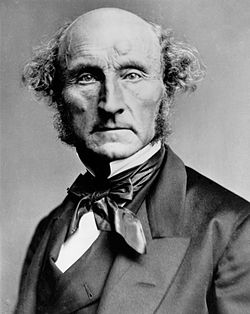
"The dictum that truth always triumphs over persecution is one of the pleasant falsehoods which men repeat after one another till they pass into commonplaces, but which all experience refutes."
Standard
Customized

More

"As the writer, you're always a presence in the song. If you get close to what human beings are like, you're writing about common experience. We all do much the same things, so if you nail somebody, then you've also nailed yourself."
Author Name
Personal Development
"I'm in the mood for another Moonstruck experience, for another romantic comedy."
Author Name
Personal Development
"You learn from a conglomeration of the incredible past - whatever experience gotten in any way whatsoever."
Author Name
Personal Development
"Existence itself does not feel horrible; it feels like an ecstasy, rather, which we have only to be still to experience."
Author Name
Personal Development
"Not everything has a name. Some things lead us into a realm beyond words."
Author Name
Personal Development
"What happens to you during Life may seem out of your control; how you perceive each experience, however... good or bad... is totally up to you."
Author Name
Personal Development
"It [discovering Finnish] was like discovering a wine-cellar filled with bottles of amazing wine of a kind and flavour never tasted before. It quite intoxicated me."
Author Name
Personal Development
"She picked up the stout and took a sip. It slid down her throat like silk."
Author Name
Personal Development
"Not everyone can experience what other people can... That's why movies come out... films and books... and short stories and novels..."
Author Name
Personal Development
"Our experiences are the building blocks of the future hewn out of the granite of the present."
Author Name
Personal Development
More
"The creed which accepts as the foundation of morals, Utility, or the Greatest-Happiness Principle, holds that actions are right in proportion as they tend to promote happiness, wrong as they tend to produce the reverse of happiness. By happiness is intended pleasure, and the absence of pain; by unhappiness, pain, and the privation of pleasure."
Philosophy
"Pleasure and freedom from pain, are the only things desirable as ends."
Freedom
"No one can be a great thinker who does not recognize that as a thinker it is his first duty to follow his intellect to whatever conclusions it may lead."
Mind
"All political revolutions, not affected by foreign conquest, originate in moral revolutions. The subversion of established institutions is merely one consequence of the previous subversion of established opinions."
Revolution
"The only power deserving the name is that of masses, and of governments while they make themselves the organ of the tendencies and instincts of masses."
Power
"The only freedom which deserves the name is that of pursuing our own good, in our own way, so long as we do not attempt to deprive others of theirs, or impede their efforts to obtain it."
Freedom
"The will of the people, moreover, practically means the will of the most numerous or the most active part of the people; the majority, or those who succeed in making themselves accepted as the majority; type people, consequently, may desire to oppress a part of their number; and precautions are as much needed against this as against any other abuse of power."
Politics
"As long as justice and injustice have not terminated their ever renewing fight for ascendancy in the affairs of mankind, human beings must be willing, when need is, to do battle for the one against the other."
Battle
"Christian morality (so called) has all the characters of a reaction; it is, in great part, a protest against Paganism. Its ideal is negative rather than positive; passive rather than action; innocence rather than Nobleness; Abstinence from Evil, rather than energetic Pursuit of Good: in its precepts (as has been well said) 'thou shalt not' predominates unduly over 'thou shalt."
Philosophy
"The only purpose for which power can be rightfully exercised over any member of a civilized community, against his will, is to prevent harm to others. His own good, either physical or moral, is not sufficient warrant."
Power
bottom of page