top of page
.png)

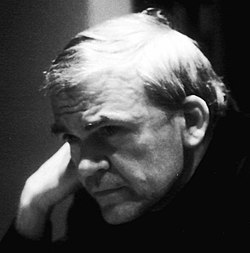
"But isn't it true that an author can write only about himself?"
Standard
Customized

Exlpore more Authorship quotes

"A writer is congenitally unable to tell the truth and that is why we call what he writes fiction."
"I am a strong believer in the tyranny, the dictatorship, the absolute authority of the writer."
"We are the products of editing, rather than of authorship."
"A lot of people who read my novel 'Smog City' ask me why I never killed off either of the two main characters. To be honest, it's because I've given them life. Not literally of course, but since I spent so much time developing and creating my characters, they've ended up with complex personalities, in fact they're almost sentient in a way, and to write them off as dead would be like killing a close friend to me."
"Authors, he thought. Even the sane ones are nuts."
"Authors are sometimes like tomcats: They distrust all the other toms but they are kind to kittens."
"Part of my soul goes into each quote I write. A book of my quotes can be yours for just $19.99."
"It will be sent that, although the writer's love is verily a jealous love, it is a jealousy for and not of his creatures. He will tolerate no interference either with them or between them and himself."
"The first book I did - the first successful book - was a kind of a travel book, and publishers in Britain encouraged me to do more."
"A writer always begins by being too complicated-he's playing at several games at once."
Explore more quotes by Milan Kundera
"The girl was grateful to the young man for every bit of flattery; she wanted to linger for a moment in its warmth and so she said, 'You're very good at lying.''Do I look like a liar?''You look like you enjoy lying to women,' said the girl, and into her words there crept unawares a touch of the old anxiety, because she really did believe that her young man enjoyed lying to women."
"No peace is possible between the novelist and the agélaste [those who do not laugh]. Never having heard God's laughter, the agélastes are convinced that the truth is obvious, that all men necessarily think the same thing, and that they themselves are exactly what they think they are. But it is precisely in losing the certainty of truth and the unanimous agreement of others that man becomes an individual. The novel is the imaginary paradise of individuals. It is the territory where no one possesses the truth — neither Anna nor Karenin — but where everyone has the right to be understood, both Anna and Karenin."
"Every novel says to the reader: "Things are not as simple as you think. That is the novel's eternal truth, but it grows steadily harder to hear amid the din of easy, quick answers that come faster than the question and block it off. In the spirit of our time, it's either Anna or Karenin who is right, and the ancient wisdom of Cervantes, telling us about the difficulty of knowing and the elusiveness of truth, seems cumbersome and useless."
"A novel that does not uncover a hitherto unknown segment of existence is immoral. Knowledge is the novel's only morality."
"There is a certain part of all of us that lives outside of time. Perhaps we become aware of our age only at exceptional moments and most of the time we are ageless."
"All the same, a seductive voice from afar kept breaking into her conjugal peace: it was the voice of solitude. She closed her eyes and listened to the sound of a hunting horn coming from the depths of distant forests. There were paths in those forests."
"Fortunately women have the miraculous ability to change the meaning of their actions after the event."
bottom of page