top of page
.png)

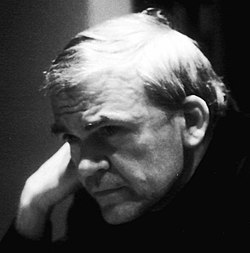
"Fortunately, I read (the books) without knowing what I was in for, and the best thing that can ever happen to a reader happened to me: I loved something that, by conviction (or by my nature) I should not have loved."
Standard
Customized

Exlpore more Literature quotes

"Shakespeare shook his head and sunk his chin into his ruff, making him look more owl-like than ever. "I have written about other worlds often enough. I have said what I can say. There are many kinds of reality. This is but one kind."
"Pages entertain me more than pictures do."
"A book lives a new life every time it is read."
"I read to know the past, I write to express my love for the future."
"I don't know where people got the idea that characters in books are supposed to be likable. Books are not in the business of creating merely likeable characters with whom you can have some simple identification with. Books are in the business of creating great stories that make you're brain go ahhbdgbdmerhbergurhbudgerbudbaaarr."
"Reading a good book helps us to feel un-alone."
"This philistinism of interpretation is more rife in literature than in any other art. For decades now, literary critics have understood it to be their task to translate the elements of the poem or play or novel or story into something else. Sometimes a writer will be so uneasy before the naked power of his art that he will install within the work itself - albeit with a little shyness, a touch of the good taste of irony - the clear and explicit interpretation of it. Thomas Mann is an example of such an overcooperative author. In the case of more stubborn authors, the critic is only too happy to perform the job."
"Considering that the modern and contemporary literature taught in most universities is largely bleak, cynical, morbid, pessimistic, misanthropic dogmatism, often written by suicidal types who sooner or later kill themselves with alcohol or drugs, or shotguns, Professor Takuda was a remarkably cheerful man."
"Literature is where I go to explore the highest and lowest places in human society and in the human spirit, where I hope to find not absolute truth but the truth of the tale, of the imagination, and of the heart."
Explore more quotes by Milan Kundera
"The girl was grateful to the young man for every bit of flattery; she wanted to linger for a moment in its warmth and so she said, 'You're very good at lying.''Do I look like a liar?''You look like you enjoy lying to women,' said the girl, and into her words there crept unawares a touch of the old anxiety, because she really did believe that her young man enjoyed lying to women."
"No peace is possible between the novelist and the agélaste [those who do not laugh]. Never having heard God's laughter, the agélastes are convinced that the truth is obvious, that all men necessarily think the same thing, and that they themselves are exactly what they think they are. But it is precisely in losing the certainty of truth and the unanimous agreement of others that man becomes an individual. The novel is the imaginary paradise of individuals. It is the territory where no one possesses the truth — neither Anna nor Karenin — but where everyone has the right to be understood, both Anna and Karenin."
"All the same, a seductive voice from afar kept breaking into her conjugal peace: it was the voice of solitude. She closed her eyes and listened to the sound of a hunting horn coming from the depths of distant forests. There were paths in those forests."
"Today I know this: when it comes time to take stock, the most painful wound is that of broken friendships; and there is nothing more foolish than to sacrifice a friendship to politics."
"Large countries' patriotism is different: they are buoyed by their glory, their importance, their universal mission. The Czechs loved their country not because it was glorious but because it was unknown; not because it was big but because it was small and in constant danger. Their patriotism was an enormous compassion for their country."
"The uniform is that which we do not choose, that which is assigned to us; it is the certitude of the universal against the precariousness of the individual. When the values that were once so solid come under challenge and withdraw, heads bowed, he who cannot live without them (without fidelity, family, country, discipline, without love) buttons himself up in the universality of his uniform as if that uniform were the last shred of transcendence that could protect him against the cold of a future in which there will be nothing left to respect."
"There is nothing heavier than compassion. Not even one's own pain weighs so heavy as the pain one feels for someone, for someone, pain intensified by the imagination and prolonged by a hundred echos."
"People fascinated by the idea of progress never suspect that every step forward is also a step on the way to the end and that behind all the joyous 'onward and upward' slogans lurks the lascivious voice of death urging us to make haste."
"The assassination of Allende quickly covered over the memory of the Russian invasion of Bohemia, the bloody massacre in Bangladesh caused Allende to be forgotten, the din of war in the Sinai Desert drowned out the groans of Bangladesh, the massacres in Cambodia caused the Sinai to be forgotten, and so on, and on and on, until everyone has completely forgotten everything."
bottom of page