top of page
.png)

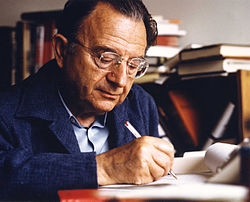
"The bureaucrat is a man who administers things and people, and who relates himself to people as to things."
Standard
Customized

Exlpore more Governance quotes

"The spirit of democracy is not a mechanical thing to be adjusted by abolition of forms. It requires change of heart."
"Tyranny and anarchy are never far apart."
"The absence of even rough agreement on the facts puts every opinion on equal footing and therefore eliminates the basis for thoughtful compromise. It rewards not those who are right, but those - like the White House press office - who can make their arguments most loudly, most frequently, most obstinately, and with the best backdrop."
"I would put our legislative and foreign policy accomplishments in our first two years against any president - with the possible exceptions of Johnson, FDR, and Lincoln - just in terms of what we've gotten done in modern history. But, you know, but when it comes to the economy, we've got a lot more work to do. And we're gonna keep on at it."
"It is remarkable that jealousy of individual property in land often goes along with very exaggerated doctrines of tribal or national property in land."
"As for us, during twenty years' reign, we have known much bitterness."
"Always remember: When government accepts responsibility for people, then people no longer take responsibility for themselves."
"Nothing lasts longer than a temporary government program."
"Tonight - by taking this solemn oath - I am no longer a private citizen but the Mayor of the City of Chicago."
Explore more quotes by Erich Fromm
"Each new step into his new human existence is frightening. It always means to give up a secure state, which was relatively known, for one which is new, which one has not yet mastered. Undoubtedly, if the infant could think at the moment of the severance of the umbilical cord, he would experience the fear of dying. A loving fate protects us from this first panic. But at any new step, at any new stage of our birth, we are afraid again. We are never free from two conflicting tendencies: one to emerge from the womb, from the animal form of existence into a more human existence, from bondage to freedom; another, to return to the womb, to nature, to certainty and security."
"Love is the active concern for the life and the growth of that which we love. Where this active concern is lacking, there is no love."
"Why should anyone be so grateful for acceptance unless he doubts that he is acceptable, and why should a young, educated and successful couple have such doubts, if not due to the fact that they cannot accept themselves because they are not themselves."
"One is not loved accidentally; one's own power to love produces love - just as being interested makes one interesting. People are concerned with the question of whether they are attractive while they forget that the essence of attractiveness is their own capacity to love. To love a person productively implies to care and to feel responsible for his life, not only for his physical existence but for the growth and development of all his human powers. To love productively is incompatible with being passive, with being an onlooker at the loved person's life; it implies labor and care and the responsibility for his growth."
"Modern man thinks he loses something - time - when he does not do things quickly. Yet he does not know what to do with the time he gains, except kill it."
"The danger of the past was that men became slaves. The danger of the future is that man may become robots."
"The cruelty itself is motivated by something deeper: the wish to know the secret of things and of life."
"What is freedom as a human experience? Is the desire for freedom something inherent in human nature? Is it an identical experience regardless of what kind of culture a person lives in, or is it something different according to the degree of individualism reached in a particular society? Is freedom only the absence of external pressure or is it also the presence of something-and if so, of what? What are the social and economic factors in society that make for the striving for freedom? Can freedom become a burden, too heavy for man to bear, something he tries to escape from? Why then is it that freedom is for many a cherished goal and for others a threat?"
bottom of page