top of page


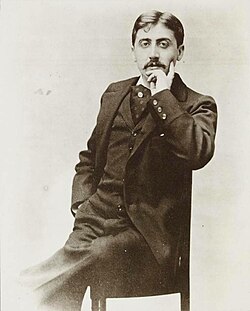
"Dinner-parties bore us because our imagination is absent, and reading interests us because it is keeping us company."
Standard
Customized

Exlpore more Imagination quotes

"The degree in which a poet's imagination dominates reality is, in the end, the exact measure of his importance and dignity."
"Memories, imagination, old sentiments, and associations are more readily reached through the sense of smell than through any other channel."
"Never tell to much. The monster is always scarier when it is still under the child's bed."
"How easy it is to invent a humanity, for anyone at all."
"Enthusiasm is that temper of the mind in which the imagination has got the better of the judgment."
"We are more often frightened than hurt; and we suffer more from imagination than from reality."
"Just like heaven. Ever'body wants a little piece of lan'. I read plenty of books out here. Nobody never gets to heaven, and nobody gets no land. It's just in their head. They're all the time talkin' about it, but it's jus' in their head."
"People think dreams aren't real just because they aren't made of matter, of particles. Dreams are real. But they are made of viewpoints, of images, of memories and puns and lost hopes."
"Because stories start in minds-- they aren't artifacts or natural phenomena."
"My brother believed in all sorts of mythical creatures: pixies, dragons, werewolves, honest men."
Explore more quotes by Marcel Proust
"We have such numerous interests in our lives that it is not uncommon, on a single occasion, for the foundations of a happiness that does not yet exist to be laid down alongside the intensification of a grief from which we are still suffering."
"In the case of the solitary, his seclusion, even when it is absolute and ends only with life itself, has often as its primary cause a disordered love of the crowd, which so far overruled every other feeling that, not being able to win, when he goes out, the admiration of his hall-porter, of the passers-by, of the cabman whom he hails, he prefers not to be seen by them at all, and with that object abandons every activity that would oblige him to go out of doors."
"I dined with Legrandin on the terrace of his house by moonlight. "There is a charming quality, is there not," he said to me, "in this silence; for hearts that are wounded, as mine is, a novelist whom you will read in time to come asserts that there is no remedy but silence and shadow. And you see this, my boy, there comes in all our lives a time, towards which you still have far to go, when the weary eyes can endure but one kind of light, the light which a fine evening like this prepares for us in the stillroom for darkness, when the ears can listen to no music save what the moonlight breathes through the flute of silence."
"He had, indeed, one of those advantages which men who had lived and moved in the world enjoy over others, even men of intelligence and refinement, who have never gone into society, namely that they no longer see it transfigured by the longing or repulsion with which it fills the imagination, but regard it as quite unimportant. Their good nature, freed from all taint of snobbishness and from the fear of seeming too friendly, grown independent, in fact, has the ease, the grace of movement of a trained gymnast each of whose supple limbs will carry out precisely the movement that is required without any clumsy participation by the rest of his body."
"And the others too were beginning to remark in Swann that abnormal, excessive, shameful and deserved senescence of bachelors, of all those for whom it seems that the great day which knows no morrow must be longer than for other men, since for them it is a void of promise, and from its dawn the moments steadily accumulate without any subsequent partition among offspring."
"That profit which good things bestowed on us by teaching to seek pleasure elsewhere than in the barren satisfaction of worldly wealth."
"To such an extent does passion manifest itself in us as a temporary and distinct character, which not only takes the place of our normal character but actually obliterates the signs by which that character has hitherto been discernible."
bottom of page