top of page
.png)

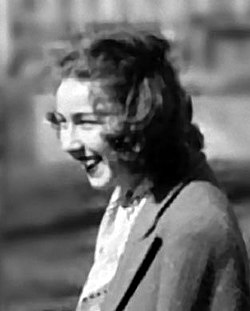
"Fiction is about everything human and we are made out of dust, and if you scorn getting yourself dusty, then you shouldn't try to write fiction. It's not a grand enough job for you."
Standard
Customized

Exlpore more Literature quotes

"This philistinism of interpretation is more rife in literature than in any other art. For decades now, literary critics have understood it to be their task to translate the elements of the poem or play or novel or story into something else. Sometimes a writer will be so uneasy before the naked power of his art that he will install within the work itself - albeit with a little shyness, a touch of the good taste of irony - the clear and explicit interpretation of it. Thomas Mann is an example of such an overcooperative author. In the case of more stubborn authors, the critic is only too happy to perform the job."
"A book is as private and consensual as sex."
"For the narrative to exist, so that it could be read and reread even if I was taken away. Stories outlive their writers all the time. We know plenty about Goethe and Charles Dickens from what they chose to tell, even though they have been dead for years."
"I haven't stuck to any formula. Most great writers stick to the same style, but I wanted to be more various."
"I hold that a writer who does not passionately believe in the perfectibility of man has no dedication nor any membership in literature."
"I suppose all fictional characters, especially in adventure or heroic fiction, at the end of the day are our dreams about ourselves. And sometimes they can be really revealing."
"When you think about the period in which Agatha Christie's crime novels were written, they are actually quite edgy for the time."
"Good characters in fiction are the very devil. Not only because most authors have too little material to make them of, but because we as readers have a strong subconscious wish to find them incredible."
"Literature, the most seductive, the most deceiving, the most dangerous of professions."
Explore more quotes by Flannery O'Connor
"Most of us have learned to be dispassionate about evil, to look it in the face and find, as often as not, our own grinning reflections with which we do not argue, but good is another matter. Few have stared at that long enough to accept that its face too is grotesque, that in us the good is something under construction. The modes of evil usually receive worthy expression. The modes of good have to be satisfied with a cliche or a smoothing down that will soften their real look."
"Writing a novel is a terrible experience, during which the hair often falls out and the teeth decay."
"I don't really think the standard of judgment, the missing link, you spoke of that you find in my stories emerges from any religion but Christianity, because it concerns specifically Christ and the Incarnation, the fact that there has been a unique intervention in history. It's not a matter in these stories of Do Unto Others. That can be found in any ethical cultural series. It is the fact of the Word made flesh."
"The meaning of a story should go on expanding for the reader the more he thinks about it, but meaning cannot be captured in an interpretation. If teachers are in the habit of approaching a story as if it were a research problem for which any answer is believable so long as it is not obvious, then I think students will never learn to enjoy fiction. Too much interpretation is certainly worse than too little, and where feeling for a story is absent, theory will not supply it."
"I preach there are all kinds of truth, your truth and somebody else's. But behind all of them there is only one truth and that is that there's no truth."
"The fact is that if the writer's attention is on producing a work of art, a work that is good in itself, he is going to take great pains to control every excess, everything that does not contribute to this central meaning and design. He cannot indulge in sentimentality, in propagandizing, or in pornography and create a work of art, for all these things are excesses. They call attention to themselves and distract from the work as a whole."
"It makes a great difference to the look of a novel whether its author believes that the world came late into being and continues to come by a creative act of God, or whether he believes that the world and ourselves are the product of a cosmic accident. It makes a great difference to his novel whether he believes that we are created in God's image, or whether he believes we create God in our own. It makes a great difference whether he believes that our wills are free, or bound like those of the other animals."
"Art requires a delicate adjustment of the outer and inner worlds in such a way that, without changing their nature, they can be seen through each other."
bottom of page