top of page
.png)

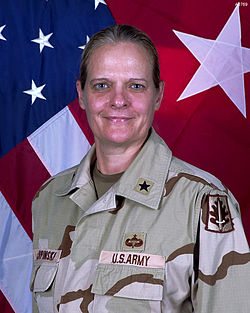
"After they killed Uday and Qusay, the focus centered on Saddam: Find him, kill him, capture him, whatever it takes. To me, it was a false sense of security: If we get Saddam, we're going to win this war."
Standard
Customized

Exlpore more War quotes

"Our modern states are preparing for war without even knowing the future enemy."
"And Louis Freeh was a completely dysfunctional FBI Director, who was actually waging his own private war against the Clinton Administration."
War,
"There was a very serious communist strain among American intellectuals before the war. America was a more tolerant place in those days, and Communists were not treated as pariahs. That ended with the McCarthy era."
"During the early months of the war in 1914 there was a conflict of opinion between the War Office and the Foreign Office regarding news from the Front."
"It makes no difference what men think of war, said the judge. War endures. As well ask men what they think of stone. War was always here. Before man was, war waited for him. The ultimate trade awaiting its ultimate practitioner. That is the way it was and will be. That way and not some other way."
Explore more quotes by Janis Karpinski
"If you are charged with this responsibility of enhancing interrogations, or using soldiers to enhance interrogations to find Saddam, and you're above the law for all practical purposes, you might try some unusual techniques. Now we know that, in fact, they did."
"Shortly after we arrived in Baghdad, we had another conversation with the ambassador. He said that he wanted us to give him the timeline, because we had 90 days to get these prisons operational and transfer responsibility back to the Iraqis."
"If they conducted a raid in this room, you'd all be policed up. They'd take all of you to Abu Ghraib and turn you over to the soldiers. Maybe there's only one or two of you in this group who was a known associate or had any piece of information that they are trying to exploit."
"The war was declared over - the end of major combat operations - in May 2003. Release procedures got under way immediately; reducing the population from 8,000 to just over 300, of course, requires fewer military police soldiers."
"That policy was abandoned very quickly, and the military police were tagged with the responsibility of conducting training, which they did. We were not equipped or set up with personnel to recruit new Iraqi guards."
"In November, they transferred control of Abu Ghraib to the military intelligence command completely; it was, after all, the center for interrogations for Iraq."
"There was a military police brigade with over 3,400 soldiers getting ready to go home because their mission - prisoner-of-war operations - was finished."
"And shortly after that, when I try to get access to those soldiers, to ask them what in the world was going on, I was told that they did not work for me and I had no right to have access to any one of them."
"Military intelligence interrogators, however, their goal is to get information, to save lives, to stop the war, to find Saddam - whatever the information is going to be used for, at whatever cost."
"The vast majority of prisoners at Abu Ghraib, even after interrogation, had no further intel value whatsoever."
bottom of page