top of page
.png)

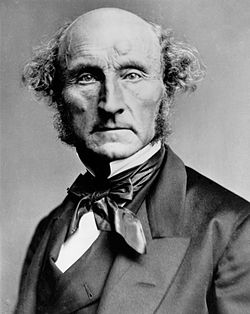
"Stupidity is much the same all the world over. A stupid person's notions and feelings may confidently be inferred from those which prevail in the circle by which the person is surrounded. Not so with those whose opinions and feelings are an emanation from their own nature and faculties."
Standard
Customized

Exlpore more Philosophy quotes

"Let each person decide his or her fate."
"Beauty, love with truth, that is all there is."
"Can any man sacrifice is life for his fellow man?"
"Life cannot be exchange for anything."
"Beauty is the brightness of being."
"The voice says, maybe you don't go to hell for the things you do. Maybe you go to hell for the things you don't do. The things you don't finish."
"The philosophy of a person speaks of what dictates or governs how and what someone believes."
"There is more things in heaven and earth...than are dreamt of by your philosophy."
"There are more things in heaven and earth...than are dreamt of by your philosophy."
"HELLO! Look at me. HELLO! I am so ZEN. This is BLOOD. This is NOTHING. Hello. Everything is nothing, and it's so cool to be ENLIGHTENED. Like me."
Explore more quotes by John Stuart Mill
"The creed which accepts as the foundation of morals, Utility, or the Greatest-Happiness Principle, holds that actions are right in proportion as they tend to promote happiness, wrong as they tend to produce the reverse of happiness. By happiness is intended pleasure, and the absence of pain; by unhappiness, pain, and the privation of pleasure."
"No one can be a great thinker who does not recognize that as a thinker it is his first duty to follow his intellect to whatever conclusions it may lead."
"All political revolutions, not affected by foreign conquest, originate in moral revolutions. The subversion of established institutions is merely one consequence of the previous subversion of established opinions."
"The only power deserving the name is that of masses, and of governments while they make themselves the organ of the tendencies and instincts of masses."
"The only freedom which deserves the name is that of pursuing our own good, in our own way, so long as we do not attempt to deprive others of theirs, or impede their efforts to obtain it."
"The will of the people, moreover, practically means the will of the most numerous or the most active part of the people; the majority, or those who succeed in making themselves accepted as the majority; type people, consequently, may desire to oppress a part of their number; and precautions are as much needed against this as against any other abuse of power."
"As long as justice and injustice have not terminated their ever renewing fight for ascendancy in the affairs of mankind, human beings must be willing, when need is, to do battle for the one against the other."
"Christian morality (so called) has all the characters of a reaction; it is, in great part, a protest against Paganism. Its ideal is negative rather than positive; passive rather than action; innocence rather than Nobleness; Abstinence from Evil, rather than energetic Pursuit of Good: in its precepts (as has been well said) 'thou shalt not' predominates unduly over 'thou shalt."
"The only purpose for which power can be rightfully exercised over any member of a civilized community, against his will, is to prevent harm to others. His own good, either physical or moral, is not sufficient warrant."
bottom of page