top of page
.png)

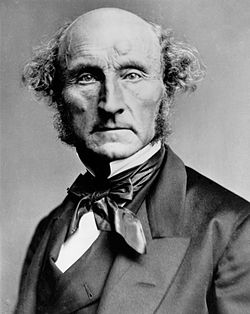
"Both teachers and learners go to sleep at their post as soon as there is no enemy in the field."
Standard
Customized

Exlpore more Education quotes

"The chance that you will become a master in something after the first attempt is neither here nor there. You don't get master's degree by attending school on the first day! Time will tell, so you got to persist!"
"And since we cannot deceive the whole human race all the time, it is most important thus to cut every generation off from all others; for where learning makes a free commerce between the ages there is always the danger that the characteristic errors of one may be corrected by the characteristic truths of another."
"He was a far more voracious reader than me, but he made it a rule never to touch a book by any author who had not been dead at least 30 years. "That's the only kind of book I can trust," he said."It's not that I don't believe in contemporary literature," he added, "but I don't want to waste valuable time reading any book that has not had the baptism of time. Life is too short."
"The student is half afraid to meet one of the great philosophers face to face. He feels himself inadequate and thinks he will not understand him. But if he only knew, the great man, just because of his greatness, is much more intelligible than his modern commentator. The simplest student will be able to understand, if not all, yet a very great deal of what Plato said; but hardly anyone can understand some modern books on Platonism."
"The system that aims at educating our boys and girls in the same manner as in the circus where the trainer teaches the lion to sit on a stool, has not understood the true meaning of education itself. Instead of being like a circus where the trainer uses his stick to make animals do stunts to serve the interest of the audience, the system of education should be like an Orchestra where the conductor waves his stick to orchestrate the music already within the musicians' heart in the most beautiful manner. The teacher should be like the conductor in the orchestra, not the trainer in the circus."
Explore more quotes by John Stuart Mill
"Of two pleasures, if there be one which all or almost all who have experience of both give a decided preference, irrespective of any feeling of moral obligation to prefer it, that is the more desirable pleasure."
"If all mankind minus one were of one opinion, mankind would be no more justified in silencing that one person than he, if he had the power, would be justified in silencing mankind."
"The only freedom which deserves the name is that of pursuing our own good, in our own way, so long as we do not attempt to deprive others of theirs, or impede their efforts to obtain it."
"Popular opinions, on subjects not palpable to sense, are often true, but seldom or never the whole truth."
"The general tendency of things throughout the world is to render mediocrity the ascendant power among mankind."
"It is true that a great statesman is he who knows when to depart from traditions, as well as when to adhere to them. But it is a great mistake to suppose that he will do this better for being ignorant of the traditions."
"The duty of man is the same in respect to his own nature as in respect to the nature of all other things, namely not to follow it but to amend it."
"First, if any opinion is compelled to silence, that opinion may, for aught we can certainly know, be true. To deny this is to assume our own infallibility. Secondly, though the silenced opinion be an error, it may, and very commonly does, contain a portion of the truth; and since the general or prevailing opinion on any subject is rarely or never the whole truth, it is only by the collision of adverse opinions that the remainder of the truth has any chance of being supplied."
bottom of page