top of page
.png)

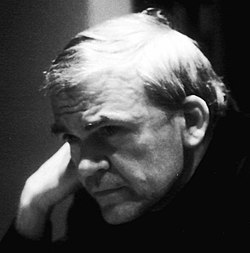
"What drove such people to their sinister occupations? Spite? Certainly, but also the desire for order. Because the desire for order tries to transform the human world into an inorganic reign in which everything goes well, everything functions as a subject of an impersonal will. The desire for order is at the same time a desire for death, because life is a perpetual violation of order. Or, inversely, the desire for order is a virtuous pretext by which man's hatred for man justifies its crimes."
Standard
Customized

Exlpore more Oppression quotes

"In the year 2025, the best men don't run for president, they run for their lives. . . ."
"We came to realise - first with astonishment, then bitterness, and finally with indifference - that intellect apparently wasn't the most important thing...not ideas, but the system; not freedom, but drill. We had joined up with enthusiasm and with good will; but they did everything to knock that out of us."
"The oppressor is never as free as they think they are."
"The hardest memory of slavery that Rialla had to bear was not the lack of freedom, it was the lack of desiring freedom."
"When a system of oppression has become institutionalized it is unnecessary for individuals to be oppressive."
"To Survive In A Ruined World, She Must Embrace The Darkness."
"When you don't make it too far from the plantation, you might as well befriend your captors."
"Colonialism. The enforced spread of the rule of reason. But who is going to spread it among the colonizers?"
"Elinor agreed to it all, for she did not think he deserved the compliment of rational opposition."
"Slaves in the past were captured by force, today's slaves surrender themselves. The masters are the same old folk (who are now more civilized) who would not lift a hand against a fellow human being! They have established economic systems that perpetuate their superiority so the poor are blamed either for their laziness or their fate."
Explore more quotes by Milan Kundera
"The girl was grateful to the young man for every bit of flattery; she wanted to linger for a moment in its warmth and so she said, 'You're very good at lying.''Do I look like a liar?''You look like you enjoy lying to women,' said the girl, and into her words there crept unawares a touch of the old anxiety, because she really did believe that her young man enjoyed lying to women."
"No peace is possible between the novelist and the agélaste [those who do not laugh]. Never having heard God's laughter, the agélastes are convinced that the truth is obvious, that all men necessarily think the same thing, and that they themselves are exactly what they think they are. But it is precisely in losing the certainty of truth and the unanimous agreement of others that man becomes an individual. The novel is the imaginary paradise of individuals. It is the territory where no one possesses the truth — neither Anna nor Karenin — but where everyone has the right to be understood, both Anna and Karenin."
"There is a certain part of all of us that lives outside of time. Perhaps we become aware of our age only at exceptional moments and most of the time we are ageless."
"All the same, a seductive voice from afar kept breaking into her conjugal peace: it was the voice of solitude. She closed her eyes and listened to the sound of a hunting horn coming from the depths of distant forests. There were paths in those forests."
"A meadow is nothing but a field of suffering. Every second some creature is dying in the gorgeous green expanse, ants eat wriggling earthworms, birds lurk in the sky to pounce on a weasel or a mouse. You see that black cat, standing motionless in the grass. She is only waiting for an opportunity to kill. I detest all that naA ve respect for nature. Do you think that a doe in the jaws of a tiger feels less horror than you? People thought up the idea that animals don't have the same capability for suffering as human, because otherwise they couldn't bear the knowledge that they are surrounded by a world of nature that is horror and nothing but horror."
"Today I know this: when it comes time to take stock, the most painful wound is that of broken friendships; and there is nothing more foolish than to sacrifice a friendship to politics."
"Without realizing it, the individual composes his life according to the laws of beauty even in times of greatest distress."
"Such are the Splendors and Miseries of memory: it is proud of its ability to keep truthful track of the logical sequence of past events; but when it comes to how we experienced them at the time, memory feels no obligation to truth."
"Indeed, the only truly serious questions are ones that even a child can formulate. Only the most naive of questions are truly serious. They are the questions with no answers. A question with no answer is a barrier that cannot be breached. In other words, it is questions with no answers that set the limit of human possibilities, describe the boundaries of human existence."
"For Sabina, living in truth, lying neither to ourselves nor to others, was possible only away from the public: the moment someone keeps an eye on what we do, we involuntarily make allowances for that eye, and nothing we do is truthful. Having a public, keeping a public in mind, means living in lies."
bottom of page