top of page
.png)

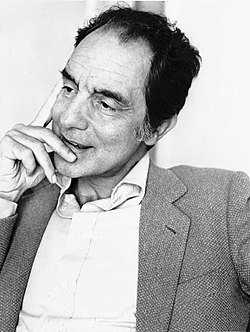
"For Leopardi, unhappy hedonist that he was, what is unknown is always more attractive than what is known; hope and imagination are the only consolations for the disappointments and sorrows of experience. Man therefore projects his desire into infinity and feels pleasure only when he is able to imagine that this pleasure has no end."
Standard
Customized

Exlpore more Philosophy quotes

"In the equation of life, the limit does not exist."
"Think independently and critically, but never forget to think with understanding and love."
"Our life on earth is and ought to be material and carnal. But we have not yet learned to manage our materialism and carnality properly they are still entangled with the desire for ownership."
"A philosopher is a lover and searcher of truth, beauty, meaning, and wisdom."
"There is nothing wrong or right, only our thoughts make it so."
"I am writing just to inspire you, encourage you, empower you, and give you hope when you are fighting your life's battle."
"I am not pretty, I am not ugly,I am not true, I am not false, I am just me, a reality, a conception not a misinterpretation."
"I am not the Messiah. I am a simple human being with the unlimited power of love and kindness."
"I can't tell you what consciousness is, but I know I can only think when I am conscious."
"I can resist everything but love."
Explore more quotes by Italo Calvino
"The word connects the visible trace with the invisible thing, the absent thing, the thing that is desired or feared, like a frail emergency bridge flung over an abyss."
"To fall in the void as I fell: none of you knows what that means I went down into the void, to the most absolute bottom conceivable, and once there I saw that the extreme limit must have been much, much farther below, very remote, and I went on falling, to reach it."
"Reading is going toward something that is about to be, and no one yet knows what it will be."
"In fact the problem Leopardi is facing is speculative and metaphysical, a problem in the history of philosophy from Parmenides to Descartes and Kant: the relationship between the idea of infinity as absolute space and absolute time, and our empirical knowledge of space and time."
"There are days when everything I see seems to me charged with meaning: messages it would be difficult for me to communicate to others, define, translate into words, but which for this very reason appear to me decisive. They are announcements or presages that concern me and the world at once: for my part, not only the external events of my existence but also what happens inside, in the depths of me; and for the world, not some particular event but the general way of being of all things."
"Do you believe that every story must have a beginning and an end? In ancient times a story could end only in tow ways: having passed all the tests, the hero and the heroine married, or else they died. The ultimate meaning to which all stories refer has two faces: the continuity of life, the inevitability of death."
"I, on the contrary, have been convinced for some time that perfection is not produced except marginally and by chance; therefore it deserves no interest at all, the true nature of things being revealed only in disintegration."
"They knew each other. He knew her and so himself, for in truth he had never known himself. And she knew him and so herself, for although she had always known herself she had never been able to recognize it until now."
"That wish to enter into an elusive element which had urged Cosimo into the trees, was still working now inside him unsatisfied, making him long for a more intimate link, a relationship which would bind him to each leaf and twig and feather and flutter."
bottom of page