top of page
.png)

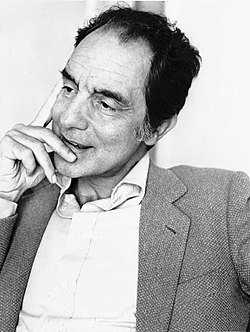
"It's better not to know authors personally, because the real person never corresponds to the image you form of him from reading his books."
Standard
Customized

Exlpore more Literature quotes

"Shakespeare shook his head and sunk his chin into his ruff, making him look more owl-like than ever. "I have written about other worlds often enough. I have said what I can say. There are many kinds of reality. This is but one kind."
"Pages entertain me more than pictures do."
"A book lives a new life every time it is read."
"I read to know the past, I write to express my love for the future."
"I don't know where people got the idea that characters in books are supposed to be likable. Books are not in the business of creating merely likeable characters with whom you can have some simple identification with. Books are in the business of creating great stories that make you're brain go ahhbdgbdmerhbergurhbudgerbudbaaarr."
"Reading a good book helps us to feel un-alone."
"This philistinism of interpretation is more rife in literature than in any other art. For decades now, literary critics have understood it to be their task to translate the elements of the poem or play or novel or story into something else. Sometimes a writer will be so uneasy before the naked power of his art that he will install within the work itself - albeit with a little shyness, a touch of the good taste of irony - the clear and explicit interpretation of it. Thomas Mann is an example of such an overcooperative author. In the case of more stubborn authors, the critic is only too happy to perform the job."
"As the hours crept by, the afternoon sunlight bleached all the books on the shelves to pale, gilded versions of themselves and warmed the paper and ink inside the covers so that the smell of unread words hung in the air."
"Considering that the modern and contemporary literature taught in most universities is largely bleak, cynical, morbid, pessimistic, misanthropic dogmatism, often written by suicidal types who sooner or later kill themselves with alcohol or drugs, or shotguns, Professor Takuda was a remarkably cheerful man."
Explore more quotes by Italo Calvino
"The word connects the visible trace with the invisible thing, the absent thing, the thing that is desired or feared, like a frail emergency bridge flung over an abyss."
"There are days when everything I see seems to me charged with meaning: messages it would be difficult for me to communicate to others, define, translate into words, but which for this very reason appear to me decisive. They are announcements or presages that concern me and the world at once: for my part, not only the external events of my existence but also what happens inside, in the depths of me; and for the world, not some particular event but the general way of being of all things."
"They knew each other. He knew her and so himself, for in truth he had never known himself. And she knew him and so herself, for although she had always known herself she had never been able to recognize it until now."
"Perhaps everything lies in knowing what words to speak, what actions to perform, and in what order and rhythm; or else someone's gaze, answer, gesture is enough; it is enough for someone to do something for the sheer pleasure of doing it, and for his pleasure to become the pleasure of others: at that moment, all spaces change, all heights, distances; the city is transfigured, becomes crystalline, transparent as a dragonfly."
"Though I leave the house as little as possible, I have the impression that someone is disturbing my papers. More than once I have discovered that some pages were missing from my manuscripts. A few days afterward I would find the pages in their place again. But often I no longer recognize my manuscripts, as if I had forgotten what I had written, or as if overnight I were so changed that no longer recognized myself in the self of yesterday."
"What he sought was always something lying ahead, and even if it was a matter of the past it was a past that changed gradually as he advanced on his journey, because the traveller's past changes according to the route he has followed: not the immediate past, that is, to which each day that goes by adds a day, but the more remote past. Arriving at each new city, the traveller finds again a past of his that he did not know he had: the foreignness of what you no longer are or no longer possess lies in wait for you in foreign, unpossessed places."
"A person, for example, reads in adulthood a book that is important for him, and it makes him say, 'How could I have lived without reading it!' and also, 'What a pity I did not read it in my youth!' Well, these statements do not have much meaning, especially the second, because after he has read that book, his life becomes the life of a person who has read that book, and it is of little importance whether he read it early or late, because now his life before that reading also assumes a form shaped by that reading."
"How well I would write if I were not here! If between the white page and the writing of words and stories that take shape and disappear without anyone's ever writing them there were not interposed that uncomfortable partition which is my person! Style, taste, individual philosophy, subjectivity, cultural background, real experience, psychology, talent, tricks of the trade: all the elements that make what I write recognizable as mine seem to me a cage that restricts my possibilities. If I were only a hand, a severed hand that grasps a pen and writes...who would move this hand? The anonymous throng? The spirit of the times? The collective unconscious? I do not know."
bottom of page