top of page
.png)

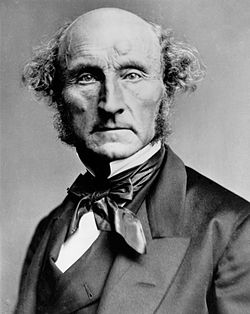
"The will of the people, moreover, practically means the will of the most numerous or the most active part of the people; the majority, or those who succeed in making themselves accepted as the majority; type people, consequently, may desire to oppress a part of their number; and precautions are as much needed against this as against any other abuse of power."
Standard
Customized

Exlpore more Politics quotes

"Patriotism is the narcissism of countries."
"Extreme positions are not succeeded by moderate ones, but by contrary extreme positions."
"A reactionary is a somnambulist walking backwards."
"I seldom think of politics more than eighteen hours a day."
"There is this common notion that young conservatives are the few, that most people had liberal worldviews when they were young. If this is true, then it is with great irony that a number of old liberals must never had progressed into conservatives as they grew older."
"Democracy, freedom and liberty do not make us more than what we are; it is our commitment that matters."
Explore more quotes by John Stuart Mill
"Of two pleasures, if there be one which all or almost all who have experience of both give a decided preference, irrespective of any feeling of moral obligation to prefer it, that is the more desirable pleasure."
"If all mankind minus one were of one opinion, mankind would be no more justified in silencing that one person than he, if he had the power, would be justified in silencing mankind."
"The only freedom which deserves the name is that of pursuing our own good, in our own way, so long as we do not attempt to deprive others of theirs, or impede their efforts to obtain it."
"Popular opinions, on subjects not palpable to sense, are often true, but seldom or never the whole truth."
"The general tendency of things throughout the world is to render mediocrity the ascendant power among mankind."
"It is true that a great statesman is he who knows when to depart from traditions, as well as when to adhere to them. But it is a great mistake to suppose that he will do this better for being ignorant of the traditions."
"The duty of man is the same in respect to his own nature as in respect to the nature of all other things, namely not to follow it but to amend it."
"First, if any opinion is compelled to silence, that opinion may, for aught we can certainly know, be true. To deny this is to assume our own infallibility. Secondly, though the silenced opinion be an error, it may, and very commonly does, contain a portion of the truth; and since the general or prevailing opinion on any subject is rarely or never the whole truth, it is only by the collision of adverse opinions that the remainder of the truth has any chance of being supplied."
bottom of page