top of page
.png)

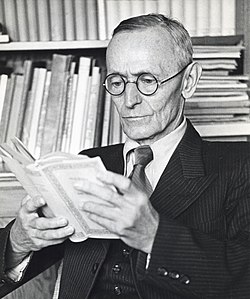
"Wisdom cannot be imparted. Wisdom that a wise man attempts to impart always sounds like foolishness to someone else ... Knowledge can be communicated, but not wisdom. One can find it, live it, do wonders through it, but one cannot communicate and teach it."
Standard
Customized

Exlpore more Wisdom quotes

"The best way to easily identify a counterfeit currency is to have a full exposure to the original currency. If you don't know your true vision, any satanic vision can cross your way and you might not know it."
"The man who reads nothing at all is better educated than the man who reads nothing but newspapers."
"Carelessness does more harm than a want of knowledge."
"Knowledge is the key to the development of civilization."
"Two things influence one's wisdom: remarkable experience and " evenmuch more " accumulated knowledge."
"Yet Byron never made tea as you do, who fill the pot so that when you put the lid on the tea spills over. There is a brown pool on the table-it is running among your books and papers. Now you mop it up, clumsily, with your pocket-hankerchief. You then stuff your hankerchief back into your pocket-that is not Byron; that is so essentially you that if I think of you in twenty years' time, when we are both famous, gouty and intolerable, it will be by that scene: and if you are dead, I shall weep."
Explore more quotes by Hermann Hesse
"Seeking nothing, emulating nothing, breathing gently, he moved in an atmosphere of imperishable calm, impresihable light, inviolable peace."
"He was pleased with everything that he did and learned and the days and months passed quickly. But he learned more from the river than Vasudeva could teach him. He learned from it continually. Above all, he learned from it how to listen, to listen with a still heart, with a waiting, open soul, without passion, without desire, without judgment, without opinions."
"It is easier to bear the worries of wandering than to find peace in your hometown, where only the sage can live in a happy house surrounded by trite troubles and daily distractions."
"If a beautiful thing were to remain beautiful for all eternity, I'd be glad, but all the same I'd look at it with a colder eye. I'd say to myself: You can look at it any time, it doesn't have to be today."
"He tried to think of death as he had done now and then, but that tired him and he dozed off. When he awoke an hour later, he felt fresh and calm as though he had slept for days."
"Whether it is good or evil, whether life in itself is pain or pleasure, whether it is uncertain-that it may perhaps be this is not important-but the unity of the world, the coherence of all events, the embracing of the big and the small from the same stream, from the same law of cause, of becoming and dying."
"Once he said to her: 'You are like me; you are different from other people. You are Kamala and no one else, and within you there is a stillness and sanctuary to which you can retreat any time and be yourself, just as I can. Few people have that capacity and yet everyone could have it."
"To deal with history [life] means to abandon one's self to chaos but to retain a belief in the ordination and the meaning. It is a very serious task."
"It was fortunate that love did not need words, or else it would be full of misunderstanding and foolishness."
"Thoughts and sorrows seem to have remained on the other side of the mountains. Between tormented men and hateful deeds, a person has to think and sorrow so much! Back there it is so difficult and so desperately important to find a reason for staying alive. How else should a person go on living? Sheer misery makes one profound."
bottom of page