top of page
.png)

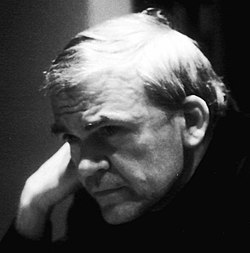
"Revolution and youth are closely allied. What can a revolution promise to adults? To some it brings disgrace, to others favor. But even that favor is questionable, for it affects only the worse half of life, and in addition to advantages it also entails uncertainty, exhausting activity and upheaval of settled habits.Youth is substantially better off: it is not burdened by guilt, and the revolution can accept young people in toto. The uncertainty of revolutionary times is an advantage for youth, because it is the world of the fathers that is challenged. How exciting to enter into the age of maturity over the shattered ramparts of the adult world!"
Standard
Customized

Exlpore more Revolution quotes

"Revolution is the accession of the peoples, and, at the bottom, the People is Man."
"It is amazing how desperately the self-proclaimed revolutionaries grope for their own orthodoxy."
"We are not subjects of a State founded upon law, but members of a society founded upon revolution. Revolution is our obligation: our hope of evolution. The Revolution is in the individual spirit, or it is nowhere. It is for all, or it is nothing. If it is seen as having any end, it will never truly begin."
"Quite like religious fundamentalism, educational fundamentalism is based upon bookish creeds created by the self-proclaimed authority figures of the system. And this very fundamentalism is the cause of all the growing conflicts between the student-body of the education society and the teachers running that society. These conflicts further become tools of exploitation in the hands of a handful of war-mongering, authoritarian, blood-sucking politicians."
"In the case of Tunisia, it was indeed this single act that sparked what had been long-standing active protest movements and moved them forward. But that's not so unusual. Let's look at our own history. Take the civil rights movement. There had been plenty of concern and activism about violent repression of blacks in the South, and it took a couple of students sitting in at a lunch counter to really set it off. Small acts can make a big difference when there is a background of concern, understanding, and preliminary activism."
"Anon from the castle wallsThe crescent banner falls,And the crowd beholds instead,Like a portent in the sky,Iskander's banner fly,The Black Eagle with double head;And a shout ascends on high,For men's souls are tired of the Turks,And their wicked ways and works,That have made of Ak-HissarA city of the plague;And the loud, exultant cryThat echoes wide and farIs: "Long live Scanderbeg!"
"The digital revolution is far more significant than the invention of writing or even of printing."
"We revolutionaries acknowledge the right to revolution when we see that the situation is no longer tolerable, that it has become a frozen. Then we have the right to overthrow it."
"But, in general, the protective system of our day is conservative, while the free trade system is destructive. It breaks up old nationalities and pushes the antagonism of the proletariat and the bourgeoisie to the extreme point. In a word, the free trade system hastens the social revolution. It is in this revolutionary sense alone, gentlemen, that I vote in favor of free trade."
"Every revolution starts with the aim to help the poor, but when the poor get it they forget who they were and become the new oppressors. The cycle goes on forever."
Explore more quotes by Milan Kundera
"The girl was grateful to the young man for every bit of flattery; she wanted to linger for a moment in its warmth and so she said, 'You're very good at lying.''Do I look like a liar?''You look like you enjoy lying to women,' said the girl, and into her words there crept unawares a touch of the old anxiety, because she really did believe that her young man enjoyed lying to women."
"No peace is possible between the novelist and the agélaste [those who do not laugh]. Never having heard God's laughter, the agélastes are convinced that the truth is obvious, that all men necessarily think the same thing, and that they themselves are exactly what they think they are. But it is precisely in losing the certainty of truth and the unanimous agreement of others that man becomes an individual. The novel is the imaginary paradise of individuals. It is the territory where no one possesses the truth — neither Anna nor Karenin — but where everyone has the right to be understood, both Anna and Karenin."
"Every novel says to the reader: "Things are not as simple as you think. That is the novel's eternal truth, but it grows steadily harder to hear amid the din of easy, quick answers that come faster than the question and block it off. In the spirit of our time, it's either Anna or Karenin who is right, and the ancient wisdom of Cervantes, telling us about the difficulty of knowing and the elusiveness of truth, seems cumbersome and useless."
"There is a certain part of all of us that lives outside of time. Perhaps we become aware of our age only at exceptional moments and most of the time we are ageless."
"All the same, a seductive voice from afar kept breaking into her conjugal peace: it was the voice of solitude. She closed her eyes and listened to the sound of a hunting horn coming from the depths of distant forests. There were paths in those forests."
"Fortunately women have the miraculous ability to change the meaning of their actions after the event."
"A meadow is nothing but a field of suffering. Every second some creature is dying in the gorgeous green expanse, ants eat wriggling earthworms, birds lurk in the sky to pounce on a weasel or a mouse. You see that black cat, standing motionless in the grass. She is only waiting for an opportunity to kill. I detest all that naA ve respect for nature. Do you think that a doe in the jaws of a tiger feels less horror than you? People thought up the idea that animals don't have the same capability for suffering as human, because otherwise they couldn't bear the knowledge that they are surrounded by a world of nature that is horror and nothing but horror."
"Let the planet be convulsed with exploding bombs, the country ravished daily by new hordes, all his neighbors taken out and shot - he could accept it all more easily than he dared to admit. But the grief implicit in Tereza's dream was something he could not endure."
bottom of page