.png)
Robert Downey Jr.: Turning a Troubled Past into Hollywood Glory
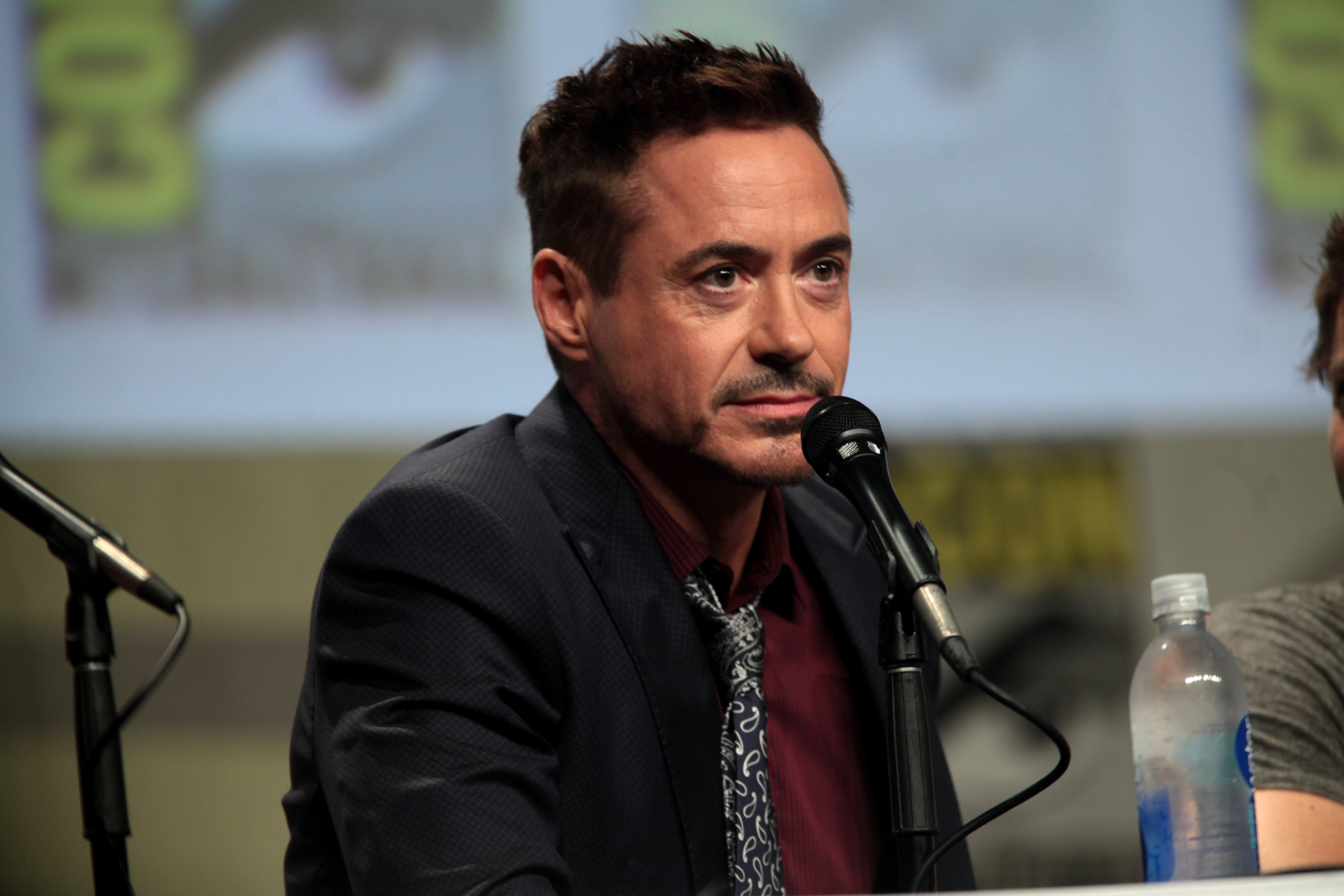
It began in a haze — not of fame, but of smoke. In the early 1970s, inside a cluttered New York loft filled with artists, filmmakers, and free spirits, six-year-old Robert Downey Jr. sat wide-eyed among adults passing joints and chasing ideas. One day, his father — the avant-garde filmmaker Robert Downey Sr. — handed him a marijuana cigarette. “I passed him a joint,” Downey Sr. would later admit, calling it “a terrible, stupid mistake… just to be funny.” For young Robert, it wasn’t just a joke — it was a formative moment. In a household where substance use blurred the lines between rebellion and routine, this act marked the beginning of a complex relationship with drugs, fatherhood, and identity. It was a small moment that would cast a long shadow, eventually becoming one of the defining threads in one of Hollywood’s most turbulent — and ultimately redemptive — life stories.
Growing up in Greenwich Village's bohemian landscape, young Robert was immersed in a world where creativity and chaos danced together. His father was a provocateur of cinema, creating avant-garde films that pushed boundaries, while his mother, Elsie, was an actress who appeared in many of his father's projects. The Downey household was anything but conventional—a place where artistic expression was paramount, rules were fluid, and experimentation was encouraged. It was an environment that fostered incredible creativity but also planted seeds of confusion about boundaries, normalcy, and what constituted a stable foundation.
This unconventional upbringing gave Robert an early taste of both fame and its darker companions. By his teenage years, he had already developed a sophisticated understanding of performance, having appeared in several of his father's films. Yet beneath the precocious talent lay a young man grappling with questions of identity and belonging. The very household that nurtured his artistic gifts also normalized behaviours that would later threaten to destroy everything he built.
The 1980s marked Robert's emergence as a serious actor. His breakout role in "Less Than Zero" in 1987 was eerily prophetic—he played a wealthy young man spiralling into drug addiction. The irony wasn't lost on anyone, including Robert himself. Here was an actor so convincing in portraying addiction that it seemed effortless, natural even. What audiences didn't fully grasp was how much of that performance came from places of genuine understanding and personal experience.
Throughout the late '80s and '90s, Robert's career trajectory seemed unstoppable. He delivered memorable performances in films like "Chaplin," earning an Academy Award nomination for his transformative portrayal of the legendary silent film star. Critics hailed his chameleon-like ability to disappear into roles, to become completely other people with stunning authenticity. Yet even as his professional star rose, his personal life was quietly unravelling.
The substances that had been casually introduced in childhood had evolved into something far more sinister. What began as experimentation had transformed into dependence, and dependence had grown into a monster that would soon devour nearly everything Robert held dear. The same sensitivity and emotional depth that made him such a compelling actor also made him vulnerable to the numbing escape that drugs seemed to provide.

The fall, when it came, was swift and public. The late 1990s and early 2000s became a series of headlines that painted a devastating picture: arrests, courtrooms, jail time, and rehab stints that seemed to offer only temporary reprieve. In 1996, he was arrested for possession of heroin, cocaine, and an unloaded pistol. More arrests followed—sleeping in a neighbour’s bed under the influence, missing mandatory drug tests, violating probation. Each incident chipped away at his reputation and opportunities.
Perhaps most heartbreaking was watching someone with such extraordinary talent systematically destroying the very thing that could save him. Studios became unwilling to insure him. Projects fell through. Friends and colleagues watched helplessly as one of Hollywood's most gifted actors seemed determined to throw it all away. The man who could embody any character on screen appeared unable to find himself in real life.
The turning point came in 2003, though like most pivotal moments in recovery, it wasn't immediately recognized as such. Robert has spoken about a significant turning point in his recovery, where he made the conscious decision to let go of his past, symbolically marking a break from his addiction. It sounds almost cinematic—a dramatic gesture that marks the end of one chapter and the beginning of another. But recovery, as Robert would learn, isn't sustained by single moments of revelation. It requires daily choices, constant vigilance, and the construction of an entirely new way of being in the world.
Central to Robert's transformation was meeting Susan Levin, who would become his wife in 2005. Susan wasn't just a romantic partner; she was someone who saw through the chaos to the man underneath and refused to enable his destructive patterns. Their relationship became a cornerstone of his recovery, providing the stability and unconditional love that had been missing from his life. As he has said, he credits his wife with helping him overcome his drug and alcohol habits, along with his family, therapy, meditation, twelve-step recovery programs, yoga, and the practice of Wing Chun kung fu.
The multifaceted approach to his recovery revealed Robert's understanding that addiction isn't solved by willpower alone. He embraced therapy to address underlying psychological patterns. He found solace and focus in meditation, learning to sit with discomfort rather than immediately seeking chemical escape. Twelve-step programs provided community and structure. Yoga offered physical and spiritual grounding. But perhaps most intriguingly, he immersed himself in Wing Chun kung fu, the martial art that became both physical discipline and philosophical framework.
Wing Chun offered Robert something unique—a practice that demanded presence, precision, and patience. The martial art's emphasis on using an opponent's energy against them became a metaphor for how he learned to handle his own destructive impulses. Rather than fighting his addiction head-on with brute force, he learned to redirect that energy, to transform the very sensitivity that had made him vulnerable into a source of strength and artistic power.
Fatherhood also played a crucial role in his transformation. Having children with Susan gave Robert something beyond himself to live for, a future to protect and nurture. The responsibility of being present for his family provided daily motivation to maintain his sobriety and continue growing as a person. It's one thing to recover for yourself; it's another entirely to recover knowing that small people depend on your stability and presence.
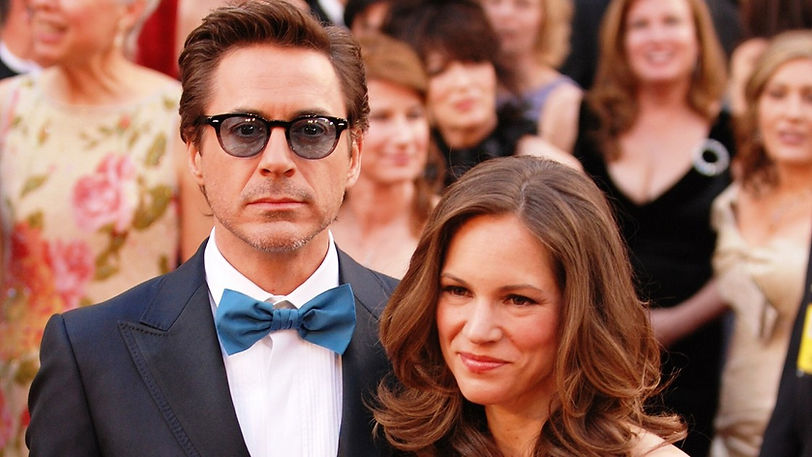
The professional resurrection began gradually. Director Jon Favreau took a significant risk in 2008 by casting Robert as Tony Stark in "Iron Man." The choice seemed inspired—who better to play a brilliant man who had nearly destroyed himself than someone who had lived that exact experience? The parallel between Tony Stark's journey and Robert's own recovery wasn't lost on audiences or the actor himself. Both men were gifted individuals who had hit rock bottom and clawed their way back through intelligence, determination, and the support of people who believed in them.
"Iron Man" wasn't just a comeback; it was a cultural phenomenon that launched the Marvel Cinematic Universe and redefined Robert's place in Hollywood. Suddenly, he wasn't just a talented actor with a troubled past—he was the face of one of the most successful film franchises in history. The irony was beautiful: the man who had once seemed unemployable was now indispensable to a multi-billion-dollar enterprise.
But perhaps more meaningful than the professional success was how Robert handled it. Rather than viewing his recovery as something to hide or overcome, he integrated it into his public persona in a way that felt authentic and hopeful. He spoke openly about his struggles, not with shame but with the wisdom of someone who had learned profound lessons about resilience, second chances, and the possibility of redemption.
The years following "Iron Man" saw Robert continue to evolve as both an artist and a person. His performances in the Marvel films showcased not just his acting abilities but his growth as a human being. The wit and charm that made Tony Stark beloved came from a man who had learned to find joy in sobriety, who had discovered that life without substances could be more vibrant and meaningful than any artificial high.
His venture into other projects, like the "Sherlock Holmes" films with Guy Ritchie, demonstrated his range while maintaining the confidence and presence that sobriety had restored. Each role seemed to build upon the last, creating a body of work that spoke to themes of redemption, intelligence overcoming adversity, and the power of choosing to be better.
In recent years, Robert's journey has come full circle in unexpected ways. In 2024, he won the Academy Award for Best Supporting Actor for his performance in "Oppenheimer," along with comparable awards at the Golden Globes, BAFTAs, Critics' Choice Awards, and Screen Actors Guild Awards. The recognition for his portrayal of Lewis Strauss in Christopher Nolan's biographical drama represented not just career achievement but validation of his complete transformation as both artist and person.
Now maintaining over 15 years of sobriety, Robert's story has become one of Hollywood's most inspiring comeback narratives. His journey from the depths of addiction to the heights of professional and personal fulfilment offers hope to anyone struggling with similar demons. It demonstrates that rock bottom can indeed become a foundation for rebuilding, that the very experiences that nearly destroy us can become sources of wisdom and strength.

What makes Robert's story particularly compelling is its honesty about the ongoing nature of recovery. He doesn't present himself as someone who conquered addiction once and moved on. Instead, he embodies the understanding that recovery is a daily practice, requiring constant attention and commitment. His openness about the tools he uses—therapy, meditation, martial arts, family support—provides a roadmap for others facing similar challenges.
The transformation from a five-year-old boy handed drugs by his father to a man who has become a symbol of redemption and second chances is remarkable not just for its dramatic arc, but for its authenticity. Robert Downey Jr. didn't just recover from addiction; he used that experience to become a more empathetic, grounded, and ultimately successful person than he might have been without those struggles.
His story reminds us that our greatest wounds can become our greatest strengths, that the very experiences that seem to disqualify us from success can actually become the foundation for extraordinary achievement. In a culture obsessed with perfection and image management, Robert's willingness to acknowledge his struggles while celebrating his recovery offers a different model of success—one based on growth, authenticity, and the courage to keep moving forward even when the path seems impossible.
Today, Robert Downey Jr. stands as proof that it's never too late to change, that second chances are possible, and that with the right support, tools, and commitment, even the most devastating falls can become launching pads for remarkable rises. His phoenix-like resurrection from the ashes of addiction has given hope to countless people facing their own struggles, proving that redemption isn't just a plot device for movies—it's a real possibility for anyone willing to do the hard work of transformation.
The boy who was introduced to substances at five became the man who chose sobriety in his thirties and has maintained it for over two decades. The actor who once seemed destined to become a cautionary tale instead became one of Hollywood's most beloved figures. Robert Downey Jr.'s journey from darkness to light continues to inspire, reminding us all that our stories are never finished being written, and that sometimes our greatest triumphs come not despite our struggles, but because of how we choose to face them.
If you found Robert Downey Jr.'s incredible journey inspiring, we'd love to hear your thoughts! Drop a comment below, like, and share this story with others who could benefit from his message of redemption and second chances. Let's spread the power of transformation!
More Stories You May Like
