.png)
Kalpana Chawla: The Journey of India’s First Woman in Space

There is a kind of child who cannot stop looking upward. In Karnal, a mid-sized city in the northern Indian state of Haryana, one such child would lie on a charpoy in the family courtyard on warm evenings, watching aircraft cut bright lines across the Indian sky. Her name was Kalpana — a word that means imagination in Hindi — and the name, as it turned out, was prophetic.
Born on March 17, 1962, Kalpana Chawla was the youngest of four children in a family where ambition was gently constrained by convention. Her father, Banarsi Lal Chawla, had imagined his daughter becoming a teacher or a doctor — safe, respected, certain. But Kalpana was drawn to something else entirely: the sensation of speed, altitude, the roar of machines that defied the ground. She was, even as a young girl, already somewhere between here and the sky.
She enrolled at Tagore Baal Niketan Senior Secondary School in Karnal, where her teachers remember a student who asked uncomfortable numbers of questions and refused to let a concept pass until she had truly understood it. After completing her schooling, she pursued a Bachelor of Engineering in Aeronautical Engineering from Punjab Engineering College in Chandigarh in 1982 — a field that few women entered at the time, and one that her community regarded with a mixture of admiration and bewilderment. Kalpana was unmoved by the scepticism. She had a direction, and she followed it.

What happened next was what happens to those who are relentless in a quiet way: one door, once opened, revealed another. She travelled to the United States, earning a Master of Science in Aerospace Engineering from the University of Texas at Arlington in 1984, and then a Ph.D. in Aerospace Engineering from the University of Colorado Boulder in 1988. In a country she had never lived in before, without the scaffolding of family or familiarity, she built herself into a formidable researcher and engineer. She joined NASA's Ames Research Centre at Moffett Field, California, where she worked on computational fluid dynamics — the science of understanding how gases behave when they interact with moving surfaces, the very discipline that makes flight possible.
In December 1994, NASA announced that Kalpana Chawla had been selected as an astronaut candidate — one of fifteen chosen from a pool of more than 2,000 applicants. She was thirty-two years old. She had, over the course of a decade, transformed herself from a girl in Karnal who stared at planes into a scientist whose expertise was needed among the stars. The distance between those two versions of herself was staggering, and yet she had covered it in the most human way imaginable: step by careful step, year by year, refusing to stop.
She completed her astronaut training and was assigned to the flight crew of STS-87, a mission aboard the Space Shuttle Columbia. On November 19, 1997, the shuttle launched from Kennedy Space Centre in Florida, and Kalpana Chawla became the first woman of Indian origin to reach space. Back in India, millions of people gathered around television sets in homes, schools, and tea stalls. In Karnal, her family watched with a particular mixture of pride and disbelief. Their daughter — their youngest child — was orbiting the Earth.
The STS-87 mission lasted nearly sixteen days. During that time, the crew deployed the Spartan-201 solar research satellite and conducted a spacewalk to retrieve it after a malfunction — an unplanned test of both the astronauts and the mission's resilience. Kalpana logged more than 376 hours in space on that first flight. She described the experience of looking at Earth from orbit with the directness of someone who takes nothing for granted: the borders that divide nations, she noted, are invisible from up there. Only the planet itself is visible — singular, fragile, and luminous.
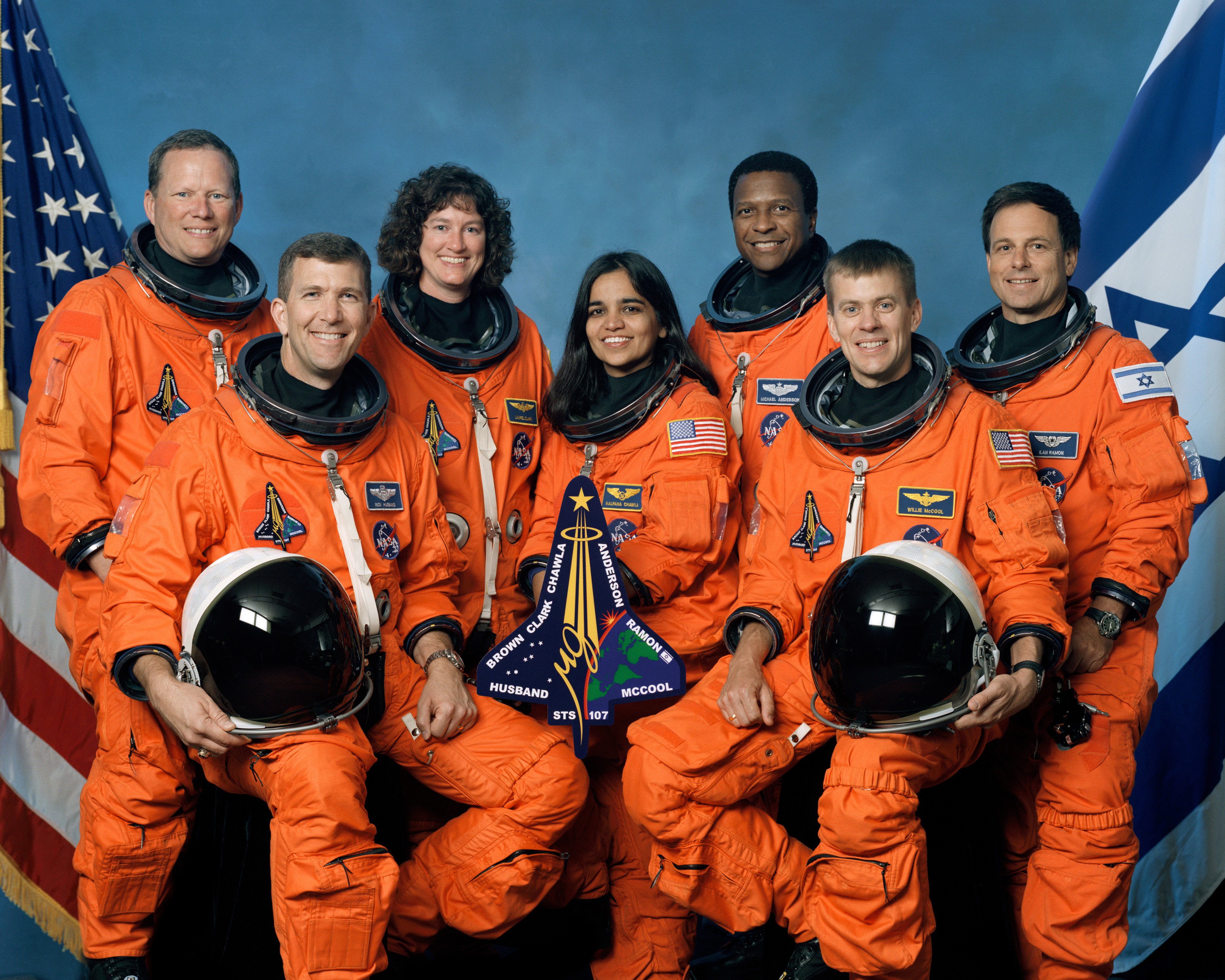
On January 16, 2003, Kalpana Chawla flew into space a second time, as a mission specialist aboard the Space Shuttle Columbia on the STS-107 mission. Alongside six crewmates — Commander Rick Husband, pilot William McCool, and mission specialists Michael Anderson, David Brown, Laurel Clark, and Israeli astronaut Ilan Ramon — she carried with her not only her scientific instruments but the hopes of countless people who saw in her something of themselves.
The STS-107 mission was devoted almost entirely to science. Over sixteen days, the crew conducted more than eighty experiments covering biology, physics, medicine, and atmospheric research. Kalpana's responsibilities included experiments in combustion and fluid physics — work with implications for technologies on Earth as much as for future space exploration. By all accounts, the mission was proceeding exactly as planned.
What no one on board knew was that during launch, a piece of insulating foam had broken away from the external fuel tank and struck the leading edge of Columbia's left wing, damaging the thermal protection tiles that prevent the shuttle from burning up during re-entry. Engineers on the ground had observed the foam strike and raised concerns, but NASA management determined — incorrectly, and fatally — that the damage posed no significant risk.
On February 1, 2003, as Columbia re-entered the atmosphere over the southern United States at approximately eighteen times the speed of sound, the damaged wing allowed superheated gases to penetrate the shuttle's structure. Within minutes, the spacecraft disintegrated. All seven crew members were lost. Kalpana Chawla was forty years old.
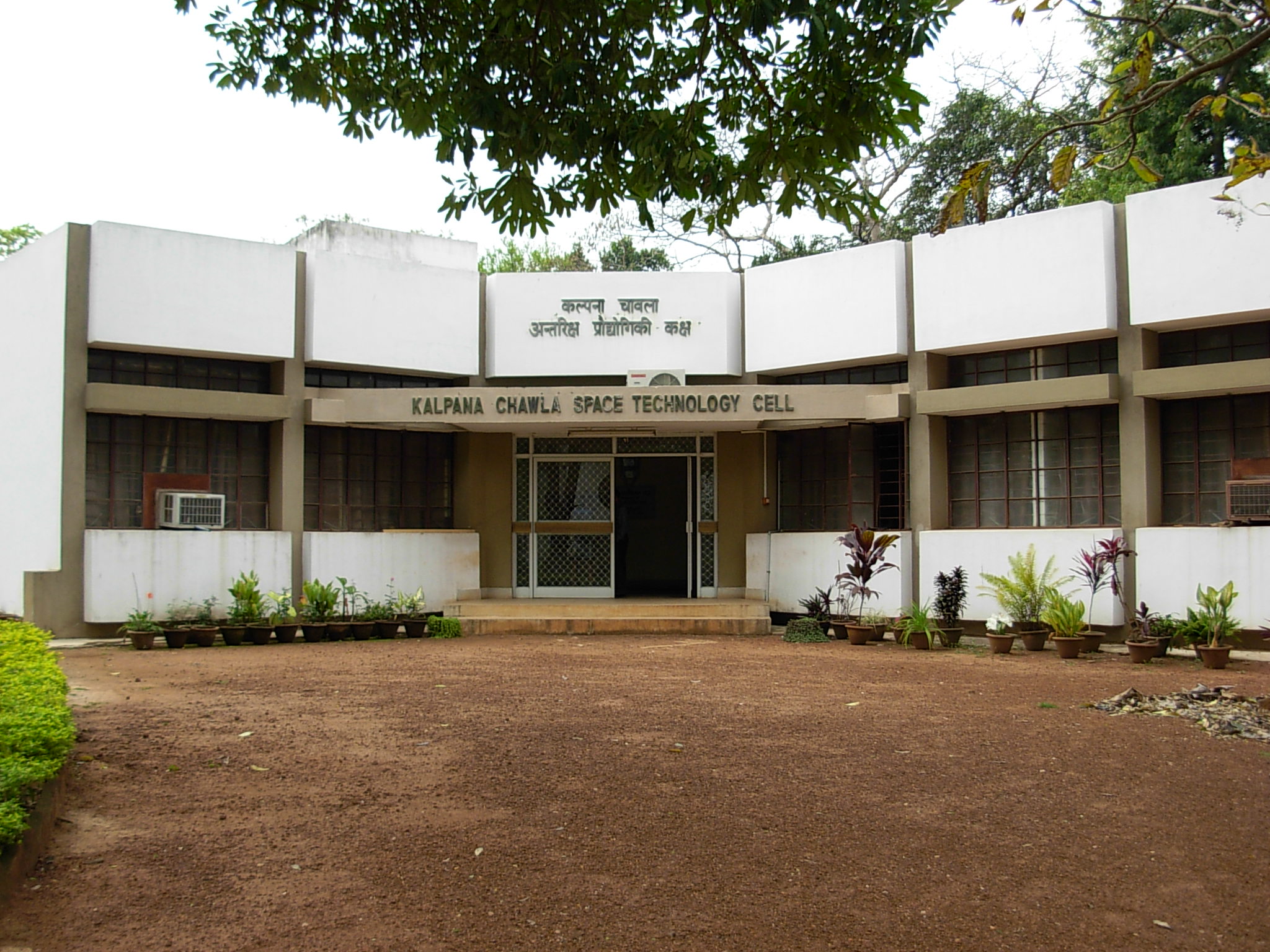
The world grieved. India grieved in the particular way a country mourns someone it had claimed as its own — someone who had walked out of an ordinary city and returned transformed, bearing the flag of possibility. Tributes poured in from scientists, schoolchildren, astronauts, and strangers. Universities established scholarships in her memory. Her hometown of Karnal built a planetarium. Her face appeared on postage stamps.
Legacies are not built by those who set out to build them. Kalpana Chawla did not pursue a career in aerospace engineering in order to become an inspiration — she pursued it because she wanted to understand the mechanics of flight, and then, having understood them, she wanted to fly. The inspiration was a consequence of her determination, not its purpose.
And yet the inspiration is real and vast. In India, Kalpana Chawla is frequently cited by researchers, educators, and students as a source of motivation for pursuing careers in engineering and science. She demonstrated, with the authority of lived experience, that a girl from a mid-sized town in northern India could become one of the most accomplished scientists and explorers of her generation. That is not symbolism. It is evidence.
Her spirit lives on in NASA's ongoing missions too. The agency named a Cygnus cargo spacecraft the SS Kalpana Chawla, which transported supplies to the International Space Station — ensuring that her journey to orbit continued in some form long after she was gone.
She once said that the question of where she came from was less interesting to her than the question of what she could learn and where she could go. That orientation — outward and forward, always — is what made her not only a remarkable astronaut, but a remarkable human being. She belonged, ultimately, not to any one country or city or community, but to that rarer fellowship: those who have touched the face of the cosmos and looked back at the Earth with wonder.
The sky above Karnal has not changed. Children still watch the planes cross it. But somewhere in the physics of that sky — in the invisible layers of atmosphere that Kalpana Chawla broke through, twice — something has shifted. She proved that the boundary between here and the infinite is not fixed. She reached it. She crossed it. And in crossing it, she left it a little more open for everyone who comes after.
If Kalpana Chawla’s journey touched your heart or sparked your imagination, take a moment to like this article, share it with those who might need a dose of inspiration, and leave a comment about what part of her story moved you the most. Her legacy isn’t just about space—it’s about courage, determination, and dreaming beyond boundaries. By sharing her story, we keep that spirit alive.