.png)
Arunima Sinha: First Female Amputee to Climb Mount Everest
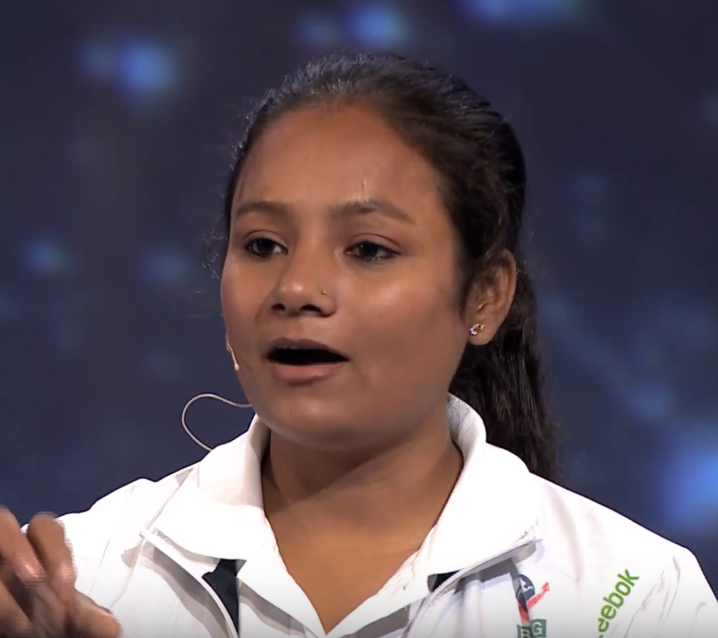
The night of April 11, 2011, should have been unremarkable for Arunima Sinha. The twenty-two-year-old national-level volleyball player was traveling from Lucknow to Delhi aboard the Padmavat Express, her mind likely occupied with thoughts of her sporting career and future aspirations. She had no way of knowing that within hours, her entire existence would be violently restructured, that the trajectory of her life would be shattered and then, against all odds, rebuilt into something extraordinary.
What happened in those dark hours remains seared into India’s collective consciousness. Arunima was pushed from the moving train while resisting thieves attempting to snatch her belongings. Her body hit the tracks. Another train ran over her left leg. She lay there, bleeding and broken, for a long time before help arrived. When she finally reached the hospital, doctors delivered news that would crush most people’s spirits entirely: her leg would need to be amputated below the knee.
For Arunima, lying in that hospital bed in the All India Institute of Medical Sciences in Delhi, the world must have seemed irretrievably lost. The athlete who had represented her state, who had dreamed of wearing India's colours on international fields, now faced a future that appeared to hold nothing but limitation and loss. The physical pain was excruciating, but perhaps more agonizing was the amputation of her identity, her purpose, everything she believed herself to be.
Yet something remarkable happened in those dark days of recovery. Where despair might have taken root, a different seed began to germinate. Arunima made a decision that would seem incomprehensible to most people facing such trauma: she would climb Mount Everest.
To understand the audacity of this goal, one must appreciate what it meant. Here was a woman who had just lost her leg, who was learning to navigate the world with a prosthetic limb, declaring her intention to scale the highest peak on Earth—a mountain that claims lives even from the most experienced, able-bodied climbers. It was a dream so improbable that it bordered on delusion. But Arunima saw it differently. The mountain became her defiance made manifest, her refusal to let tragedy define her limits.

The path from that hospital bed to the roof of the world was neither straight nor smooth. Arunima's training began at the Nehru Institute of Mountaineering in Uttarkashi, where she faced scepticism and physical challenges that would have broken lesser spirits. Learning to climb with a prosthetic leg meant relearning balance, developing new muscle memory, and enduring pain that extended far beyond normal training discomfort. The prosthetic would chafe against her skin during long climbs, causing wounds that became infected. The cold at high altitudes made the metal limb unbearably frigid, adding another layer of suffering to an already gruelling endeavour.
But Arunima had discovered something crucial about herself in those post-accident months: her body might have been broken, but her will remained intact. Every painful step up a training slope, every night spent in freezing conditions, every moment when her body screamed for her to quit became a testament to human resilience. She was not just training her body; she was forging a new identity from the ruins of the old one.
Her preparation caught the attention of Yuvraj Singh, the celebrated Indian cricketer who himself had battled cancer. Recognizing a kindred spirit of determination, he extended support and encouragement that helped propel her expedition forward. Bachendri Pal, the first Indian woman to summit Everest, became her mentor, offering guidance born of hard-won experience. These connections were more than practical support; they represented belief from people who understood the magnitude of what Arunima was attempting.
On May 21, 2013, just two years after losing her leg, Arunima Sinha stood on the summit of Mount Everest. Nearly 8,849 meters above sea level, she became the first female amputee in the world to reach the highest point on Earth. The photographs from that moment show her flag-draped and triumphant, but they cannot capture the full weight of what she carried to that summit—every doubt, every setback, every person who had underestimated her, every moment she had questioned herself, and ultimately, the ironclad determination that had carried her through it all.
For many people, such an achievement would be the culminating point of a life's journey. For Arunima, it was merely the beginning. She had discovered not just a talent for mountaineering, but a profound purpose: demonstrating that disability need not mean inability, that the human spirit can transcend physical limitation in ways that inspire others to confront their own challenges.

She set her sights on an even more audacious goal: climbing the highest peaks on all seven continents. Mount Kilimanjaro in Africa fell first to her determination, followed by Mount Elbrus in Europe. She went on to conquer Mount Kosciuszko in Australia, Aconcagua in South America, Carstensz Pyramid in Oceania, and finally Mount Vinson in Antarctica. Each summit represented not just a personal achievement but a message broadcast to millions: your circumstances do not determine your potential.
The physical demands of these climbs cannot be overstated. High-altitude mountaineering pushes the human body to its absolute limits. Oxygen becomes scarce, temperatures plummet to life-threatening lows, and every step requires monumental effort. For an amputee, these challenges multiply exponentially. Yet Arunima persisted, her prosthetic leg carrying her to heights that symbolized humanity's capacity to overcome.
Recognition followed her achievements like dawn follows darkness. The Government of India honoured her with the Padma Shri, one of the nation's highest civilian awards, in 2015. She received the Tenzing Norgay National Adventure Award and numerous other accolades. But perhaps more meaningful than any formal recognition was the impact she began having on ordinary people facing their own battles with disability, discrimination, or despair.
Arunima transformed into something more than a mountaineer; she became a living embodiment of possibility. Her motivational talks draw crowds across India and beyond, not because she offers easy platitudes or simple solutions, but because she speaks from authentic experience. When she tells audiences that the greatest disability is a defeated mindset, her words carry the weight of someone who has lived that truth. She has looked into the abyss of hopelessness and climbed her way out, and that journey resonates with anyone who has faced seemingly insurmountable obstacles.
Her advocacy work extends beyond inspiration. She has been vocal about the need for better infrastructure and opportunities for people with disabilities in India. She has also worked toward creating avenues for sports training for underprivileged children and differently-abled individuals, using her platform to open pathways for others to discover their own potential. Through these efforts, she multiplies her impact, transforming her personal triumph into collective empowerment.
What makes Arunima's story so compelling is not merely the dramatic arc from tragedy to triumph, but the profound humanity at its core. She did not overcome her disability by transcending her humanity; she did so by embracing it fully, acknowledging the pain and difficulty while refusing to be defined by limitation. In interviews, she speaks candidly about the ongoing challenges of living with a prosthetic leg, the moments of frustration and difficulty that persist even after extraordinary achievements. This honesty makes her story more, not less, inspiring.

Her journey also illuminates a broader truth about human potential. We often conceive of disability as a fixed state, a permanent subtraction from wholeness. Arunima's life demonstrates a different mathematics: loss can catalyse transformation, limitation can sharpen focus, and adversity can reveal reserves of strength we never knew we possessed. She did not climb Everest despite her amputation; in a profound sense, the amputation made the climb possible by forcing her to discover capabilities that might have otherwise remained dormant.
Today, Arunima Sinha stands as one of India’s most recognized motivational figures, her story shared in classrooms, featured widely in media, and retold in countless contexts where inspiration is needed. But beyond the fame and recognition lies something more essential: a life that serves as proof. Proof that the worst thing that happens to us need not be the defining thing. Proof that the human spirit, properly directed, can achieve the seemingly impossible. Proof that our response to tragedy matters more than the tragedy itself.
When Arunima lay on those train tracks in 2011, bleeding and broken, the future must have seemed impossibly dark. Yet from that darkness, she forged light—not just for herself, but for millions who have found hope in her example. Her summits are more than geographical achievements; they are monuments to resilience, testaments to the unconquerable nature of human will.
The girl who lost her leg on those train tracks did more than survive. She transcended, transformed, and in doing so, she showed us all what lies beyond survival: the possibility of soaring to heights we never imagined possible, one determined step at a time.
If Arunima Sinha’s journey moved you, show your support. Like this story, comment with what inspired you most, and share it with someone who might need a reminder of what resilience looks like. Your engagement helps powerful stories like this reach further—and light the way for others.