top of page
.png)

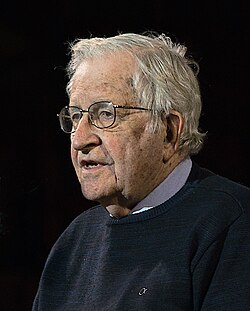
"The principle of universality is not a 'theory'. Just moral truism."
Standard
Customized

Exlpore more Philosophy quotes

"Think independently and critically, but never forget to think with understanding and love."
"Our life on earth is and ought to be material and carnal. But we have not yet learned to manage our materialism and carnality properly they are still entangled with the desire for ownership."
"A philosopher is a lover and searcher of truth, beauty, meaning, and wisdom."
"There is nothing wrong or right, only our thoughts make it so."
"I can resist everything but love."
"Opinion about religion might be different, but religion should be one and that is the well being of humanity."
"You may not be rich with money, Socrates was not, your life still has tremendous value."
"You are the center of your universe, without you nothing is there."
"Fear is the chain still wrapped around a free man's leg."
"The role of a philosopher is to create a better way for the future generations."
Explore more quotes by Noam Chomsky
"Corporations barely pay taxes. The corporate tax rate is already very low, but corporations have worked out an array of complicated techniques so they often don't have to pay taxes at all... The scale of sheer robbery by corporate power is enormous."
"Language is a process of free creation; its laws and principles are fixed, but the manner in which the principles of generation are used is free and infinitely varied. Even the interpretation and use of words involves a process of free creation."
"By now, they rank people by income level or wages roughly the same: The bottom seventy per cent or so are virtually disenfranchised; they have almost no influence on policy, and as you move up the scale you get more influence. At the very top, you basically run the show."
"If there was an observer on Mars, they would probably be amazed that we have survived this long."
"Do you train for passing tests or do you train for creative inquiry?"
"How people themselves perceive what they are doing is not a question that interests me. I mean, there are very few people who are going to look into the mirror and say, 'That person I see is a savage monster'; instead, they make up some construction that justifies what they do. If you ask the CEO of some major corporation what he does he will say, in all honesty, that he is slaving 20 hours a day to provide his customers with the best goods or services he can and creating the best possible working conditions for his employees. But then you take a look at what the corporation does, the effect of its legal structure, the vast inequalities in pay and conditions, and you see the reality is something far different."
"One of the best predictors of policy around is Thomas Ferguson's investment theory of politics, as he calls it - very outstanding political economist - which essentially - I mean, to say it in a sentence, he describes elections as occasions in which groups of investors coalesce and invest to control the state."
bottom of page