top of page
.png)

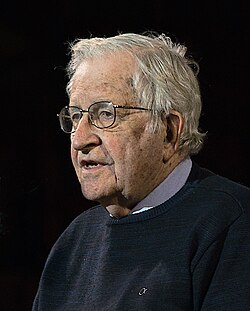
"I think maybe the classic formulation was by David Hume in "Of the First Principles of Government," where he pointed out that "Force is always on the side of the governed." Whether it's a military society, a partially free society, or what we - not he - would call a totalitarian state, it's the governed who have the power. And the rulers have to find ways to keep them from using their power. Force has its limits, so they have to use persuasion. They have to somehow find ways to convince people to accept authority. If they aren't able to do that, the whole thing is going to collapse."
Standard
Customized

Exlpore more Politics quotes

"To safeguard democracy the people must have a keen sense of independence, self-respect and their oneness, and should insist upon choosing as their representatives only such persons as are good and true."
"Politics means implementation of the best ideas for the society in the path of wellbeing and progress. This is the approach that gave the world, leaders of glorious characters such as Abraham Lincoln, Martin Luther King Jr., Subhas Chandra Bose (the actual man behind India's Independence), Vasil Levski (the man who liberated Bulgaria from the Ottoman oppression), Nelson Mandela and many more. These people were technically politicians too, but unlike the majority of the politicians ofmodern society, their approach to politics was what it should be in a real system of politics."
"On the other hand, the vast majority of all westernized countries, including every single European country along with Israel and Japan, do not offer birthright citizenship."
Explore more quotes by Noam Chomsky
"We can, for example, be fairly confident that either there will be a world without war or there won't be a world - at least, a world inhabited by creatures other than bacteria and beetles, with some scattering of others."
"Corporations barely pay taxes. The corporate tax rate is already very low, but corporations have worked out an array of complicated techniques so they often don't have to pay taxes at all... The scale of sheer robbery by corporate power is enormous."
"Language is a process of free creation; its laws and principles are fixed, but the manner in which the principles of generation are used is free and infinitely varied. Even the interpretation and use of words involves a process of free creation."
"By now, they rank people by income level or wages roughly the same: The bottom seventy per cent or so are virtually disenfranchised; they have almost no influence on policy, and as you move up the scale you get more influence. At the very top, you basically run the show."
"If there was an observer on Mars, they would probably be amazed that we have survived this long."
"How people themselves perceive what they are doing is not a question that interests me. I mean, there are very few people who are going to look into the mirror and say, 'That person I see is a savage monster'; instead, they make up some construction that justifies what they do. If you ask the CEO of some major corporation what he does he will say, in all honesty, that he is slaving 20 hours a day to provide his customers with the best goods or services he can and creating the best possible working conditions for his employees. But then you take a look at what the corporation does, the effect of its legal structure, the vast inequalities in pay and conditions, and you see the reality is something far different."
"One of the best predictors of policy around is Thomas Ferguson's investment theory of politics, as he calls it - very outstanding political economist - which essentially - I mean, to say it in a sentence, he describes elections as occasions in which groups of investors coalesce and invest to control the state."
"In societies that profess some respect for law, suspects are apprehended and brought to fair trial. I stress 'suspects.'"
bottom of page