top of page
.png)

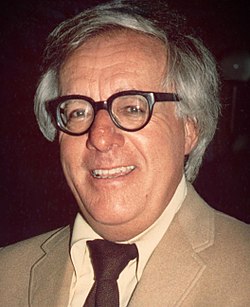
"Science fiction is the fiction of ideas. Ideas excite me, and as soon as I get excited, the adrenaline gets going and the next thing I know I'm borrowing energy from the ideas themselves. Science fiction is any idea that occurs in the head and doesn't exist yet, but soon will, and will change everything for everybody, and nothing will ever be the same again. As soon as you have an idea that changes some small part of the world you are writing science fiction. It is always the art of the possible, never the impossible."
Standard
Customized

More

"I'm interested in things that change the world or that affect the future and wondrous, new technology where you see it, and you're like, 'Wow, how did that even happen? How is that possible?'"
Author Name
Personal Development
"Thinking differently is the key to improvement."
Author Name
Personal Development
"Great things often start out small, and only open minds can perceive their inception."
Author Name
Personal Development
"It is much more worthwhile to implement only one bright idea than collecting a thousand of them."
Author Name
Personal Development
"I say beware of all enterprises that require new clothes, and not rather a new wearer of clothes."
Author Name
Personal Development
"The significant problems we have cannot be solved at the same level of thinking with which we created them."
Author Name
Personal Development
"I am certain that a Sewing Machine would relieve as much human suffering as a hundred Lunatic Asylums, and possibly a good deal more."
Author Name
Personal Development
"Create an environment that fosters the creative genius within you!"
Author Name
Personal Development
"Some old and unrealized ideas will undoubtedly be actualized when their time comes."
Author Name
Personal Development
"One machine can do the work of fifty ordinary men. No machine can do the work of one extraordinary man."
Author Name
Personal Development
More
"Don't think. Thinking is the enemy of creativity. It's self-conscious, and anything self-conscious is lousy. You can't try to do things. You simply must do things."
Creativity
"Love is easy, and I love writing. You can't resist love. You get an idea, someone says something, and you're in love."
Writing
"Beware the autumn people."
Emotion
"Create a character with an obsession, then follow."
Creativity
"No, no, it's not the books you are looking for! Take it where you can find it, in old phonograph records, in old motion pictures, and in old friends; look for it in nature and look for it in yourself. Books were only one type of receptacle where we stored a lot of things we were afraid we might forget. There is nothing magical in them at all. The magic is only in what books say, how they stitched the patches of the universe together into one garment for us."
Literature
"There is no cause for nostalgia save the good and life-enhancing nostalgia for the present."
Time
"Insane people give me hope.""What!!!!" I almost dropped my beer."The insane have decided to stay on," Crumley said. "They love life so much that, rather than destroy it, they go behind a self-made wall to hide. Pretend not to hear, but the do hear. Pretend not to see, but see. Insanity says: I hate living but love life. Hate the rules but do like me. So, rather than drop in graves, I hide out. Not in liquor, nor in bed under sheets, nor in a needle's prick or snuffs of white powder, but in madness. On my own shelf, in my own rafters, under my own silent roof. So, yeah, insane people give me hope. Courage to go on being sand and alive, always with the cure at hand, should I ever tire and need it: madness."
Mental Health
"The huge round lunar clock was a gristmill. Shake down all the grains of Time-the big grains of centuries, and the small grains of years, and the tiny grains of hours and minutes-and the clock pulverized them, slid Time silently out in all directions in a fine pollen, carried by cold winds to blanket the town like dust, everywhere. Spores from that clock lodged in your flesh to wrinkle it, to grow bones to monstrous size, to burst feet from shoes like turnips. Oh, how that great machine dispensed Time in blowing weathers."
Time
"Our civilization is flinging itself to pieces. Stand back from the centrifuge."
Society
"And what, you ask, does writing teach us? First and foremost, it reminds us that we are alive and that it is a gift and a privilege, not a right."
Creativity
bottom of page