top of page
.png)

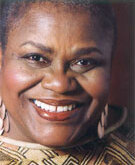
"I think the Civil Rights Movement changed that trajectory for me. The first thing I did was leave school. I was suspended for my participation in Movement demonstrations in my hometown, December, 1961."
Standard
Customized

Exlpore more Civil rights quotes

"Rarely in my 45 years as a civil rights lawyer have I been so angry about an injustice as I am about what happened to Billy Ray Johnson."
"There has been only a civil rights movement, whose tone of voice was adapted to an audience of liberal whites."
"The civil rights movement wasn't easy for anybody."
"When I started graduate school I was interested in the culture of the Civil Rights Movement."
"I don't call myself a white supremacist. I'm a civil rights activist concerned about European-American rights."
"There are severe limitations on civil rights. In the international arena, Iran is turning into an isolated country, and the international community is becoming more hostile toward it."
"The law regards man as man, and takes no account of his surroundings or of his color when his civil rights as guaranteed by the supreme law of the land are involved."
"Civil rights are more important today than they ever have been in our country. There is so much divisiveness today."
"If Willie Nelson had been Rosa Parks, there never would have been a civil rights movement in this country, because he refuses to leave the back of the bus."
Explore more quotes by Bernice Johnson Reagon
"So one of the things that happened with integration in the South is they found that the black teachers were much more educated than the white teachers."
"The voice I have now, I got the first time I sang in a movement meeting, after I got out of jail... and I'd never heard it before in my life."
"If I had been at a University I don't think I would have been able to have the experience I had in my Smithsonian work. I don't think I have been as successful."
"I learned that if you bring black people together, you bring them together with a song. To this day, I don't understand how people think they can bring anybody together without a song."
"The first job I had with the Smithsonian was as a field researcher among African American communities in Southwest Louisiana and Arkansas for the festival."
"I was at the Smithsonian for twenty years, and I'm still at the Smithsonian as a curator emeritus, and I still plan to figure out what that means for me at this point in my life."
"The Smithsonian Festival of American Folklife, actually, was an effort to put something on the mall in Washington so American tourists could walk through America, and in their minds everything on the mall would be American."
"At the same time all this was happening, there was a folk song revival movement goingon, so the commercial music industry was actually changed by the Civil Rights Movement."
"And I used to think that proof that I had religion was whether I knew how to sing all of the songs."
"When I started graduate school I was interested in the culture of the Civil Rights Movement."
bottom of page