top of page
.png)

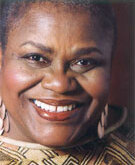
"I learned that if you bring black people together, you bring them together with a song. To this day, I don't understand how people think they can bring anybody together without a song."
Standard
Customized

Exlpore more People quotes

"We should not judge people by their peak of excellence; but by the distance they have traveled from the point where they started."
"I believe that in every country the people themselves are more peaceably and liberally inclined than their governments."
"A lot of people are afraid of heights. Not me, I'm afraid of widths."
"People generally quarrel because they cannot argue."
"How long most people would look at the best book before they would give the price of a large turbot for it?"
"I find that most people know what a story is until they sit down to write one."
"I am confident that, in the end, common sense and justice will prevail. I'm an optimist, brought up on the belief that if you wait to the end of the story, you get to see the good people live happily ever after."
Explore more quotes by Bernice Johnson Reagon
"The first job I had with the Smithsonian was as a field researcher among African American communities in Southwest Louisiana and Arkansas for the festival."
"I think the Civil Rights Movement changed that trajectory for me. The first thing I did was leave school. I was suspended for my participation in Movement demonstrations in my hometown, December, 1961."
"The voice I have now, I got the first time I sang in a movement meeting, after I got out of jail... and I'd never heard it before in my life."
"Most people come out of their Ph.D. experience trying to prove themselves, trying to get ahead, trying to get published. You're scared everybody else is going to do your research and get your topic."
"Well, the first time I ran into the term religion, people were asking whether you had any. You know, some people had religion and some people didn't have religion."
"The Smithsonian Festival of American Folklife, actually, was an effort to put something on the mall in Washington so American tourists could walk through America, and in their minds everything on the mall would be American."
"And I used to think that proof that I had religion was whether I knew how to sing all of the songs."
"In fact when Sweet Honey was ten years old it was too big for me to run, and I knew it, but I ran it for another thirteen years because I couldn't convince other people to really do it. And this year, I'm not running it."
"When I started graduate school I was interested in the culture of the Civil Rights Movement."
bottom of page